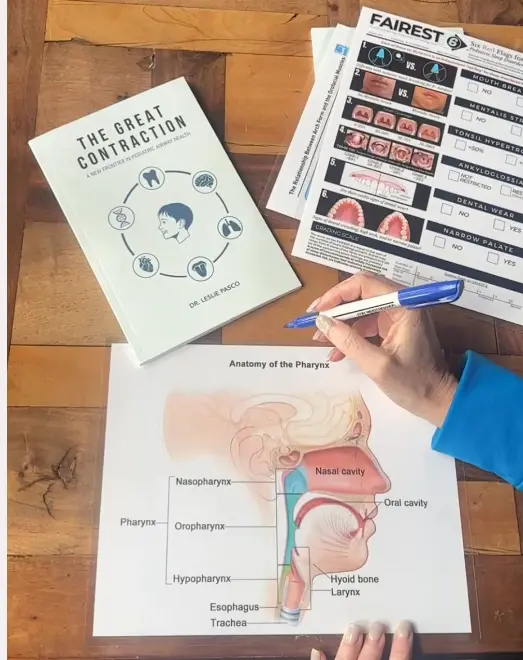

Jaw development and sleep in children are closely connected and play a vital role in overall growth and behavior. When the jaw and airway do not develop properly, breathing can become restricted during sleep, leading to poor rest and disrupted brain function
What the story of Connor Deegan teaches us about anxiety, sleep, and jaw development
Many parents reach a breaking point when their child’s behavior becomes too overwhelming to manage. Meltdowns, anxiety, inattentiveness, even depression can leave families feeling hopeless and out of options. Medications are often prescribed. School accommodations may be put in place. Therapy is suggested. Yet for some families, nothing seems to truly resolve the problem.
Now imagine finding out that the real issue was not psychological at all. It was physical. And it had been missed for years.
That is what happened to Connor Deegan and his family.
The Story of Connor Deegan
Connor was a young boy who struggled deeply with emotional regulation. His parents described him as anxious, aggressive, and often disconnected. He had trouble at school and difficulty making friends. Doctors suggested anxiety. Therapists mentioned possible depression. His parents were desperate for answers.
But it was not until a dentist noticed the shape of Connor’s upper jaw that the puzzle began to come together. His palate was too narrow, restricting nasal airflow. This was forcing Connor to breathe through his mouth, especially during sleep. That mouth breathing was disrupting his rest and robbing his brain of the oxygen it needed to regulate emotions, energy, and focus.
The diagnosis was not a mental health condition. It was an airway issue.
When Breathing Affects Behavior
Children need healthy, consistent nasal breathing to sleep well and function during the day. When a child breathes through the mouth instead of the nose, it can lead to a cascade of problems:
- Fragmented sleep
- Poor oxygenation during rest
- Activation of the body’s stress response
- Behavioral outbursts
- Inattention and poor memory
- Low frustration tolerance
- Emotional instability
Sleep is the foundation of emotional and cognitive development. Without it, even the most nurturing environment or best therapy tools may fall short. This is why some children do not improve with traditional interventions. The root cause is still there, hidden in plain sight: how they breathe.
The Role of Jaw and Airway Development
A child’s jaw and palate shape their airway. When the upper jaw is too narrow or underdeveloped, it can restrict the nasal passages and limit airflow.
This often leads to:
- Mouth breathing
- Snoring or noisy sleep
- Teeth grinding
- Restless sleep
- Daytime fatigue or hyperactivity
Many of these signs are misinterpreted as behavioral or developmental problems. In reality, they are physical symptoms of a poorly functioning airway. Early evaluation of jaw growth and breathing patterns can reveal these issues before they become chronic.
What Myofunctional Therapy Can Do
Myofunctional therapy focuses on retraining the muscles of the face, tongue, and mouth to support optimal breathing, speaking, and swallowing. When combined with medical-grade appliances designed to guide proper jaw growth, it can help open the airway and restore nasal breathing.
At MyoWay, we use a structured program tailored for children to:
- Encourage proper tongue posture
- Support nasal breathing, day and night
- Stimulate jaw growth for a wider palate and open airway
- Improve sleep quality
- Help children function better emotionally and cognitively
This is not cosmetic orthodontics. This is airway-first therapy that aims to help children grow and thrive from the inside out.
What Parents Should Watch For
If you are unsure whether your child might be experiencing airway-related issues, consider the following signs:
- Mouth breathing during the day or night
- Snoring or noisy breathing during sleep
- Restlessness or frequent waking at night
- Teeth grinding
- Fatigue in the morning despite a full night of sleep
- Emotional instability or mood swings
- Diagnoses such as ADHD, anxiety, or sensory processing challenges
- Narrow or high-arched palate
These symptoms may seem unrelated. But together, they point to a bigger picture: disrupted sleep and poor breathing mechanics.
Why Early Intervention Matters
The earlier a child is evaluated for airway and jaw development, the easier it is to address the root problem. Waiting until braces are needed or behavioral issues become severe means losing valuable time.
Proper intervention during growth windows can:
- Reduce the need for more invasive treatments later
- Support normal cognitive and emotional development
- Improve academic and social functioning
- Give children the best chance at a full, healthy life
Connor Deegan’s story is not an isolated case. There are thousands of children struggling with the same hidden problem. The good news is that there is hope when parents and providers know where to look.
You Are Not Alone
If you feel like you have tried everything and still do not have answers, it is time to look at how your child is breathing. Schedule an airway evaluation. Watch the video about Connor. Talk to a myofunctional therapist who understands the deeper connection between breathing and behavior. You do not need to wait for a diagnosis to begin helping your child feel better.
Look Beneath the Surface
Behavior is communication. When a child is struggling emotionally, physically, or academically, it is often a sign of something deeper.
As we learn more about the relationship between jaw development, sleep, and mental health, we can stop blaming the child and start addressing the cause.
The solution might be simpler than you think.
Book your free consultation in under 5 minutes.
https://mychart.myoryx.com/patient/#/auth/onlineschedule?realm=myoway&univers=com