
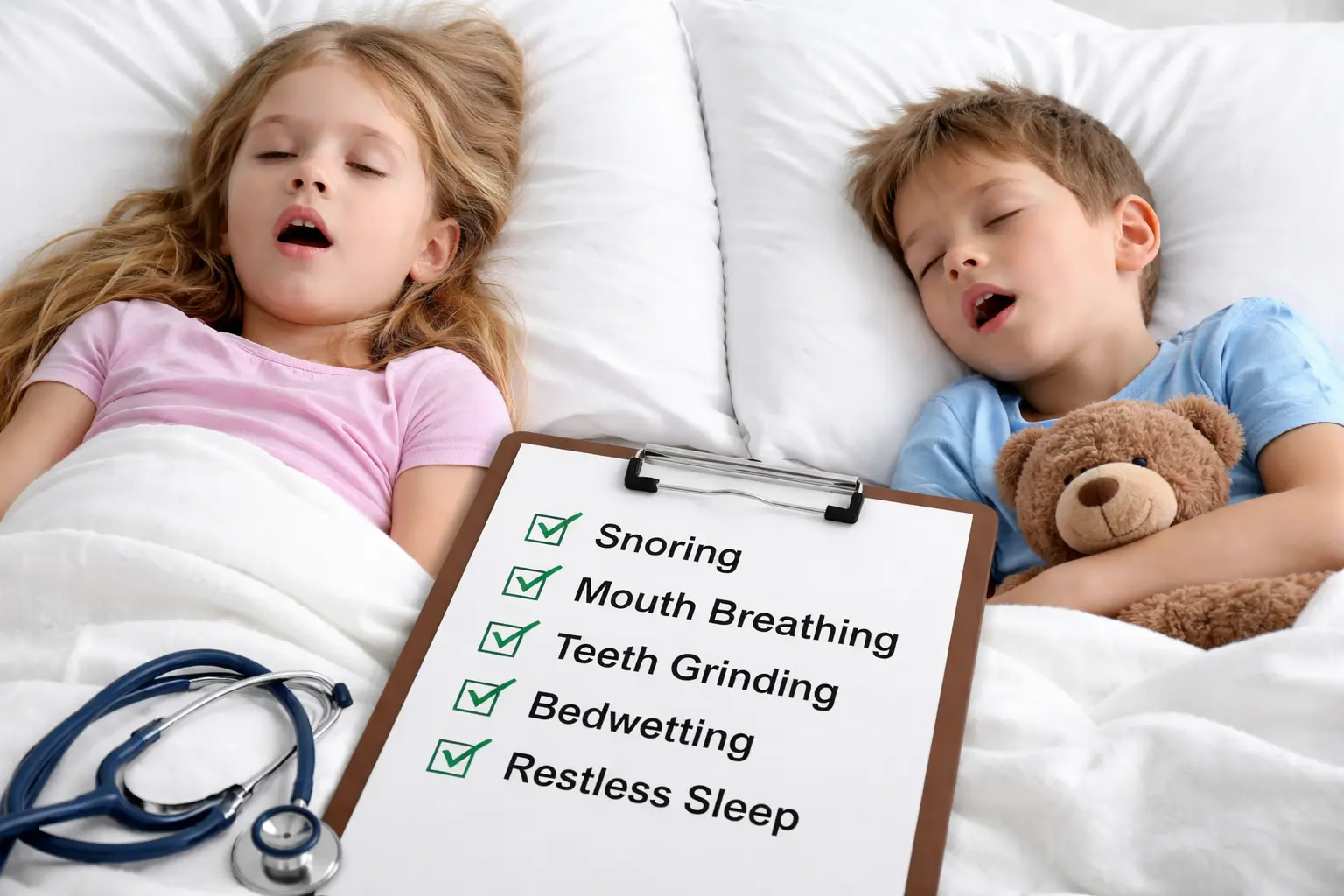
Most wellness visits and dental cleanings cover the basics: height, weight, vision, and cavities. Those matter. Yet one of the most important indicators of long term health and development is often missed unless a parent brings it up first: your child’s breathing, especially during sleep. Snoring, mouth breathing, restless sleep, teeth grinding, and bedwetting are often dismissed as normal phases. In many cases they are not emergencies, yet they can be meaningful signals that your child may not be getting the most restorative sleep possible. This article gives you a simple airway screening checklist to bring to your next appointment, explains why these signs matter, and outlines clear next steps.
If you want help understanding your child’s signs and what an airway focused plan could look like, you can schedule a free consultation with MyoWay Centers for Kids.
Use these five airway screening questions at your next checkup:
-
Does your child snore, even quietly
-
Does your child breathe through their mouth during the day or at night
-
Does your child have attention concerns, hyperactivity like behavior, or anxiety like symptoms paired with poor sleep
-
Does your child wet the bed or grind their teeth at night
-
Is your child a restless sleeper who tosses and turns
If you answer yes to any, ask your pediatrician or dentist for an airway focused screening and guidance on next steps.
Why Breathing Should Be Part of Every Pediatric and Dental Visit
Breathing is not just about oxygen. It influences how the tongue rests, how the lips seal, how the jaw develops, and how stable sleep can be. When a child breathes well through the nose at night, sleep tends to be more restorative, and the body has a better chance to support healthy growth and daily regulation.
When breathing is strained during sleep, the body can compensate in ways that are easy to miss. Some children become restless sleepers. Some grind their teeth. Some wet the bed. Some struggle with focus, mood, or big emotional swings. Those signs often lead families to chase separate solutions, when the foundation might include sleep quality and breathing patterns.
Many routine visits do not include a structured airway history. That is why parents asking the right questions can make such a difference.
The Parent Problem: Symptoms That Look Unrelated
Parents are often told:
-Snoring is normal.
-Mouth breathing is a habit.
-Grinding is stress.
-Bedwetting is a phase.
-Restless sleep is just how some kids sleep.
Sometimes those statements are true. Yet when several signs appear together, or when a child is chronically tired or dysregulated, it is reasonable to ask whether the airway and sleep quality deserve a closer look. The goal is not to label your child. The goal is to notice patterns early, then get the right screening so you can make informed choices.
The Five Airway Screening Questions
Below are the five questions from the video, expanded with what they can mean.
1) Does your child snore, even quietly?
Occasional snoring during a cold can happen. Habitual snoring, including quiet snoring, can be a sign that your child is working harder to move air during sleep.
What to note at home:
-
How many nights per week you hear snoring
-
Whether snoring is louder in certain positions
-
Whether you notice pauses, gasps, or frequent position changes
2) Does your child breathe through their mouth during the day or night?
Mouth breathing is often a compensation for nasal breathing that is not easy or comfortable. Over time, chronic mouth breathing can influence oral posture and muscle balance.
What to note at home:
-
Lips open at rest during the day
-
Dry mouth in the morning
-
Chapped lips
-
Open mouth posture in photos
-
Noisy breathing during sleep
3) Does your child struggle with attention concerns, hyperactivity like behavior, or anxiety like symptoms?
Poor sleep can show up as more energy, not less. Some children appear wired, impulsive, emotional, or anxious when they are under rested. That overlap is one reason airway and sleep screening can be valuable when behavioral concerns exist.
What to note at home:
-
Morning irritability or difficulty waking
-
Afternoon crashes
-
Emotional outbursts that seem out of proportion
-
Teachers reporting inattention or high activity
-
Anxiety like behaviors paired with sleep issues
4) Does your child wet the bed or grind their teeth at night?
Bedwetting and teeth grinding can be clues that sleep is not as stable as it should be. Families are often surprised to hear these can be linked to sleep disruption patterns in some children.
What to note at home:
-
Frequency of bedwetting episodes
-
Evidence of grinding, such as flat spots on teeth or jaw soreness
-
Headaches in the morning
-
Restlessness or sweating during sleep
5) Is your child a restless sleeper who tosses and turns?
Restless sleep can reflect frequent micro awakenings and positioning changes. Some children move to find a more comfortable breathing posture. They may not fully wake up, yet deep restorative sleep can still be disrupted.
What to note at home:
-
Frequent tossing and turning
-
Sleeping in unusual positions
-
Waking up tangled in sheets
-
Night sweating
-
Waking up still tired
Common Signs Parents Mention That Fit This Pattern
Parents often describe one or more of the following:
-
Snoring more than a few nights per week
-
Mouth breathing during the day or at night
-
Dark circles despite adequate time in bed
-
Frequent nighttime waking or nightmares
-
Teeth grinding
-
Bedwetting beyond the expected age range
-
Morning headaches
-
Chronic fatigue that looks like irritability
-
Challenges with focus, behavior, or emotional regulation
A single sign does not confirm a problem. A cluster of signs is worth a closer look.
What to Do if You Answer Yes to Any Question
A yes is not a reason to panic. It is a reason to get clarity. Use this simple step by step approach.
Step 1: Bring the checklist to the next appointment
Bring a short note with:
-
Which signs you see
-
How often they happen
-
Whether the child wakes tired, moody, or hard to wake
This helps your provider make faster, clearer decisions.
Step 2: Ask for airway focused screening
Examples of what to ask:
-
“Can we evaluate nasal breathing and oral posture?”
-
“Is there any concern for enlarged tonsils or adenoids based on symptoms?”
-
“Should we consider a sleep evaluation if symptoms persist?”
-
“Who would you refer to for an airway focused assessment?”
Step 3: Consider a team approach when indicated
Depending on your child’s signs, referrals may include:
-
Pediatrician or pediatric dentist
-
Ear, nose, and throat specialist
-
Sleep medicine evaluation when appropriate
-
Orthodontic evaluation for growth and development considerations
-
Pediatric myofunctional therapy for oral facial muscle patterns and nasal breathing support
Families often get better outcomes when the airway is addressed structurally and functionally, rather than focusing on one piece alone.
Where Pediatric Myofunctional Therapy Fits
Pediatric myofunctional therapy focuses on oral facial muscle patterns that support nasal breathing, stable oral posture, swallowing, and tongue function. For many children, therapy is part of a broader plan that may also involve medical evaluation and dental or orthodontic guidance.
Therapy can help children learn healthier patterns that support long term stability. It can also complement other interventions by helping the body use the airway more effectively and maintain improved function. This is not about forcing perfection. It is about creating healthier habits that can support sleep quality, growth, and daily regulation.
Frequently Asked Questions
Is snoring normal for children?
Occasional snoring during illness can happen. Habitual snoring is worth bringing up, especially when it shows up alongside mouth breathing, restless sleep, or daytime fatigue.
My child mouth breathes at night. Should I be worried?
Mouth breathing can be a sign that nasal breathing is not easy. It is a good reason to ask for an evaluation of nasal obstruction, allergies, and oral posture.
Can sleep issues look like attention or anxiety concerns?
Sleep disruption can overlap with attention and emotional regulation challenges. Screening sleep and breathing can be a practical step when behavioral symptoms and nighttime signs occur together.
What professional should I talk to first?
Start with your pediatrician or pediatric dentist, then ask about referrals if symptoms persist. Many families also benefit from an airway focused evaluation that includes oral posture and breathing habits.
What should I track before the appointment?
Track snoring frequency, mouth breathing, restless sleep, teeth grinding, bedwetting, morning mood, and daytime fatigue. Short notes help your provider understand patterns quickly.
A Simple Checklist You Can Copy
-
Snoring nights per week:
-
Mouth breathing day or night:
-
Restless sleep or frequent moving:
-
Teeth grinding:
-
Bedwetting:
-
Morning tiredness or headaches:
-
Attention or anxiety like concerns:
-
Next appointment date:
Breathing and sleep quality deserve a place alongside growth charts and cavity checks. The five questions in this article help you identify common signs that can point to a need for deeper airway focused screening. Early awareness supports earlier action, which can support healthier patterns as your child grows.
If you want help connecting your child’s signs to a clear plan, schedule a consultation with MyoWay Centers for Kids.
Book your free consultation in under 5 minutes.
https://mychart.myoryx.com/patient/#/auth/onlineschedule?realm=myoway&univers=com