A scalloped tongue in kids can be easy to miss, but it may be telling an important story about oral function, breathing, and growth. When the sides of the tongue look wavy or indented, it often means the tongue is pressing against the teeth because there is not enough room in the mouth for it to rest properly. That visible pattern can be a clue that the oral space is too small, which may also relate to airway development, mouth breathing, sleep quality, and jaw growth.
For many parents, this is not something they have ever been taught to notice. They may see crowded teeth, open mouth posture, snoring, or restless sleep without realizing these signs can be connected. A scalloped tongue is one of those subtle findings that can point to a deeper functional issue.
MyoWay Centers for Kids helps families understand what signs like this may mean and why early support matters. When the tongue does not have enough room to live comfortably in the mouth, it can affect much more than appearance. It can influence how a child breathes, sleeps, swallows, and develops over time.
What does a scalloped tongue mean in kids?
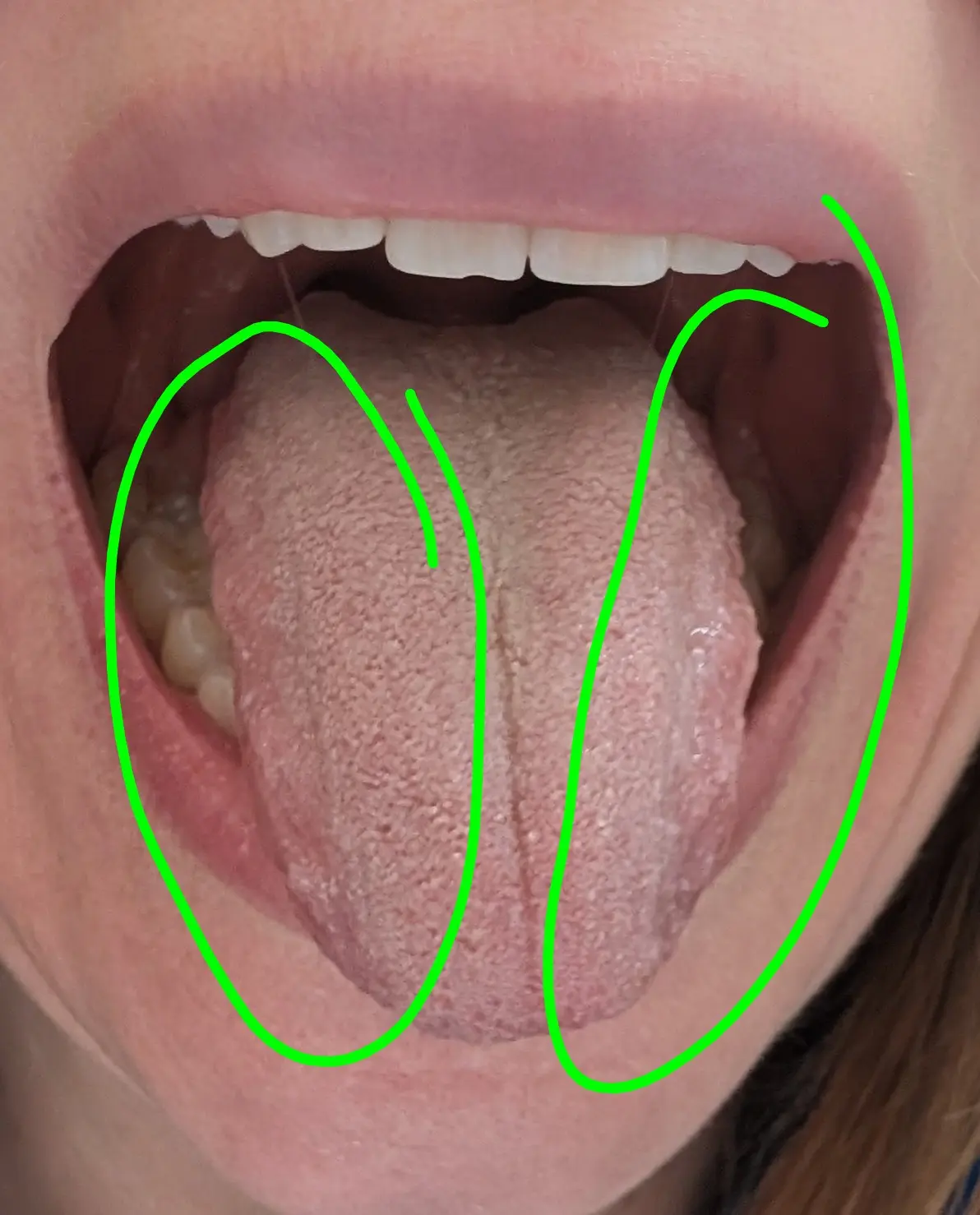
A scalloped tongue in kids often means the tongue does not have enough room to rest properly in the mouth. As the tongue presses against the teeth, it can leave scalloped edges along the sides.
This may be a sign of limited oral space, poor tongue posture, mouth breathing, and airway development concerns.
What Is a Scalloped Tongue?
A scalloped tongue is a tongue with rippled, wavy, or indented edges along the sides. These marks usually happen when the tongue is pressing into the teeth over time. The tongue should ideally rest fully in the mouth with enough space to sit comfortably against the palate. When there is not enough room, the tongue may spread outward and press into the surrounding teeth, creating a scalloped border. This is why a scalloped tongue is often seen as a sign, not the root problem itself. It can suggest that the tongue is too large for the available space, or more commonly, that the mouth and jaw have not developed enough room for proper tongue posture.
Why Does a Scalloped Tongue Happen?
A scalloped tongue usually happens because the tongue is trying to fit into a space that is too small.
In children, this may be related to:
- A narrow upper jaw
- Underdeveloped oral space
- Low tongue posture
- Chronic mouth breathing
- Improper oral resting posture
- Functional habits that affect jaw growth over time
When the tongue cannot rest where it should, it often spills outward between the teeth or presses against them. Over time, the sides of the tongue begin to reflect that pressure. This matters because the tongue is not just a muscle for speech and eating. It plays a major role in shaping oral posture, supporting nasal breathing, guiding swallowing patterns, and helping the jaws develop properly.
Why Tongue Space Matters for Kids
The tongue needs enough room in the mouth to function the way it was designed to function. When the tongue rests properly, it supports healthy oral posture and helps guide growth in the upper jaw. Proper tongue posture also works together with nasal breathing, lip seal, and balanced swallowing. These are all important parts of healthy development.
When there is not enough room for the tongue, the body often adapts in ways that are less efficient. A child may begin breathing through the mouth, sleeping with the lips open, or holding the tongue low in the mouth instead of on the palate. Over time, these patterns can influence facial growth, sleep quality, focus, and comfort.
This is one reason why a scalloped tongue can be such an important clue. It may be one of the first visible signs that the oral environment is not supporting ideal function.
What a Scalloped Tongue May Be Telling You
A scalloped tongue may be a sign that a child does not have enough room in the mouth for proper tongue rest.
That can point to bigger functional concerns, including:
- Limited oral space
- Improper tongue posture
- Mouth breathing
- Poor sleep quality
- Jaw underdevelopment
- Crowded teeth
- Reduced support for healthy airway development
A scalloped tongue does not diagnose a condition by itself. It does, however, suggest that it may be time to look more closely at how a child is breathing, sleeping, and developing. Many families are surprised to learn that a tongue finding can be connected to airway and jaw growth. Once they understand that the tongue should have a proper resting place, the connection becomes much clearer.
The Link Between a Scalloped Tongue and Airway Development
The tongue and the airway are closely connected. A child needs enough space in the mouth and jaws for the tongue to rest comfortably and support normal function. When the oral space is too small, the tongue may sit low or press outward. That can be a sign that the airway container is also too small and may need support as the child grows.
This is where the conversation moves beyond teeth alone.
Children with limited oral space may also struggle with nasal breathing, restful sleep, and healthy jaw development. A smaller oral environment can affect how the face grows and how the body compensates during rest and sleep.
Instead of asking only whether the teeth look straight, it is often more helpful to ask bigger questions:
- Does the child have enough room for the tongue?
- Is the child breathing through the nose comfortably?
- Is sleep quiet and restful?
- Is jaw growth supporting healthy function?
A scalloped tongue can be one visible sign that these questions are worth exploring.
Common Signs That May Show Up Alongside a Scalloped Tongue
A scalloped tongue often appears with other signs of oral and airway dysfunction.
Parents may also notice:
- Mouth breathing during the day
- Open mouth posture at rest
- Snoring or noisy sleep
- Restless sleep
- Crowded teeth
- Dark circles under the eyes
- Difficulty keeping the lips closed
- Low tongue posture
- Daytime irritability or fatigue
- Trouble with focus after poor sleep
These signs do not always happen together, and they do not always mean the same thing. Still, when a scalloped tongue appears alongside these patterns, it can suggest that function and development deserve a closer look.
Is a Scalloped Tongue Always a Problem?
Not every child with a scalloped tongue will have the same level of concern, but it should not be ignored. The reason is simple. A scalloped tongue is often a visible adaptation to limited space. Even if a child is not showing major symptoms yet, early signs can still matter. The body often compensates quietly before larger issues become more obvious.
This is especially important in growing children because the early years are when the jaws, face, and oral habits are still developing. The sooner a family understands what may be happening, the more opportunity there may be to support healthier patterns during growth.
Why Early Intervention Matters
Early intervention matters because growth does not wait. As children grow, their oral posture, breathing habits, and jaw development are constantly shaping the future structure of the face and airway. Waiting until symptoms become severe can mean missing an important window to guide function more effectively.
When early signs are recognized, families may have the opportunity to support:
- Better tongue posture
- Healthier breathing habits
- Improved oral function
- Stronger support for jaw development
- Better sleep quality
- A more complete understanding of what the body is communicating
A scalloped tongue may seem like a small detail, but small details often reveal the bigger picture.
How MyoWay Centers for Kids Supports Children with These Concerns
At MyoWay Centers for Kids, we look beyond isolated symptoms and focus on how the whole system works together. A scalloped tongue may be one sign that a child needs more support for proper tongue posture, oral function, jaw development, and airway growth. Our approach helps families understand how breathing, sleep, oral posture, and development are connected.
When appropriate, support may include structured myofunctional guidance and medical grade appliances designed to encourage healthier patterns as children grow. The goal is to support function first, so the body has a better foundation for breathing, resting, and developing well.
Families often come to us after noticing things like:
- Mouth breathing
- Poor sleep
- Crowded teeth
- Open mouth posture
- Snoring
- Early signs that something does not seem quite right
When these signs are viewed together, they often make much more sense.
When Should Parents Seek an Evaluation?
Parents should consider seeking an evaluation when a scalloped tongue appears together with other signs of poor oral function or airway concerns.
It may be time to look deeper if your child has:
- A tongue with tooth marks or scalloped edges
- Chronic mouth breathing
- Snoring or noisy sleep
- Restless sleep
- Crowded teeth
- Lips apart at rest
- Low tongue posture
- Daytime tiredness or irritability
You do not need to wait for a major problem to take early signs seriously. In many cases, the best time to explore a concern is when it first becomes noticeable.
Key Takeaways for Parents
If you are trying to understand what a scalloped tongue means, here are the most important points to remember:
- A scalloped tongue often means the tongue does not have enough room in the mouth.
- The scalloped edges happen when the tongue presses into the teeth.
- This may be a sign of limited oral space and poor tongue posture.
- A scalloped tongue can be connected to mouth breathing, sleep quality, jaw growth, and airway development.
- It is not just a cosmetic finding. It can be a functional clue.
- Early recognition can help families seek support before patterns become more established.
Frequently Asked Questions
What does a scalloped tongue mean in kids?
A scalloped tongue in kids often means the tongue is pressing against the teeth because there is not enough room in the mouth for it to rest properly. This may point to limited oral space, poor tongue posture, and possible airway development concerns.
Is a scalloped tongue caused by the teeth?
The teeth create the visible marks, but the deeper issue is often that the tongue does not have enough room in the mouth. The tongue presses into the teeth because it is trying to fit into a space that is too small.
Can a scalloped tongue be related to mouth breathing?
Yes, it can. Mouth breathing and poor tongue posture often go together. When a child breathes through the mouth, the tongue may rest low instead of where it should, which can contribute to improper oral development and scalloping along the tongue edges.
Does a scalloped tongue mean my child has airway problems?
A scalloped tongue does not confirm an airway problem by itself, but it can be a clue that airway development and oral function should be evaluated more closely. It is one sign that may point to a smaller oral space and less ideal breathing support.
Can a scalloped tongue affect sleep?
It may be connected to sleep concerns because the same oral and airway issues that contribute to tongue scalloping can also affect breathing during sleep. Children with limited oral space may also show snoring, restless sleep, or open mouth posture at night.
Should I worry if my child has a scalloped tongue?
It is worth paying attention to, especially if your child also shows signs like mouth breathing, snoring, restless sleep, or crowded teeth. A scalloped tongue is often a sign that more evaluation may be helpful.
Final Thoughts
A scalloped tongue in kids is more than a visual detail. It may be a sign that the tongue does not have enough room to rest properly and that the mouth is not providing the space needed for ideal function.
When the tongue spills over the edges and presses into the teeth, it can reveal a deeper issue involving oral posture, breathing, jaw growth, and airway development. That is why this small sign deserves attention.
The good news is that awareness creates opportunity. When parents understand what a scalloped tongue may be saying, they can take the next step toward finding answers and supporting healthier growth for their child.
Book your free consultation in under 5 minutes.
https://mychart.myoryx.com/patient/#/auth/onlineschedule?realm=myoway&univers=com