
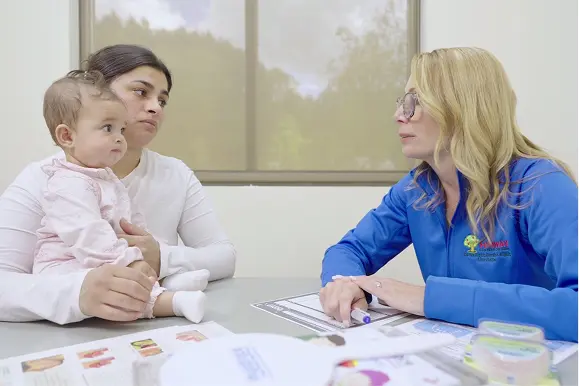
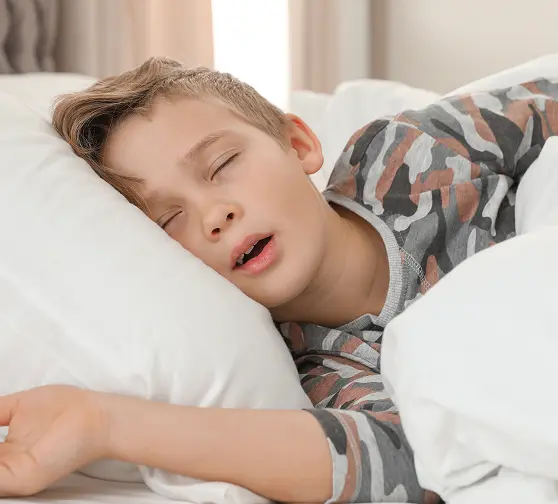
Mouth breathing in children is commonly associated with poor sleep quality, behavioral challenges, restricted jaw development, and poor oxygen efficiency. MyoWay Centers for Kids focuses on identifying and supporting the airway-related causes behind these conditions rather than addressing symptoms alone.
Children often present with symptoms that seem unrelated: snoring, poor focus, crowded teeth, feeding difficulties, speech concerns, restless sleep, or oral habits. At MyoWay Centers for Kids, we recognize that these challenges frequently stem from a combination of oral muscle dysfunction, underdeveloped airways, poor tongue posture, and inefficient breathing patterns.
Our approach looks at three connected areas: Form, Function, and Fuel. Form refers to jaw structure and dental arch development. Function refers to the muscles of the tongue, lips, cheeks, and airway. Fuel refers to breathing efficiency, oxygen utilization, and sleep quality.
Pediatric myofunctional therapy helps children breathe better, sleep more soundly, and develop more efficiently by improving the function of the muscles of the face, tongue, and jaw while supporting healthier breathing patterns.

Chronic mouth breathing in children can alter the way the jaw develops, reduce oxygen efficiency, and contribute to dry mouth, poor sleep quality, and low tongue posture.
When the tongue rests low instead of on the roof of the mouth, the upper jaw may not develop as broadly as it should. Over time, this can contribute to crowded teeth, a narrow palate, and restricted airway space.
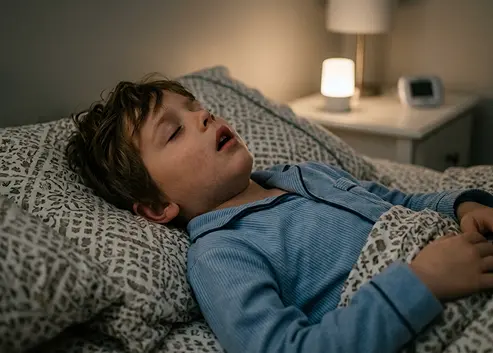
Snoring and interrupted sleep are often signs of restricted airways. This can affect daytime behavior, mood, emotional regulation, memory, and academic performance.
Restless sleep, frequent waking, unusual sleep positions, sweating during sleep, and teeth grinding can also be signs that a child is working harder than they should to breathe at night.

Sleep disruption can mimic behavioral and attention challenges commonly seen in school-aged children. When a child does not receive oxygenated, restorative sleep, symptoms may show up as hyperactivity, emotional volatility, irritability, poor focus, impulsivity, and difficulty with self-regulation.
By supporting airway health, sleep quality, and oxygen efficiency, many children are better positioned to focus, regulate, learn, and function throughout the day.
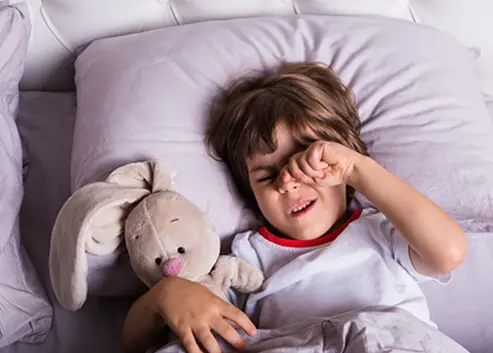
Restless sleep, frequent waking, unusual sleep positions, sweating during sleep, and teeth grinding can be signs that a child is working harder than they should to breathe at night.
Teeth grinding, also called bruxism, may be connected to the body’s attempt to reposition the jaw and help keep the airway open during sleep.
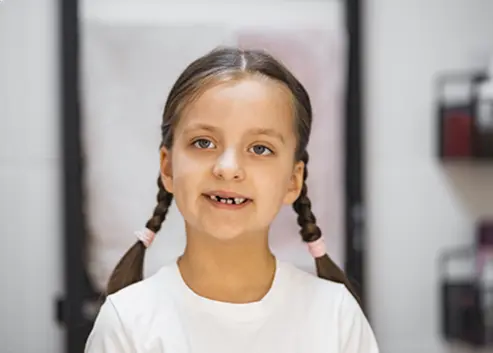
A narrow palate or recessed chin can be signs that the jaw and face are not developing forward and wide enough to support the airway.
When the tongue rests low instead of on the roof of the mouth, the upper jaw may not receive the natural support it needs to widen. Mouth breathing, enlarged tonsils or adenoids, and poor oral posture can also influence how the face and jaw grow.

Physical signs can sometimes point to airway stress.
Dark circles under the eyes may be associated with chronic nasal congestion or poor drainage. Forward head posture may also be a compensation pattern. Some children move the head forward to help open the airway and breathe more easily.
These signs do not confirm an airway problem on their own, but they can be important clues when they appear with mouth breathing, snoring, restless sleep, poor focus, or chronic congestion.
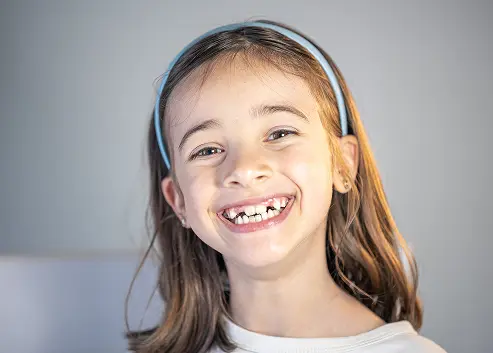
Crowded teeth are often a sign that the jaw did not develop enough room for the teeth, tongue, and airway. When the tongue does not rest properly on the roof of the mouth, the upper jaw may not receive the natural support it needs to grow wide and properly.

Chronically enlarged tonsils or adenoids may block airflow during sleep and contribute to snoring, mouth breathing, restless sleep, and disrupted rest.
When the airway is restricted, children may compensate with forward head posture, open-mouth breathing, or restless sleep positions. MyoWay Centers for Kids coordinates with appropriate providers, including ENT specialists, when tonsil, adenoid, or structural airway concerns may be involved.
MyoWay Centers for Kids does not replace orthodontics.
Myofunctional therapy may support orthodontic results by addressing the muscle and breathing patterns that can contribute to relapse. If tongue posture, swallowing patterns, mouth breathing, or oral muscle dysfunction remain untreated, teeth may shift after orthodontic treatment.
MyoWay Centers for Kids helps support long-term stability by improving oral posture, muscle function, swallowing patterns, and nasal breathing.
MyoWay Centers for Kids uses a personalized approach based on each child’s age, symptoms, development, and clinical needs.
Care may include:
The goal is to support better breathing, better sleep, healthier jaw growth, improved oral function, clearer speech, and long-term stability.
MyoWay Centers for Kids offers personalized programs with flexible monthly payment options.
Programs typically range from $550 to $2,800 depending on the child’s age, complexity, and recommended plan.
Payment options may be available starting at $99/month, with 0% interest and no credit check required.
Programs are also compatible with HSA and FSA accounts.
Take the Risk Quiz to see whether your child may be showing signs of jaw, airway, sleep, or myofunctional concerns.