
As parents, it is heartbreaking to watch your child struggle and not know why. Maybe your child has trouble focusing in school. Maybe homework takes twice as long as it should. Maybe mornings feel emotional, bedtime feels exhausting, and teachers are starting to mention restlessness, impulsive behavior, or difficulty paying attention.
For many families, the first conversation becomes attention deficit hyperactivity disorder. That can be an important conversation, and every child deserves the right support. However, there is another question that often gets missed.
How is your child breathing while they sleep?
At MyoWay Centers for Kids, we help families understand the connection between sleep, breathing, airway development, jaw growth, and daytime behavior. In some children, symptoms that look like attention or behavior concerns may be influenced by poor sleep quality related to mouth breathing, snoring, or underdeveloped airway function.
Why Sleep Matters More Than Many Parents Realize
A child who is not sleeping well does not always look sleepy.
Adults usually show exhaustion by slowing down. Children often do the opposite. A tired child may become more active, more emotional, more impulsive, and more difficult to calm. This is one reason sleep-related breathing concerns can be so easy to overlook.
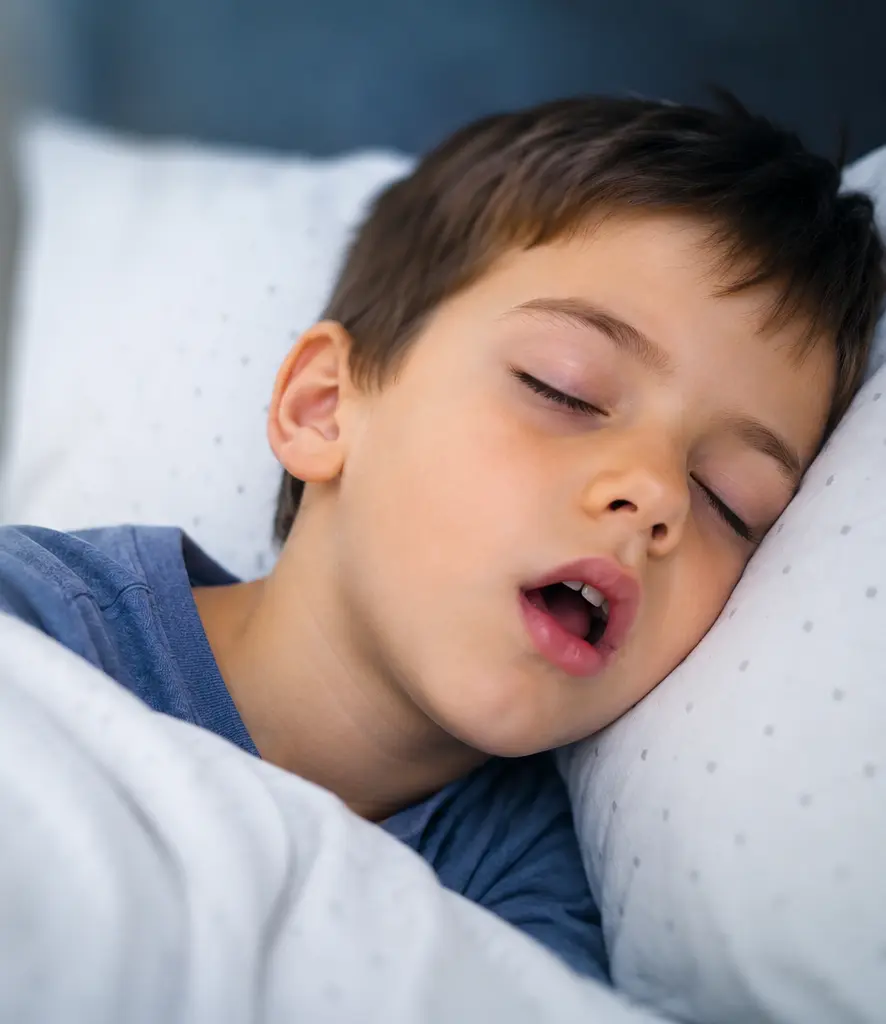
A child may be in bed for ten hours and still wake up tired. They may appear to sleep through the night, but never reach the deep, restorative sleep their brain and body need. Parents may notice snoring, mouth breathing, teeth grinding, restless movement, dark circles under the eyes, or a child who wakes up already exhausted.
When sleep quality is disrupted, the effects can show up everywhere. Focus, learning, memory, mood, behavior, and emotional regulation may all become harder than they should be.
When Breathing Problems Look Like Behavior Problems
Sleep-related breathing issues happen when a child’s breathing is not as calm, quiet, and efficient as it should be during sleep. For some children, this may look like snoring. For others, it may look like open-mouth sleeping, restless sleep, teeth grinding, or frequent waking.
The confusing part is what happens the next day.
A child who is not getting quality sleep may struggle to focus because the brain is tired. They may seem hyperactive because the body is trying to stay alert. They may become emotional because poor sleep makes regulation harder. They may have trouble following directions, completing schoolwork, or handling frustration.
This is why sleep-related breathing issues can sometimes mirror symptoms commonly associated with attention deficit hyperactivity disorder.
That does not mean every child with attention deficit hyperactivity disorder has a breathing issue. It also does not mean sleep is the only factor in attention or behavior concerns. It simply means sleep and breathing should be part of the bigger picture.
Before a child is viewed only through the lens of behavior, it is worth asking whether their body is getting the rest and oxygen it needs at night.
Why Mouth Breathing Is a Sign Worth Noticing
Mouth breathing is one of the most important signs parents can learn to recognize.
Children are designed to breathe primarily through the nose. Nasal breathing helps filter, warm, and humidify the air. It also supports healthier tongue posture, oral muscle function, and jaw development.
When a child regularly breathes through the mouth, especially during sleep, it may be a sign that nasal breathing is difficult or that the mouth, tongue, and facial muscles are not functioning as they should.
Tongue posture matters because the tongue helps guide the growth of the upper jaw. Ideally, the tongue should rest gently against the roof of the mouth. When the mouth stays open and the tongue rests low, the upper jaw may not receive the same natural support. Over time, this can contribute to narrow arches, crowded teeth, open-mouth posture, and airway concerns.
This is why crowded teeth are not always just a dental issue.
Crowding may be a sign that the jaws did not have enough room to develop properly. Since jaw development and airway development are closely connected, early signs like mouth breathing, snoring, and a narrow smile should not be ignored.
Why Waiting Is Not Always the Best Plan
Many parents are told to wait until all the adult teeth come in before addressing orthodontic concerns. In some cases, waiting may be appropriate. In others, it can mean missing an important window for growth and development.
Childhood is the time when the jaws are still growing, breathing patterns are still developing, and oral habits are still being formed. That makes early evaluation especially important when sleep, breathing, and behavior concerns are present.
Early airway-focused care is not about rushing into braces. It is about understanding why the concern is happening in the first place.
Why are the teeth crowded? Why is the mouth open during sleep? Why is the child snoring? Why does sleep seem restless? Why is focus so difficult during the day?
At MyoWay Centers for Kids, we look at the function beneath the symptoms. Teeth, sleep, breathing, jaw growth, and behavior are not separate conversations. They are often connected.
How Pediatric Myofunctional Therapy Supports Healthy Development
Pediatric myofunctional therapy focuses on the function of the mouth, tongue, lips, facial muscles, and breathing patterns.
At MyoWay Centers for Kids, our airway-focused approach is designed to support proper oral function, encourage nasal breathing, and promote healthy jaw development during important growth years.
A myofunctional evaluation helps us look at how your child breathes at rest, whether the lips can comfortably stay closed, where the tongue rests, how the jaw is developing, and whether oral habits may be affecting sleep quality or growth.
This type of care does not replace your child’s pediatrician, dentist, orthodontic provider, sleep specialist, or ear, nose, and throat specialist. Many children benefit from a collaborative approach. MyoWay helps families better understand oral function, breathing patterns, and airway development so concerns can be identified earlier.
A Better Way to Understand Your Child’s Behavior
Behavior is communication.
A child who cannot focus may not be lazy. A child who melts down after school may not be dramatic. A child who cannot sit still may not be trying to cause problems.
Sometimes, the body is tired. Sometimes, sleep is not restorative. Sometimes, a child is working harder than parents realize just to breathe well at night.
When breathing disrupts sleep, the impact can carry into the entire day. School can feel harder. Directions can feel harder. Emotional control can feel harder. Morning routines can feel harder.
This is why it is so important to look deeper when a child is struggling.
The question is not, “What is wrong with my child?”
The better question is, “What is my child’s body trying to tell us?”
Signs Your Child May Benefit From an Airway-Focused Consultation
Parents do not need to diagnose their child. That is the role of qualified professionals. What parents can do is notice patterns.
A consultation may be helpful if your child snores, breathes through the mouth, sleeps with an open mouth, grinds their teeth, tosses and turns, wakes up tired, has dark circles under the eyes, struggles with focus, has emotional outbursts, shows hyperactive behavior, or has crowded teeth.
One sign alone does not always mean there is a major concern. A pattern of signs is worth discussing.
The purpose of a consultation is to help you better understand what may be contributing to your child’s sleep, breathing, growth, and daily function.
What Makes MyoWay Centers for Kids Different?
MyoWay Centers for Kids takes an airway-first, growth-focused approach to pediatric myofunctional therapy.
Instead of looking only at teeth or behavior, we look at how oral function, breathing, sleep, and jaw development work together. This broader view helps families understand why early signs like mouth breathing, snoring, restless sleep, and crowded teeth deserve attention.
Our program uses structured therapy and medical-grade appliances to support children during key stages of development. Every child is different, and some children may need support from multiple providers. Some may need a sleep evaluation. Some may need orthodontic guidance. Some may benefit from therapy focused on tongue posture, nasal breathing, and oral muscle function.
The first step is awareness.
When parents understand the signs, they can ask better questions and take action earlier.
Frequently Asked Questions
Can sleep problems affect a child’s focus and behavior?
Yes. Poor sleep quality can contribute to focus challenges, emotional regulation issues, impulsive behavior, and daytime restlessness in some children. Sleep is not the only factor in attention and behavior, but it is an important part of the bigger picture.
Can mouth breathing affect my child’s sleep?
Yes. Mouth breathing may be connected to open-mouth posture, snoring, restless sleep, and airway concerns. Children are designed to breathe primarily through the nose, especially during sleep.
Does snoring in children matter?
Yes. Snoring in children should not be ignored, especially when it happens regularly. Even light snoring may be a sign that breathing during sleep is not as quiet and efficient as it should be.
Can poor sleep look like attention deficit hyperactivity disorder?
In some children, poor sleep may create symptoms that resemble attention deficit hyperactivity disorder, including poor focus, hyperactivity, impulsive behavior, and emotional outbursts. This does not mean every child with attention concerns has a sleep-related breathing issue, but it does mean sleep and breathing should be considered.
What does pediatric myofunctional therapy support?
Pediatric myofunctional therapy supports proper oral muscle function, tongue posture, lip seal, nasal breathing, and healthy jaw development. At MyoWay Centers for Kids, therapy is designed to help children build better functional patterns during important growth years.
When should my child be evaluated?
Parents should consider an evaluation if their child snores, mouth breathes, sleeps restlessly, wakes up tired, grinds their teeth, has crowded teeth, or struggles with focus and behavior. Early evaluation can help identify concerns before they become harder to address.
The Bottom Line for Parents
If your child is struggling with attention, behavior, sleep, or school performance, it may be time to look deeper.
Attention and behavior symptoms can have many contributing factors. Sleep and breathing are important pieces of the puzzle that are often overlooked.
Your child may not be choosing to struggle. Your child may be tired. Your child may be working harder than you realize to breathe, sleep, focus, and get through the day.
At MyoWay Centers for Kids, we help families connect the dots between mouth breathing, airway development, jaw growth, sleep quality, and daytime behavior.
Early awareness can change the direction of a child’s growth.
Book your free consultation in under 5 minutes.
https://mychart.myoryx.com/patient/#/auth/onlineschedule?realm=myoway&univers=com