
Some parents have not slept through the night in years. Their child wakes once, twice, or several times a night. Sometimes the child cries. Sometimes they crawl into a parent’s bed. Sometimes they seem restless, thirsty, anxious, uncomfortable, or unable to settle without help. Over time, the entire family begins to organize itself around disrupted sleep.
Many families are told this is normal. They may hear that some children are simply difficult sleepers, that they will grow out of it, or that the solution is a stricter bedtime routine. Sleep routines do matter, and consistency can be helpful. However, when a child wakes repeatedly night after night, it is also important to ask whether the body is truly resting well.
At MyoWay Centers for Kids, we often look at sleep through a different lens. Frequent night waking may be related to airway development, nasal breathing, oral posture, and how the muscles of the mouth, tongue, lips, and jaw function during rest. When these systems are not working together well, a child may struggle to achieve the deep, restorative sleep their body needs.
Why Frequent Night Waking Deserves Attention
A child waking throughout the night is not only a child sleep issue. It can quickly become a whole-family health issue.
When a parent wakes repeatedly to comfort, reposition, or settle a child, their own sleep becomes fragmented. That affects mood, energy, focus, work performance, and emotional resilience. In some families, one parent begins sleeping in the child’s room. In others, parents stop sleeping in the same bed because someone needs to stay near the child through the night.
This is not simply an inconvenience. Chronic sleep disruption can place stress on the entire household.
Parents often minimize this because they are focused on their child. They may say they are used to it, or that this is just part of parenting. Yet waking several times a night for months or years is not something families should have to accept without looking deeper.
If a child cannot sleep peacefully, the question should not only be, “How do we make bedtime easier?” A better question may be, “Why is this child having trouble staying asleep?”
When Sleep Looks Like a Behavior Problem
Frequent night waking is often treated as a behavioral issue. Parents may wonder if their child is being difficult, forming a bad habit, or resisting sleep. While behavior and routine can contribute to sleep challenges, they are not always the full explanation.
Some children wake because their bodies are working harder than they should during sleep. A child who breathes through the mouth, snores, grinds their teeth, sweats at night, tosses and turns, or sleeps in unusual positions may be compensating for an airway or oral function issue.
In these cases, the child may spend enough hours in bed but still miss the deeper stages of sleep needed for restoration. Parents may notice the effects the next day. The child may seem emotional, impulsive, tired, hyperactive, unfocused, or difficult to wake in the morning.
This is one reason sleep should be part of the conversation when a child is struggling with behavior, attention, or emotional regulation. Not every focus or behavior concern is caused by poor sleep, but poor sleep can make it much harder for a child to function well.
What Mouth Breathing May Reveal
Mouth breathing in children is common, but that does not mean it should be ignored.
Children are designed to breathe primarily through the nose. Nasal breathing helps filter, warm, and humidify the air. It also supports healthy tongue posture, jaw development, and airway function.
When a child frequently breathes through the mouth, especially during sleep, it may be a sign that nasal breathing is difficult or that the mouth and tongue are not resting in an ideal position. Over time, these patterns may influence how the jaw develops and how well the airway is supported.
Parents may notice that their child sleeps with the mouth open, wakes with dry lips, drools on the pillow, snores, grinds their teeth, or seems restless at night. They may also notice daytime signs such as dark circles under the eyes, morning irritability, difficulty focusing, or increased emotional sensitivity.
These signs do not all mean the same thing for every child. However, when several appear together, they deserve a closer look.
Why Airway Development Matters in Children
Airway development refers to how the structures of the face, jaws, tongue, mouth, and throat support healthy breathing. In children, these structures are still growing, which makes early evaluation especially important.
The way a child breathes, chews, swallows, sleeps, and rests the tongue can influence development over time. When the tongue rests properly against the roof of the mouth, it helps support healthy upper jaw development. When the mouth stays open and the tongue rests low, the jaw may not receive the same natural support.
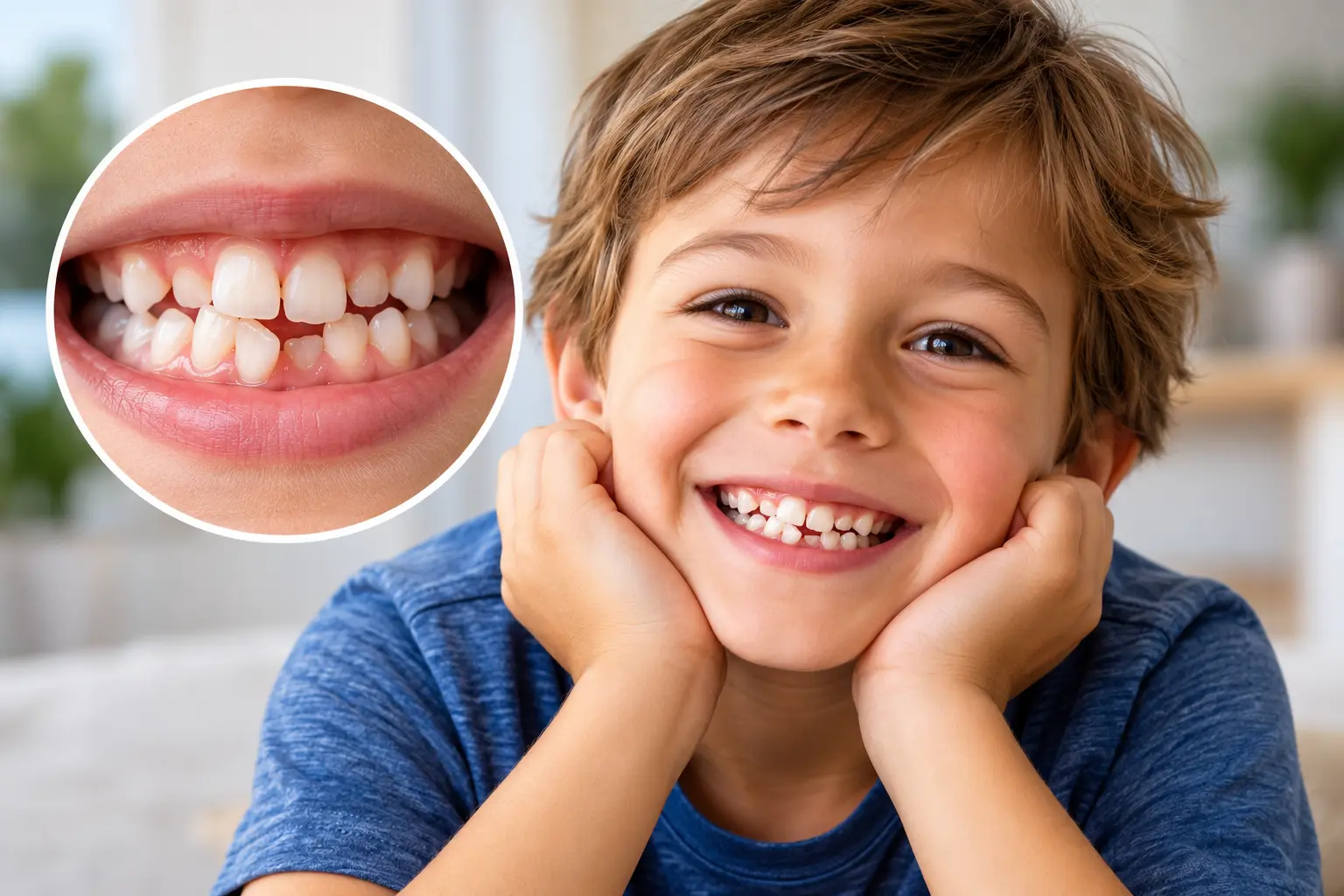
This can be associated with patterns such as narrow arches, crowded teeth, open mouth posture, and poor sleep quality.
Many parents think of orthodontics only in terms of straight teeth. At MyoWay, we look at what may be underneath those visible signs. Crowded teeth may indicate that the jaws did not develop with enough space. A narrow palate may affect more than the smile. It may also be part of a broader airway and function pattern.
Early support does not replace appropriate medical or dental care. It helps families understand how breathing, oral function, and development may be connected while the child is still growing.
How Pediatric Myofunctional Therapy May Support Better Function
Pediatric myofunctional therapy focuses on the muscles of the mouth, tongue, lips, cheeks, and jaw. The goal is to support healthier function during breathing, resting, swallowing, and sleeping.
At MyoWay Centers for Kids, care is designed to encourage nasal breathing, promote proper oral posture, support jaw development, and help children build healthier functional patterns over time. Depending on the child’s needs, this may include guided exercises, habit correction, and medical-grade appliances as part of a structured program.
This is not about forcing quick change. It is about helping the body function better during an important stage of growth.
For many families, this is the missing piece. They have tried bedtime routines, reward systems, schedule changes, and waiting. What they may not have explored is whether their child’s breathing and oral function are making sleep harder than it should be.
Signs Parents Should Discuss With a Professional
Parents do not need to diagnose the problem at home. They only need to notice patterns that may deserve evaluation.
Common signs worth discussing include:
- Frequent night waking
- Mouth breathing during the day or night
- Sleeping with the mouth open
- Snoring or noisy breathing
- Restless sleep
- Tossing and turning
- Teeth grinding
- Drooling on the pillow
- Dry mouth or dry lips in the morning
- Difficulty waking
- Daytime tiredness or hyperactivity
- Trouble focusing
- Crowded teeth or a narrow palate
One sign alone may not tell the whole story. Several signs together may suggest that airway development, nasal breathing, and oral function should be evaluated.
Why Early Evaluation Matters
Childhood is a critical window for growth and development. The jaws, airway, oral structures, and facial muscles are still changing. That means early signs should not be overlooked.
Parents do not need to wait until all adult teeth have erupted. They do not need to wait until braces are the only option being discussed. They do not need to wait until sleep issues become severe.
An early evaluation helps families understand what may be contributing to the pattern. It also helps identify whether supportive care may be appropriate while growth is still happening.
The goal is not to alarm parents. The goal is to give them better information. When families understand why a child may be struggling to sleep, they can make more confident decisions about what to do next.
Frequently Asked Questions
Why does my child keep waking up at night?
A child may wake frequently for many reasons, including sleep routines, anxiety, discomfort, breathing challenges, mouth breathing, snoring, restless sleep, or oral function patterns. If frequent night waking occurs with mouth breathing, snoring, teeth grinding, restless sleep, or daytime fatigue, it may be helpful to evaluate airway development and oral function.
Can mouth breathing affect my child’s sleep?
Mouth breathing may affect sleep quality because it can be connected to poor oral posture, nasal breathing difficulty, and airway stress during rest. Children who breathe through the mouth at night may also show signs such as dry mouth, snoring, restless sleep, frequent waking, or difficulty waking in the morning.
Is snoring normal in children?
Regular snoring should not be ignored. While occasional noisy breathing may happen with congestion, frequent snoring may suggest that the airway is not as open or supported as it should be during sleep. If your child snores often, it is worth having their breathing and airway development evaluated.
What is pediatric myofunctional therapy?
Pediatric myofunctional therapy focuses on improving the function of the tongue, lips, cheeks, jaw, and facial muscles. It may support nasal breathing, healthy oral posture, jaw development, and better functional patterns during growth.
When should I schedule a consultation?
A consultation may be helpful if your child frequently wakes at night, breathes through the mouth, snores, grinds their teeth, sleeps restlessly, has crowded teeth, or struggles with daytime focus, mood, or energy. Early evaluation can help you better understand what may be contributing to the pattern.
The Whole Family Deserves Rest
A child waking throughout the night is not something families should simply endure for years.
Poor sleep can affect the child’s growth, mood, focus, and daytime function. It can also affect the parents’ health, work, relationships, and emotional well-being. When sleep is disrupted night after night, the entire household feels it.
If your child wakes often, snores, breathes through the mouth, grinds their teeth, or seems restless during sleep, it may be time to look deeper. Airway development, nasal breathing, and oral function may be important parts of the conversation.
MyoWay Centers for Kids helps families explore early support for healthier breathing patterns, oral function, jaw development, and sleep quality.
Not sure whether your child’s sleep patterns may be a concern? Start by taking the MyoWay Sleep Quiz. It can help you recognize common signs of disrupted sleep, mouth breathing, and airway-related concerns in children.
After taking the quiz, you can schedule a free evaluation to better understand what may be contributing to your child’s sleep patterns.
Book your free evaluation in under 5 minutes.
https://mychart.myoryx.com/patient/#/auth/onlineschedule?realm=myoway&univers=com