
Mouth breathing may seem like a small issue. In reality, it can signal deeper problems that affect your child’s growth, sleep, appearance, and long-term health. If your child is consistently breathing through their mouth during the day or while sleeping, it is time to look more closely at what that might mean.
What is Mouth Breathing and Why Does It Happen?
Mouth breathing occurs when a child habitually breathes through their mouth instead of their nose. While this can sometimes be due to short-term issues like congestion or allergies, it often becomes a long-term pattern with deeper consequences.
Common causes of mouth breathing in kids include:
-
Enlarged adenoids or tonsils
-
Chronic nasal congestion or allergies
-
Deviated septum or narrow nasal passages
-
Tongue tie or low tongue posture
-
Prolonged thumb sucking, pacifier use, or bottle feeding
-
Habitual open-mouth posture developed in early years
Even if the original issue resolves, the habit may remain. Over time, this can affect how the muscles and bones in the face grow and function.
What Happens When a Child Mouth Breathes Long-Term?
When a child breathes through the mouth instead of the nose, the position of their tongue and facial muscles change. Normally, the tongue rests on the roof of the mouth, helping shape a wide palate and guiding proper jaw development. In mouth breathing, the tongue drops to the floor of the mouth. The facial muscles compensate, and over time, the bones follow.
This can lead to:
-
A narrow upper jaw or high-arched palate
-
Recessed lower jaw or chin
-
Long, narrow face (sometimes called “adenoid face”)
-
Flattened midface and underdeveloped cheekbones
-
Mouth open posture
-
Smaller airway space, making breathing more difficult
These structural changes can affect how your child sleeps, eats, speaks, and even behaves.
How Does Mouth Breathing Affect Sleep and Behavior?
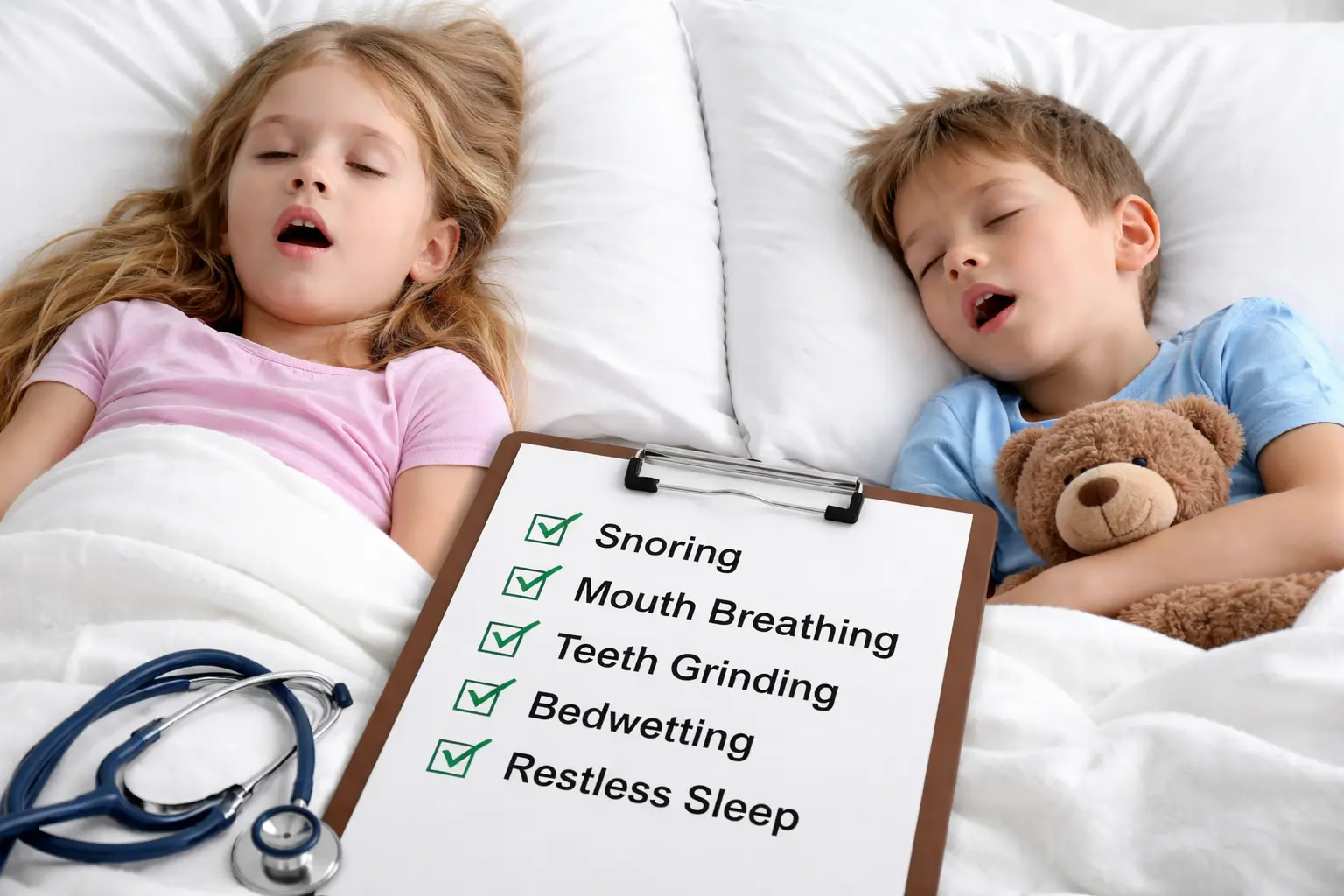
Poor facial and airway development can impact breathing during sleep. When the airway is restricted, your child may not get the deep, restful sleep they need. This can lead to:
-
Snoring
-
Sleep-disordered breathing
-
Teeth grinding
-
Nighttime restlessness or frequent waking
-
Daytime fatigue
-
Difficulty focusing in school
-
Hyperactive or inattentive behavior
In fact, many children who are misdiagnosed with ADHD or behavioral issues may actually be suffering from poor-quality sleep due to an underlying airway problem.
What is “Adenoid Face” and What Are the Signs?
“Adenoid face” is a term used to describe a specific facial structure often seen in children who have been mouth breathing for a long time. It is typically marked by:
-
Long, narrow face
-
Open mouth at rest
-
Flattened cheeks
-
Receding chin
-
Dark under-eye circles
-
High palate and dental crowding
These signs are more than cosmetic. They reflect how breathing and muscle function are influencing facial growth and overall health.
Can Myofunctional Therapy Help Mouth Breathing in Kids?
Yes. Myofunctional therapy is a gentle, non-invasive treatment that helps retrain the muscles of the face, tongue, and mouth to function correctly. At MyoWay Centers for Kids, we combine myofunctional therapy with medical-grade appliances that guide jaw and airway development in the most natural way possible.
Our program focuses on:
-
Encouraging nasal breathing
-
Correcting tongue posture
-
Building balanced muscle function
-
Expanding the palate naturally
-
Supporting full airway development
-
Addressing the root cause early
This approach not only helps improve your child’s appearance and breathing, but it also supports better sleep, emotional regulation, and cognitive function.
How Early Should You Intervene?
Early childhood is the best time to intervene because the bones of the face and jaw are still growing. Between the ages of 4 and 10, the palate and airway are especially responsive to guided development.
Waiting until the teenage years may require braces, extractions, or even surgical solutions. Addressing the root cause earlier often prevents more complex treatments down the line.
Early habits create lifelong patterns. Starting therapy when your child is young allows you to take advantage of their natural growth process in a positive way.
What Does a MyoWay Evaluation Include?
At MyoWay Centers for Kids, we provide a full functional and structural evaluation to understand how your child’s breathing, sleep, and facial growth are connected.
The initial consultation includes:
-
Breathing pattern and posture screening
-
Sleep quality and symptom review
-
Tongue and oral muscle function exam
-
Facial and jaw development assessment
-
Personalized therapy and appliance plan if needed
This holistic approach allows us to create a therapy plan tailored to your child’s specific growth needs and lifestyle.
What Results Can Parents Expect?
Parents consistently report improvements in:
-
Nasal breathing during day and night
-
Sleep quality and reduced snoring
-
Energy and behavior during the day
-
Facial development and symmetry
-
Reduction in open mouth posture
-
Confidence and overall wellness
One of the most common reactions we hear from parents is, “I wish I had known about this sooner.”
How to Know If Your Child Needs an Airway Evaluation
Here are signs your child may benefit from a MyoWay evaluation:
-
Chronic mouth breathing
-
Snoring or grinding teeth at night
-
Open-mouth posture while awake or asleep
-
Crowded or crooked teeth appearing early
-
Frequent ear, nose, or throat infections
-
Speech delays or trouble with certain sounds
-
Behavioral struggles without a clear cause
If any of these sound familiar, it may be time to explore your child’s airway and muscle function more closely.
Early Growth Shapes Lifelong Health
Mouth breathing in kids is more than just a temporary habit. It is a developmental issue that can impact how your child looks, feels, sleeps, and grows. Thankfully, it is also something that can be addressed with the right support and guidance.
At MyoWay Centers for Kids, we help children breathe better, sleep better, and grow stronger by addressing root causes with early intervention and expert care.
Book your free consultation in under 5 minutes.
https://mychart.myoryx.com/patient/#/auth/onlineschedule?realm=myoway&univers=com