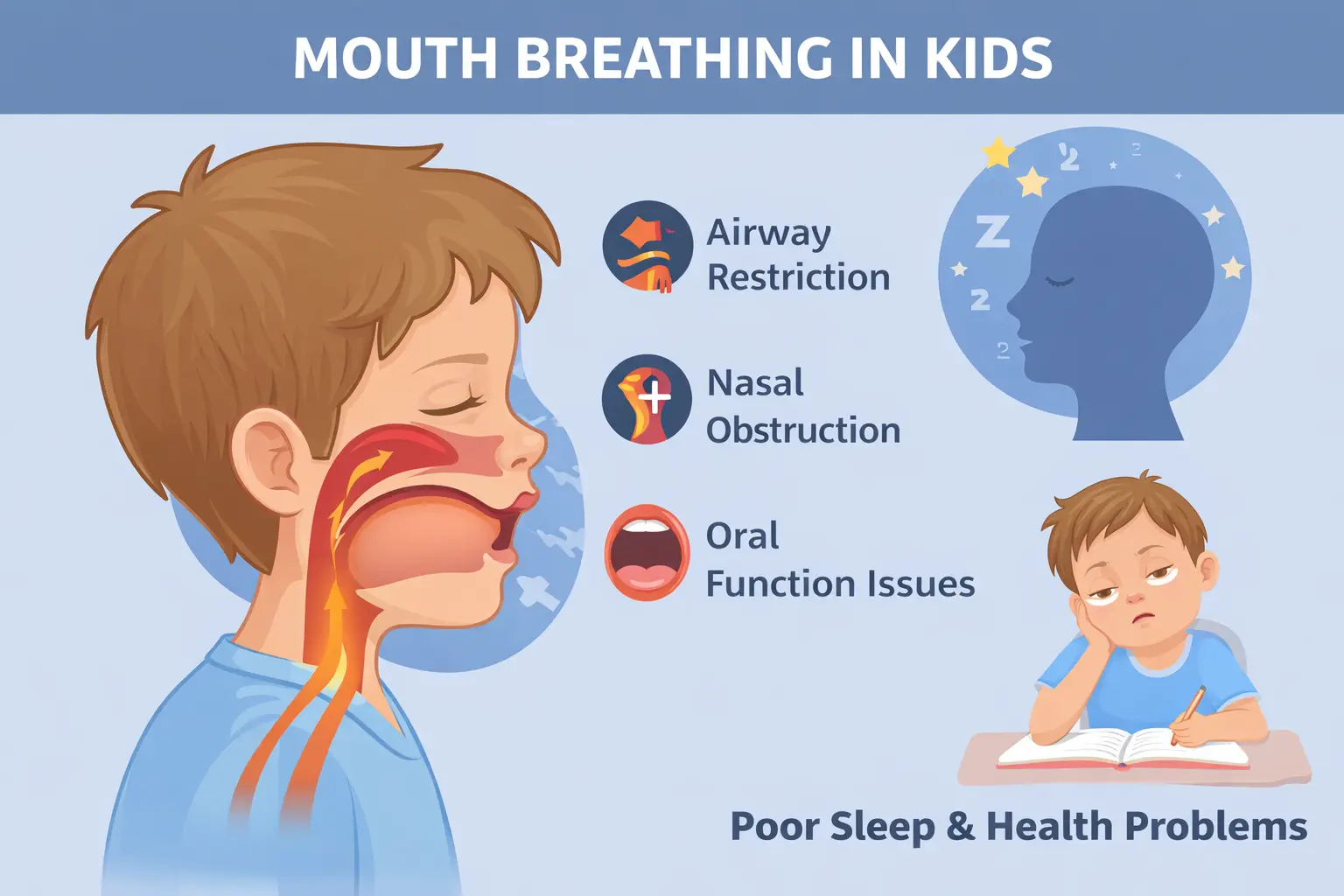
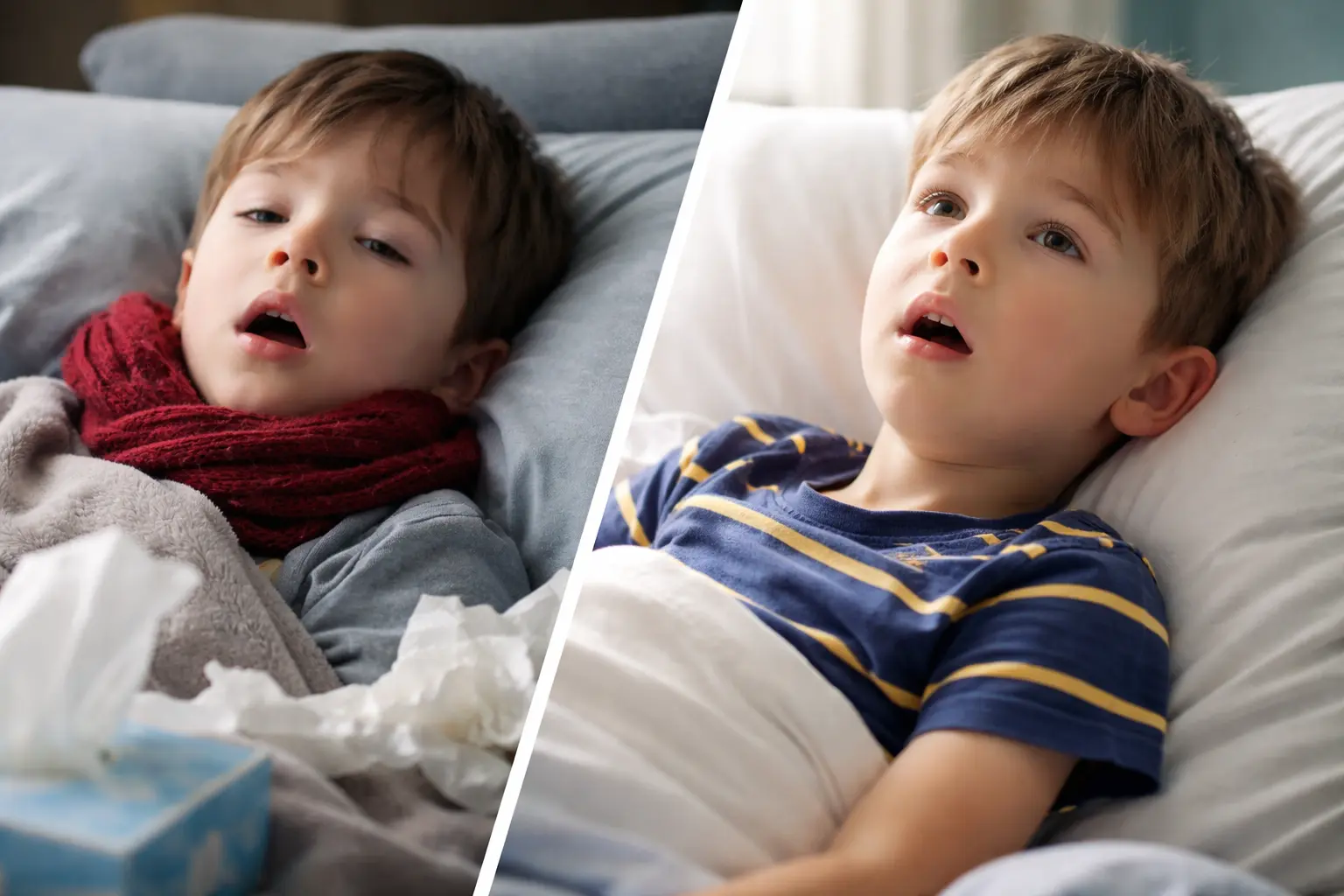
If your child began mouth breathing during a cold and continues to do so after recovering, it may no longer be congestion. Persistent mouth breathing can change tongue posture, jaw growth, airway development, sleep quality, and focus. Early evaluation makes correction easier and helps support healthy development.
Many children start mouth breathing during a cold or sinus infection. When the nose is blocked, breathing through the mouth is the body’s natural backup system. In most cases, this resolves once the illness passes. For some children, it does not.
Weeks or even months later, the cold is gone but the mouth breathing remains. Parents often assume it is a harmless habit or something their child will outgrow. In reality, persistent mouth breathing can quietly interfere with how a child grows, sleeps, and functions. At MyoWay Centers for Kids, we see this pattern often. A temporary illness triggers a breathing shift, and the body adapts before parents realize anything has changed.
Why Mouth Breathing Can Become Permanent
Children’s bodies adapt quickly. When nasal breathing becomes difficult, the brain chooses the easiest way to get oxygen. If mouth breathing works, the body keeps using it. When this pattern lasts more than a few weeks, the muscles, tongue, and jaw begin adjusting to support mouth breathing instead of nasal breathing. Over time, this adaptation becomes automatic. This is especially important during childhood because growth is still happening. Breathing patterns directly influence facial development, posture, and airway growth.
What Happens in the Body When a Child Mouth Breathes
Persistent mouth breathing affects more than airflow. It changes how the entire oral and facial system functions.
Common physical changes include:
-The tongue resting low in the mouth instead of against the roof
-The upper jaw developing more narrowly
-The lower jaw growing downward and backward
-The airway becoming smaller during key growth periods
-Postural changes in the head and neck
These structural changes can contribute to crowded teeth, long facial growth, restricted airways, and difficulty maintaining nasal breathing.
Signs Your Child May Still Be Mouth Breathing
Parents often miss the signs because mouth breathing can happen quietly, especially during sleep.
Common indicators include:
-Sleeping with the mouth open
-Snoring or noisy breathing at night
-Dry lips or mouth in the morning
-Drooling on the pillow
-Restless sleep or frequent waking
-Dark circles under the eyes
-Daytime fatigue or difficulty focusing
-Crowded teeth at an early age
If these signs persist after a cold has resolved, it may indicate an airway and breathing pattern issue rather than leftover congestion.
How Mouth Breathing Affects Sleep and Behavior
Nasal breathing plays a critical role in deep, restorative sleep. When a child breathes through the mouth at night, oxygen intake can become less efficient.
Poor sleep quality can lead to:
-Difficulty concentrating during the day
-Increased irritability or emotional sensitivity
-Hyperactivity or impulsive behavior
-Morning fatigue despite adequate time in bed
In many cases, children are labeled with attention or behavioral concerns without anyone assessing how they breathe during sleep.
Why Early Intervention Is So Important
The earlier mouth breathing is addressed, the easier it is to correct. During childhood, bones are still developing and respond well to proper guidance. With early intervention, it is often possible to:
-Restore nasal breathing as the default
-Encourage healthy jaw and airway development
-Improve sleep quality
-Support focus, behavior, and learning
-Reduce the need for more invasive treatments later
Waiting allows compensations to become more deeply ingrained, making correction more complex over time.
Common Myths About Mouth Breathing in Kids
Myth One: They will grow out of it
Most children do not outgrow mouth breathing without help. The pattern often worsens as growth continues.
Myth Two: It is just a habit
Mouth breathing is usually driven by structure and function, not behavior alone.
Myth Three: Braces will fix it later
Braces can straighten teeth but do not correct breathing patterns or airway development.
Myth Four: If my child is active, it cannot be a problem
Many children compensate well until adolescence, when growth spurts and sleep demands increase.
How MyoWay Approaches Mouth Breathing Differently
At MyoWay Centers for Kids, we focus on function first. Our approach is designed to support proper breathing, jaw growth, and airway development during the years when change is most effective.
Our programs may include:
-Medical grade myofunctional appliances
-Guided oral muscle therapy
-Breathing pattern retraining
-Tongue posture correction
-Ongoing progress monitoring
The goal is not just to close the mouth. The goal is to help the body function the way it was designed to.
Real Outcomes from Addressing Mouth Breathing Early
Families often report improvements such as:
-Quieter sleep
-Better morning energy
-Improved focus at school
-Reduced snoring
-More balanced facial growth
These outcomes are the result of addressing the root cause rather than managing symptoms.
When Should Parents Seek an Evaluation
Parents should consider an evaluation if their child:
-Started mouth breathing during a cold and never stopped
-Sleeps with their mouth open regularly
-Snores or breathes loudly at night
-Appears tired despite sufficient sleep
-Has early crowding of teeth
Early assessment provides clarity and allows families to make informed decisions.
Frequently Asked Questions
Can a cold cause long term mouth breathing in kids?
Yes. A cold can trigger mouth breathing, and if it continues long enough, the body may adopt it as the default breathing pattern.
Is mouth breathing harmful for children?
Persistent mouth breathing can affect jaw growth, airway development, sleep quality, and daytime function.
How long is too long for mouth breathing after a cold?
If mouth breathing continues for several weeks after recovery, it should be evaluated.
Can mouth breathing be corrected without surgery?
Yes. Early myofunctional therapy and airway focused interventions can support natural correction.
What kind of specialist treats mouth breathing in children?
Providers trained in pediatric myofunctional therapy and airway development are often best equipped to evaluate and address the root cause.
Key Takeaways
-Mouth breathing after a cold is common, but it should not persist
-Even short periods of mouth breathing can affect growth
-Early intervention is more effective and less invasive
-Breathing patterns influence sleep, behavior, and development
If your child is still mouth breathing after a cold, do not brush it off. It may be a sign that their airway and jaw development need support. Early action can change the course of your child’s growth and well being.
Book your free consultation in under five minutes.
https://mychart.myoryx.com/patient/#/auth/onlineschedule?realm=myoway&univers=com