
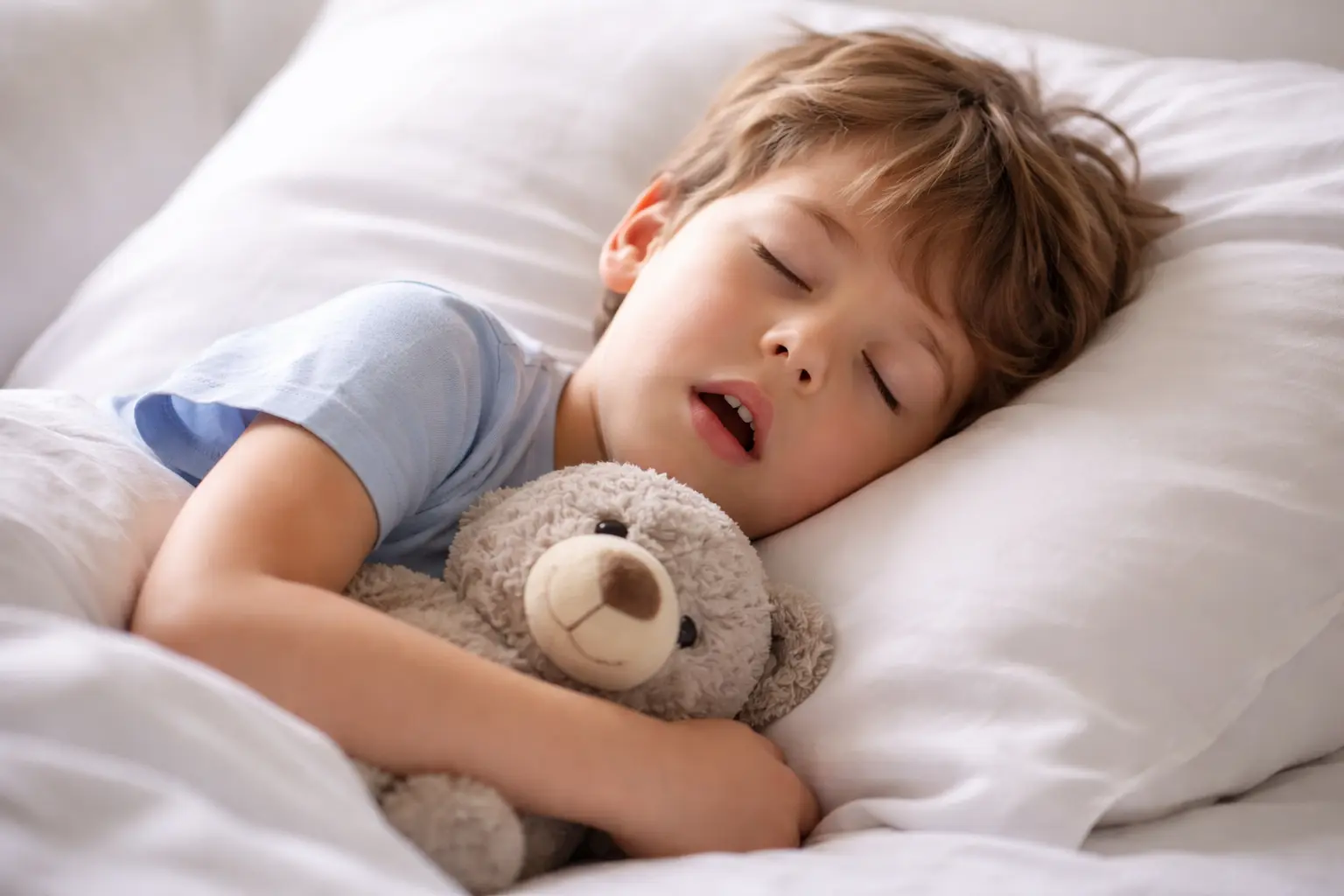
Sleep is one of the most powerful indicators of a child’s overall health and development. As parents, we are often told to ensure our children get enough hours of sleep, but what is often missed is how they are breathing during that time.
The way your child breathes while sleeping can reveal much about their brain, jaw, and airway development. Many children are struggling silently with sleep-disordered breathing, and it affects far more than their rest. It influences everything from focus to facial growth.
At MyoWay Centers for Kids, we take a function-first approach. We specialize in pediatric myofunctional therapy and airway development, and we begin by asking one critical question: how is your child sleeping?
The Link Between Sleep and Growth
When children experience poor quality sleep, it can hinder their physical, emotional, and cognitive development. Sleep is when the body heals, the brain processes information, and the muscles and bones grow.
Sleep-Related Breathing Disorders (SRBDs) are a group of conditions in which breathing is abnormal during sleep, leading to disrupted sleep and reduced oxygen levels. They range from mild to potentially serious.
If breathing is disrupted during this time, the effects ripple into a child’s daily life. Interrupted sleep caused by mouth breathing, snoring, or sleep apnea can lead to:
-
Trouble focusing or staying on task
-
Irritability or emotional outbursts
-
Slower learning and memory retention
-
Weakened immune system
-
Delayed growth milestones
-
Poor facial and jaw development
Restless or disrupted sleep often goes unnoticed until academic or behavioral issues appear. By that time, the airway concern may have already affected development.
Signs Your Child May Have a Sleep-Related Breathing Disorder
As airway-focused clinicians, we ask parents a series of questions to uncover potential red flags. These questions often reveal concerns that might otherwise be dismissed as normal childhood behavior.
Here are the most common signs we look for:
-
Snoring three or more nights per week
-
Open-mouth breathing while asleep
-
Restlessness or frequent night waking
-
Sleepwalking or vivid nightmares
-
Bedwetting beyond toddler years
-
Heavy breathing or gasping during sleep
-
Difficulty waking up in the morning
Even one “yes” to these questions can be enough to warrant an airway evaluation. These are not harmless phases. These are signs your child may not be breathing properly while they sleep.
Why Snoring in Children Is Not Normal
Many parents assume snoring is normal or even cute in young children. However, snoring is a clinical warning sign that something may be restricting the airway.
Snoring in children is often caused by:
-
Enlarged tonsils or adenoids
-
Poor tongue posture
-
Underdeveloped upper or lower jaw
-
Nasal congestion or obstruction
Snoring may also indicate obstructive sleep apnea, which causes pauses in breathing that disrupt the brain’s ability to reach deep, restorative sleep. If your child snores more than three nights per week, it is not something to overlook. It is a sign the airway may not be functioning correctly, which can impact every aspect of their growth.
Understanding the Impact of Mouth Breathing
Mouth breathing is another red flag. While some children mouth breathe due to temporary nasal congestion, chronic mouth breathing suggests an underlying structural or functional issue.
When a child breathes through the mouth instead of the nose, it can cause:
-
Lower oxygen intake
-
Altered tongue posture
-
Weak oral muscles
-
Improper jaw alignment
-
Narrow dental arches
-
Changes in facial structure
Mouth breathing not only disrupts sleep, but it also leads to long-term effects on dental and facial development. It often results in crowded teeth, narrow palates, and even behavioral issues.
Behavior and Sleep Are Closely Connected
When a child is not breathing well during sleep, the brain remains on high alert. This prevents deep sleep and reduces oxygen flow, which can appear as hyperactivity, emotional instability, or attention problems during the day. Many children who are diagnosed with attention deficit or behavioral disorders may actually be experiencing chronic sleep disruption.
Common behavioral signs linked to sleep-disordered breathing include:
-
Difficulty concentrating in school
-
Frequent meltdowns or mood swings
-
Delayed speech or learning challenges
-
Hyperactivity or impulsivity
-
Anxiety or irritability
-
Clumsiness or poor coordination
Before assuming a behavioral diagnosis, it is important to ask how the child is sleeping and breathing at night.
What Is Pediatric Myofunctional Therapy?
Pediatric myofunctional therapy is a structured, non-invasive program that supports proper development of the muscles and structures of the face, mouth, and airway.
This therapy includes:
-
Muscle retraining exercises for the tongue, lips, and cheeks
-
Breathing pattern correction
-
Posture and habit correction
-
Use of medical-grade oral appliances to guide jaw growth
The goal of myofunctional therapy is to support nasal breathing, healthy jaw development, and stable facial growth while improving sleep and cognitive performance. It is most effective when started early, during the critical years of growth and development.
Why Early Intervention Matters
The bones of the face and jaw are most responsive to change during childhood. When airway issues are caught early, we can often guide growth and development in a natural, non-invasive way.
Delaying intervention can lead to more severe issues later, such as:
-
Advanced orthodontic needs
-
Obstructive sleep apnea in adolescence or adulthood
-
Ongoing behavioral struggles
-
Speech and feeding difficulties
-
Reduced academic performance
The earlier we intervene, the more options we have to improve long-term outcomes. Early screening allows us to treat the root cause rather than waiting to manage symptoms.
What to Do If You Are Concerned About Your Child’s Sleep
If your child exhibits any of the signs discussed above, it is important not to wait. Even if your pediatrician or dentist has not raised concerns, trust your observations as a parent. You can schedule a consultation with our team at MyoWay Centers for Kids. Our approach is gentle, informative, and centered around empowering families to make the best decisions for their child’s health. We work with children as young as three years old and collaborate with healthcare professionals to provide coordinated care when needed.
A child’s sleep is not just about rest. It is a window into their airway, jaw development, and overall health. When sleep is disturbed by mouth breathing, snoring, or night waking, it often means the body is not receiving the oxygen and rest it needs to grow and thrive. At MyoWay, we specialize in identifying and treating the root causes of sleep-disordered breathing through pediatric myofunctional therapy and airway development. Our goal is to help children breathe better, sleep deeper, and live healthier lives.
Do not wait for things to get worse. If you are concerned, the best time to take action is now.
Book your free consultation in under 5 minutes.
https://mychart.myoryx.com/patient/#/auth/onlineschedule?realm=myoway&univers=com
Frequently Asked Questions About Children’s Sleep and Airway Health
Is snoring normal in children?
No. Snoring is not considered normal in children. Occasional snoring during illness may happen, but habitual snoring three or more nights per week can be a sign of a sleep-related breathing disorder. Snoring often indicates that airflow is restricted during sleep, which can affect oxygen levels and disrupt healthy brain and body development.
What causes mouth breathing in children?
Mouth breathing in children is often caused by airway obstruction, poor jaw development, enlarged tonsils or adenoids, chronic nasal congestion, or improper tongue posture. When nasal breathing is difficult, the body compensates by breathing through the mouth, especially during sleep. Over time, this can negatively impact facial growth, dental alignment, and sleep quality.
Can mouth breathing affect my child’s behavior?
Yes. Chronic mouth breathing and poor sleep quality can contribute to behavioral concerns such as difficulty focusing, hyperactivity, irritability, emotional outbursts, and learning challenges. When the brain does not receive adequate oxygen and restorative sleep, behavior and attention can be significantly affected.
What is a sleep-related breathing disorder in children?
A sleep-related breathing disorder refers to conditions where a child’s breathing is disrupted during sleep. This includes habitual snoring, obstructive sleep apnea, and upper airway resistance. These conditions can cause frequent nighttime awakenings, reduced oxygen intake, and poor sleep quality, even if the child appears to sleep through the night.
How do I know if my child has sleep apnea?
Common signs of pediatric sleep apnea include loud or frequent snoring, pauses in breathing during sleep, gasping or choking sounds, restless sleep, mouth breathing, bedwetting, night sweats, and difficulty waking in the morning. Daytime symptoms may include fatigue, attention problems, or behavioral challenges. A professional airway evaluation is recommended if these signs are present.
Can bedwetting be related to sleep or breathing problems?
Yes. Bedwetting beyond the toddler years can be linked to sleep-disordered breathing. When breathing is disrupted during sleep, the body experiences stress responses that can interfere with bladder control. Bedwetting is often overlooked as a developmental phase, but it can be an important sign of an underlying sleep issue.
What is pediatric myofunctional therapy?
Pediatric myofunctional therapy is a non-invasive therapy that focuses on improving the function of the muscles of the face, tongue, lips, and jaw. It supports proper breathing, swallowing, and jaw development. Myofunctional therapy often includes exercises and medical-grade appliances designed to encourage nasal breathing and healthy growth patterns.
At what age should a child be evaluated for airway issues?
Children can be evaluated for airway and breathing concerns as early as three years old. Early childhood is an ideal time to assess jaw development, breathing patterns, and sleep quality because the face and airway are still growing. Early intervention often leads to better and more stable long-term outcomes.
Can poor sleep affect my child’s learning and school performance?
Yes. Poor sleep quality caused by breathing problems can affect memory, attention, processing speed, and emotional regulation. Children who do not reach deep, restorative sleep may struggle academically even if they appear intelligent and capable. Addressing sleep and airway issues can significantly improve school performance.
Should I wait for my pediatrician to refer my child for an airway evaluation?
You do not need to wait for a referral if you are concerned. Parents are often the first to notice changes in sleep, breathing, or behavior. If your child snores regularly, mouth breathes, or wakes up tired, it is appropriate to seek an airway-focused evaluation even if concerns have not yet been raised by another provider.
Can early intervention prevent braces or more invasive treatments later?
In many cases, yes. Early airway and jaw development therapy can guide growth in a way that reduces the severity of future orthodontic needs. By addressing the root causes of crowded teeth and airway restriction early, children may avoid more invasive treatments later in adolescence or adulthood.
What should I do if I suspect my child has a sleep or breathing issue?
If you suspect your child is not breathing well during sleep, the next step is an evaluation focused on airway and functional development. Early screening allows families to understand what is happening and explore supportive options before problems escalate.