
Many families are told their child may have attention deficit hyperactivity disorder after noticing struggles with focus, behavior, school performance, or emotional regulation. These concerns are real, and parents deserve thoughtful answers. At the same time, there is one important question that is often missed early in the conversation.
How is that child breathing and sleeping?
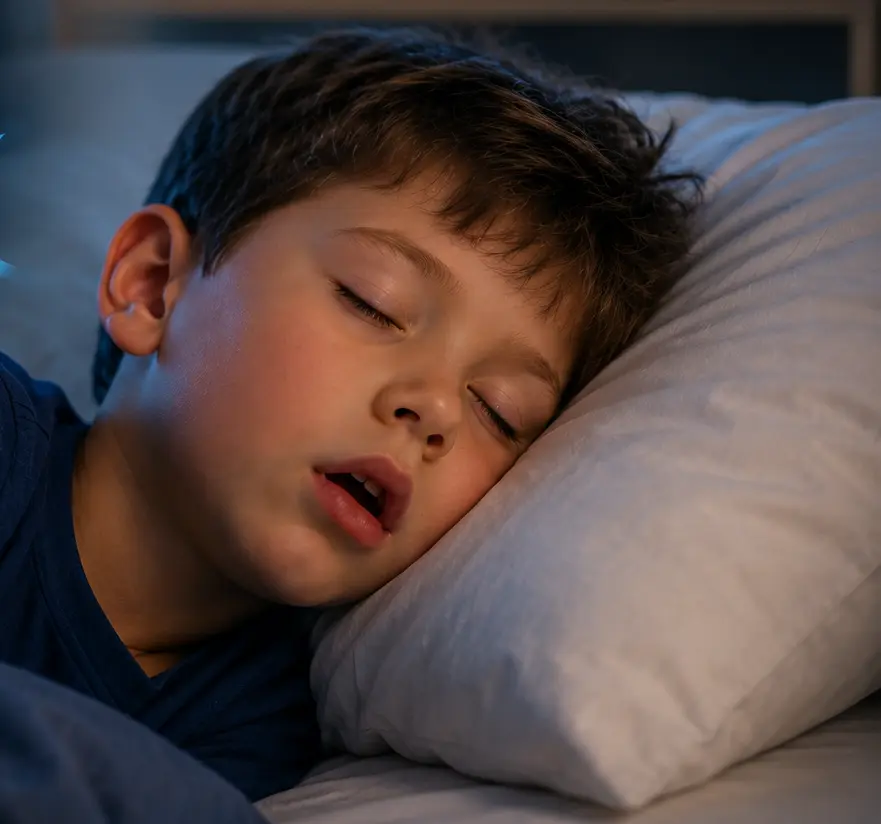
For some children, what looks like an attention or behavior issue may also be connected to poor sleep quality, mouth breathing, or resistance in the airway. When a child is not breathing well during sleep, the brain and body may not get the deep rest needed for healthy development. Over time, this can affect mood, attention, learning, resilience, and daytime behavior in ways that can easily be misunderstood.
This does not mean every child with focus or behavior challenges has a sleep related breathing concern. It does mean breathing, sleep, and airway development deserve a closer look, especially when symptoms feel persistent, confusing, or difficult to explain.
Myoway Centers for Kids helps families explore the connection between breathing, sleep, jaw development, and oral function so they can better understand what may be contributing to their child’s daily struggles.
If your child has trouble focusing, seems unusually emotional, snores, mouth breathes, sleeps restlessly, or wakes up tired, it may be worth looking beyond behavior alone. Poor sleep and airway resistance can affect how a child feels, learns, and functions during the day. Early evaluation can help uncover patterns that might otherwise be missed.
Why Sleep Matters So Much in Childhood
Sleep is not simply a break from the day. It is a critical time for growth, recovery, and brain development.
During healthy sleep, a child’s body works to support:
- Memory and learning
- Emotional regulation
- Growth and hormone balance
- Nervous system recovery
- Immune system function
- Healthy cognitive development
When sleep is interrupted by mouth breathing, snoring, airway resistance, or poor oxygen flow, the body may remain in a more stressed and less restorative state. A child may spend the night sleeping, yet still wake up unrested. That lack of quality sleep often shows up during the day in ways parents and teachers notice quickly.
These daytime signs may include:
- Poor focus
- Impulsive behavior
- Irritability
- Hyperactivity
- Low frustration tolerance
- Emotional ups and downs
- Difficulty with schoolwork
- Trouble following directions
- Morning fatigue
- Sensory sensitivity
To adults, these symptoms can look like a behavior problem or attention disorder. In some cases, the deeper issue may be that the child is simply not getting the restorative sleep needed for healthy brain and body function.
When Poor Sleep Looks Like a Behavior Problem
One of the most challenging parts of pediatric sleep related breathing concerns is how closely the symptoms can overlap with common attention and behavior concerns.
A child who is tired does not always look sleepy. In fact, children often show exhaustion in the opposite way adults do. Instead of appearing sluggish, they may become more active, more reactive, more impulsive, and less able to regulate themselves.
This can lead to a confusing picture for families.
A child may be described as:
- Inattentive
- Restless
- Disruptive
- Emotionally intense
- Easily frustrated
- Forgetful
- Disorganized
- Behind in school
- Difficult to settle
Those descriptions may be accurate, but they do not always explain why the symptoms are happening. If breathing and sleep have never been evaluated, an important part of the picture may be missing.
That is why Myoway Centers for Kids encourages families to ask better questions earlier. Behavior matters. Learning matters. Emotional health matters. Sleep quality, airway health, oral posture, and jaw development matter too.
Signs Parents Should Not Ignore
Many parents sense that something is off long before they have the words to describe it. Sometimes the signs are obvious. Sometimes they are easy to overlook.
Common signs that may point to a sleep and airway concern include:
- Mouth breathing during the day
- Mouth breathing during sleep
- Snoring
- Restless sleep
- Teeth grinding
- Frequent waking
- Sweating during sleep
- Dark circles under the eyes
- Trouble waking in the morning
- Daytime fatigue
- Chronic congestion
- Frequent irritability
- Poor focus
- Crowded teeth
- Narrow palate
- Open mouth posture
- Low tongue posture
- Picky eating
- Chewing difficulties
- Speech concerns
- Bedwetting beyond the expected age
Not every child with these signs has the same underlying cause. Still, these patterns are worth paying attention to. Snoring, chronic mouth breathing, and restless sleep are not simply harmless habits. They may be signals that a child is working harder than they should to breathe, especially at night.
The Link Between Mouth Breathing, Jaw Development, and Airway Health
Breathing habits and facial development are closely connected.
When a child breathes through the mouth instead of the nose, it can affect:
- Tongue posture
- Lip seal
- Jaw growth
- Palate development
- Oral muscle function
- Airway support during sleep
Healthy nasal breathing helps support balanced facial growth and efficient airway function. When mouth breathing becomes a long term pattern, the jaws may not develop with enough space, the tongue may rest low instead of against the palate, and the airway may have less structural support.
This is important because healthy breathing starts with function and structure working together. It is not only about the lungs. It also involves the nose, mouth, tongue, palate, jaws, and surrounding muscles.
At Myoway Centers for Kids, families are often surprised to learn that crowded teeth, poor sleep, mouth breathing, and behavior concerns may all be related to the same developmental pattern.
Why Early Intervention Matters
Many families are told to wait.
They are told to wait until more adult teeth come in.
They are told to wait until braces are needed.
They are told to wait until the child gets older.
The problem is that growth is happening now.
Childhood is a key window for development. The earlier airway and oral function concerns are identified, the more opportunity there may be to support healthier patterns while the face and jaws are still growing.
Early support may help families:
- Understand what is contributing to their child’s symptoms
- Address functional habits before they become more established
- Support healthier jaw and airway development
- Improve sleep quality
- Reduce the need to rely only on symptom based explanations
- Create a more complete plan with the right providers
This does not mean every child needs intervention. It means every child with clear signs deserves thoughtful evaluation.
How Pediatric Myofunctional Therapy Supports Healthy Development
Pediatric myofunctional therapy focuses on the function of the muscles of the mouth and face. It helps assess and support patterns that influence breathing, oral posture, swallowing, and jaw development.
This may include support for:
- Lip seal
- Tongue posture
- Nasal breathing
- Chewing patterns
- Swallowing function
- Oral muscle coordination
- Healthy resting posture of the mouth and face
When these patterns are not functioning well, they can affect both everyday wellness and long term development. A child who constantly mouth breathes or rests with an open mouth posture may not be getting the structural support that healthy development needs.
Myoway Centers for Kids uses a structured, child focused approach designed to support better breathing, better sleep, and better oral function. In some cases, this may also include medical grade appliances that support healthy jaw and airway development as part of a broader plan.
The goal is not to promise a cure or make fear based claims. The goal is to help create better conditions for growth, sleep, and overall function.
What Makes This Conversation So Important for Families?
Parents are often trying to make sense of a long list of symptoms that may seem unrelated at first.
A child may have:
- Trouble focusing
- Emotional ups and downs
- Restless sleep
- Snoring
- Crowded teeth
- Speech challenges
- Poor school performance
- Frequent fatigue
- Chronic mouth breathing
These issues are often handled separately. One provider may focus on behavior. Another may focus on teeth. Another may focus on sleep. Another may focus on speech. What families often need is a more connected understanding of the whole child.
That is why this conversation matters. When breathing, sleep, oral posture, and development are considered together, families may finally start to understand why their child has been struggling.
A Better Question to Ask
Instead of asking only, “What label fits this child?” it may be more helpful to ask, “What is affecting this child’s ability to breathe, sleep, grow, and function well?”
That one question can shift the entire direction of care.
It opens the door to a more complete evaluation and more collaborative thinking among:
- Parents
- Pediatric providers
- Dental professionals
- Orthodontic providers
- Airway focused providers
- Myofunctional therapists
Myoway Centers for Kids believes children deserve more than a narrow view of symptoms. They deserve care that considers development, function, and the patterns that shape health over time.
What Parents Can Do Next
If this topic feels familiar, the next step is not panic. The next step is awareness.
Parents can start by paying closer attention to how their child breathes and sleeps. It may help to notice patterns such as:
- Snoring
- Open mouth sleeping
- Restless movement at night
- Teeth grinding
- Waking tired
- Frequent congestion
- Daytime mouth breathing
- Poor lip closure
- Behavioral changes after poor sleep
Write down what you notice. These details can be helpful when speaking with providers.
It is also reasonable to seek an evaluation when concerns are ongoing, especially if your child’s focus, behavior, emotional regulation, or sleep quality seem consistently affected.
Why Families Choose Myoway Centers for Kids
Families come to Myoway Centers for Kids because they want answers that go deeper than symptom management alone. They want to understand how sleep, breathing, oral function, and jaw development may be shaping their child’s daily life.
Myoway Centers for Kids offers an approach centered on:
- Early identification
- Airway aware thinking
- Pediatric myofunctional therapy
- Support for healthy oral function
- Guidance for jaw and airway development
- A whole child perspective
For many families, simply learning there may be another piece to the puzzle brings relief. It gives them a clearer path forward and a better understanding of what their child may truly need.
If your child struggles with focus, behavior, emotional regulation, mouth breathing, snoring, or restless sleep, it may be time to look deeper. What appears to be an attention challenge on the surface may also involve sleep quality, airway health, oral posture, and jaw development.
Early awareness matters. Thoughtful evaluation matters. A whole child approach matters.
Myoway Centers for Kids is committed to helping families better understand the connection between breathing, sleep, and development so children can be supported as early and as effectively as possible. Book your free consultation in under 5 minutes. https://mychart.myoryx.com/patient/#/auth/onlineschedule?realm=myoway&univers=com
Frequently Asked Questions
Can poor sleep affect a child’s focus and behavior?
Yes. Poor sleep can affect attention, mood, emotional regulation, school performance, and daily behavior. When children do not get restorative sleep, the effects often show up during the day in ways that can be mistaken for a behavior or attention concern.
Can mouth breathing cause problems for children?
Chronic mouth breathing may affect sleep quality, oral posture, jaw development, and overall function. It may also be associated with restless sleep, snoring, and daytime fatigue.
What are signs of sleep related breathing concerns in children?
Common signs include:
- Snoring
- Mouth breathing
- Restless sleep
- Teeth grinding
- Waking tired
- Dark circles under the eyes
- Poor focus
- Irritability
- Crowded teeth
- Open mouth posture
What is pediatric myofunctional therapy?
Pediatric myofunctional therapy supports healthy function of the mouth and facial muscles. It may help improve breathing patterns, lip seal, tongue posture, swallowing function, and oral habits that influence development.
Why does early intervention matter?
Early childhood is an important time for growth and development. Identifying concerns early may create more opportunity to support healthier breathing, sleep, jaw growth, and oral function while a child is still developing.
How can I know if my child should be evaluated?
If your child snores, mouth breathes, sleeps restlessly, wakes tired, struggles with focus, or shows signs of poor oral posture or crowded teeth, it may be worth exploring a more complete evaluation.