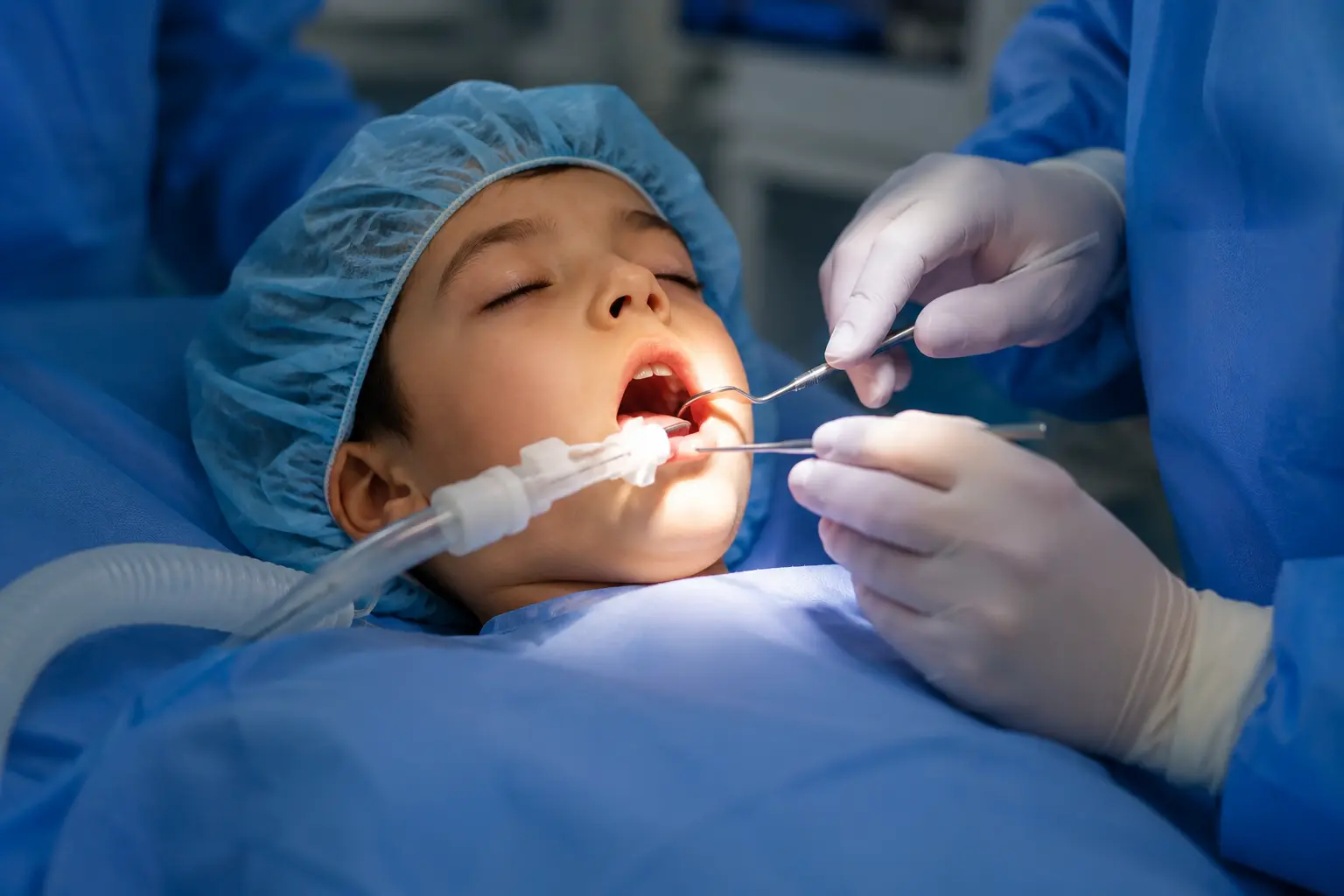
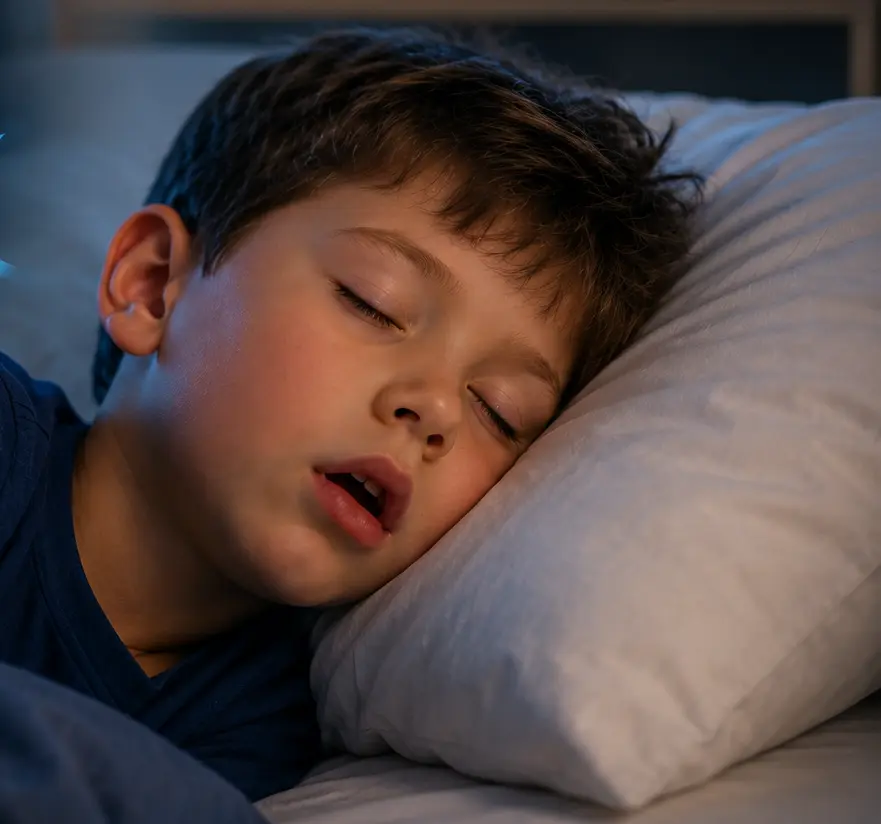
Yes, a child can sleep through the night and still have airway resistance. Sleep quality is not only measured by whether a child wakes up. It is also measured by how well they breathe while they sleep. When breathing is harder than it should be during sleep, it may affect oxygen levels, rest quality, brain development, behavior, focus, and school performance.
Why Sleeping Through the Night Does Not Always Mean Healthy Sleep
Many parents believe that if their child sleeps through the night, their sleep must be healthy. It makes sense. If a child is not waking up, crying, calling for help, or getting out of bed, it is easy to assume their body is resting well.
The truth is that sleep is not only about staying asleep. Healthy sleep also depends on how well a child breathes while sleeping.
A child can remain asleep through the night and still experience airway resistance. This means the body may be working harder than it should to move air during sleep. The child may not fully wake up, and parents may not notice anything unusual. The bedroom may seem quiet. The child may stay in bed. The night may appear normal.
Still, the body may not be getting the deep, restorative sleep it needs.
For growing children, sleep is when the brain processes learning, the nervous system resets, the body grows, and emotional regulation is restored. When breathing is harder during sleep, the signs do not always appear at night. Many times, they appear during the day.
A child who is not breathing well during sleep may seem tired, emotional, distracted, hyperactive, frustrated, or less able to perform at school.
That is why parents may need to look beyond the question, “Is my child sleeping through the night?”
A better question is, “Is my child breathing well while sleeping?”
What Is Airway Resistance in Children?
Airway resistance means airflow is not moving as freely as it should through the airway. During sleep, the muscles in the body relax. For some children, this can make it harder for air to pass smoothly through the nose, mouth, throat, or upper airway.
A child may continue sleeping while the body works harder to breathe.
This can be connected to several factors, including mouth breathing, poor tongue posture, narrow dental arches, crowded teeth, allergies, nasal congestion, enlarged tonsils or adenoids, oral habits, or jaw development concerns.
Airway resistance does not always look dramatic. Some children snore. Some grind their teeth. Some toss and turn. Some sleep with their mouth open. Some wake up tired even after a full night of rest.
Other children may appear to sleep peacefully, yet still experience subtle breathing challenges that affect sleep quality.
This is one reason airway concerns can be missed. Parents may think, “My child sleeps all night, so everything must be fine.” In reality, a child can sleep through the night while still missing out on the deeper rest needed for healthy growth, focus, and emotional balance.
Why Sleep Breathing Matters for Brain Development
Children’s brains are growing rapidly. During sleep, the brain organizes memories, supports learning, restores energy, and helps regulate mood and behavior. Deep sleep also supports attention, problem solving, and emotional control.
Breathing plays an important role in this process.
When a child breathes well during sleep, the body can enter deeper stages of rest more easily. The nervous system can settle. The brain can recharge. The body can focus on growth and recovery.
When breathing is harder than it should be, the body may shift into a lighter, more protective sleep state. The child may not fully wake up, but the brain and body may still respond as if they are under stress.
Over time, this may affect how rested the child feels during the day.
A child who does not get restorative sleep may have a harder time paying attention, managing emotions, sitting still, remembering instructions, or staying calm when frustrated.
This does not mean every behavior or school concern is caused by airway resistance. It does mean sleep breathing is an important part of the picture that many families are never encouraged to consider.
When a child is struggling with focus, behavior, or school performance, it may be worth asking what is happening during sleep.
How Airway Resistance Can Show Up During the Day
One of the most confusing things about airway resistance is that the signs often show up when the child is awake.
A child may not complain about poor sleep. Many children do not know what healthy sleep feels like, especially if they have been breathing this way for a long time. Instead, parents may notice changes in mood, behavior, attention, and learning.
A tired adult may look slow, quiet, or low energy. A tired child may look restless, emotional, impulsive, or hyperactive. This is why poor sleep breathing can sometimes be mistaken for a behavior issue.
Parents may notice that their child wakes up irritable, has a hard time getting ready in the morning, struggles with homework, reacts strongly to small frustrations, or has trouble focusing at school. Teachers may report distractibility, inconsistent performance, emotional outbursts, or difficulty following directions.
These daytime struggles can be exhausting for both the child and the parent. Families may try discipline strategies, school support, tutoring, or behavior plans. Those tools can be helpful, but they may not address the deeper issue if the child is not getting quality sleep.
Before assuming a child’s daytime struggles are only behavioral, it may be helpful to ask how they are breathing at night.
Signs Parents Can Watch For
Parents do not need to diagnose the issue at home. They can begin by noticing patterns. One sign by itself does not always mean there is an airway concern. Repeated patterns, especially when combined with behavior or school challenges, may be worth discussing with a trained provider.
Possible signs of sleep breathing concerns include:
- Mouth breathing during the day or night
- Sleeping with the lips apart
- Snoring or noisy breathing
- Restless sleep
- Tossing and turning
- Teeth grinding
- Waking up tired
- Morning irritability
- Dark circles under the eyes
- Difficulty focusing
- Emotional outbursts
- Hyperactivity or restlessness
- Trouble with school performance
- Crowded teeth
- Narrow palate
- Frequent nasal congestion
- Low tongue posture
These signs do not confirm a diagnosis on their own. They are clues that may help parents recognize when it is time to look deeper.
The Connection Between Mouth Breathing and Jaw Development
Mouth breathing is one of the most important signs for parents to notice.
Children are designed to breathe primarily through the nose. Nasal breathing helps filter, warm, and humidify the air. It also supports healthy oral posture, including closed lips, proper tongue position, and balanced facial development.
When a child regularly breathes through the mouth, the tongue often rests low instead of resting against the roof of the mouth. Over time, this may influence how the upper jaw and dental arches develop.
The tongue plays an important role in shaping the palate. When the tongue rests in the right position, it can help support healthy upper jaw development. When the tongue rests low, the palate may develop more narrowly. This may contribute to crowded teeth, limited oral space, and less room for proper airway support.
This is why mouth breathing in kids is not just a habit to ignore. It can be connected to airway development, early orthodontics, sleep quality, and long-term oral function.
Crowded teeth are not only a cosmetic concern. They may be a sign that the jaws did not have enough room to develop fully. When the jaws are narrow, the airway may also be affected.
At MyoWay Centers for Kids, this is part of a bigger conversation about function. We look at how breathing, tongue posture, oral habits, jaw development, and sleep quality work together.
Why Early Support Matters
Children grow quickly. The earlier airway and oral function concerns are recognized, the more opportunity there may be to support healthier patterns during development.
Early support does not mean rushing into aggressive care. It means asking better questions sooner.
Parents can begin with simple observations:
- Does my child breathe through the nose or mouth?
- Are my child’s lips closed at rest?
- Does my child sleep with an open mouth?
- Does my child snore or grind their teeth?
- Does my child wake up rested?
- Does my child struggle with focus, behavior, or emotional regulation?
- Are the teeth crowded?
- Does the jaw seem narrow?
- Is sleep truly restorative?
These questions can help families have a more informed conversation with a provider who understands pediatric airway development and pediatric myofunctional therapy.
Pediatric myofunctional therapy focuses on oral function, tongue posture, lip seal, swallowing patterns, and muscle habits that can influence breathing and development. When appropriate, medical-grade appliances may also be used to support jaw development and healthier oral function.
The goal is to support the child’s growth in a structured, thoughtful, and child-centered way.
Airway Development and School Performance
Many parents first become concerned when their child begins struggling at school.
A child may be bright and capable, yet still have trouble staying focused, following directions, completing assignments, remembering information, or managing frustration. These struggles can be painful for families because the child may be trying hard and still falling behind.
Sleep quality can affect how the brain performs during the day.
When a child is working harder to breathe during sleep, the body may not fully restore overnight. Even if the child spends enough hours in bed, the quality of that sleep may not support the level of focus, memory, and emotional control needed for school.
This can create a frustrating cycle. The child struggles to focus. The teacher sees behavior challenges. The parent sees homework battles. The child starts to feel like they are always in trouble or never doing enough.
Looking at sleep breathing does not replace educational support, medical guidance, or behavior support. It adds another important layer.
If a child is struggling during the day, sleep breathing may be part of the story.
Why Children Do Not Always Wake Up
A common question parents ask is, “Would my child wake up if they were having trouble breathing?”
Not always.
Children can experience increased breathing effort without fully waking up. The brain may briefly shift into a lighter sleep stage to protect the body, then return to sleep without the child remembering anything happened.
This can happen without the child calling out, leaving the bed, or appearing awake.
That is why night wakings are not the only sign of poor sleep quality. A child can sleep through the night and still wake up unrefreshed. A child can stay in bed all night and still have restless sleep. A child can seem fine at night and still struggle during the day.
Parents know their children best. If something feels off, it is reasonable to look at sleep, breathing, and airway development as part of the bigger picture.
How MyoWay Centers for Kids Helps Families Look Deeper
MyoWay Centers for Kids helps families understand the connection between oral function, breathing, jaw development, sleep quality, and daily behavior.
Our approach looks beyond the surface. Instead of focusing only on symptoms, we help families explore how structure and function work together. Tongue posture, lip seal, nasal breathing, swallowing patterns, jaw development, and airway space can all influence how a child sleeps and functions during the day.
This is especially important for children who show signs such as mouth breathing, crowded teeth, snoring, restless sleep, teeth grinding, focus challenges, emotional outbursts, or school struggles.
Pediatric myofunctional therapy may support healthier oral habits and encourage nasal breathing. Medical-grade appliances, when appropriate, may support jaw development and create a healthier foundation for growth.
Every child is different, which is why proper evaluation matters. The goal is to identify concerns early and support development with a plan that fits the child.
Frequently Asked Questions
Can a child have airway resistance if they sleep through the night?
Yes. A child can sleep through the night and still experience airway resistance. They may not fully wake up, but their body may still be working harder than it should to breathe during sleep.
Is mouth breathing in kids a concern?
Mouth breathing can be a sign that a child is not breathing comfortably through the nose. Over time, mouth breathing may affect tongue posture, jaw development, sleep quality, and oral function. It is worth discussing with a provider who understands pediatric airway development.
Can poor sleep breathing affect behavior?
Poor sleep breathing may affect how rested the brain and body feel during the day. Some children may show this through poor focus, emotional outbursts, hyperactivity, irritability, or difficulty with school performance.
Does snoring always mean there is a serious problem?
Not always, but regular snoring in children should not be ignored. Snoring can be a sign that airflow is restricted during sleep. A professional evaluation can help determine whether further support is needed.
What is pediatric myofunctional therapy?
Pediatric myofunctional therapy focuses on oral function, including tongue posture, lip seal, nasal breathing, swallowing patterns, and muscle habits. It may help support healthier breathing patterns, jaw development, and sleep quality.
When should parents schedule a consultation?
Parents may consider a consultation if their child mouth breathes, snores, grinds their teeth, sleeps restlessly, wakes up tired, has crowded teeth, struggles with focus, or has ongoing behavior or school challenges that may be connected to sleep quality.
A Better Question for Parents to Ask
Sleeping through the night matters, but it is not the whole picture.
A child’s body needs more than time in bed. It needs quality breathing, deep rest, healthy oral function, and proper airway support to grow and function well.
Airway resistance can be quiet. The signs may not show up as night wakings. They may show up as poor focus, big emotions, hyperactivity, fatigue, mouth breathing, or school struggles.
Parents do not need to have all the answers. They only need to know when to ask a deeper question.
Instead of only asking, “Is my child sleeping through the night?” it may be time to ask, “Is my child breathing well while sleeping?”
If your child sleeps through the night but still struggles with focus, behavior, mouth breathing, restless sleep, or school performance, MyoWay Centers for Kids can help you better understand what may be happening beneath the surface.
Book your free consultation in under five minutes.
https://mychart.myoryx.com/patient/#/auth/onlineschedule?realm=myoway&univers=com