
Is Your Child Stuck in Survival Mode?
Fearfulness, anxiety, emotional outbursts, poor focus, and restless sleep may sometimes be connected to the way a child is breathing and sleeping. When a child is not getting restorative sleep or is relying on mouth breathing, the body may stay in a stress pattern that makes learning, emotional regulation, and development harder.
Pediatric myofunctional therapy can support healthier oral function, encourage nasal breathing, and promote better airway development in growing children.
Why This Matters for Parents
When a child is asked to draw something they are afraid of, many parents expect a simple childhood fear. Maybe it is the dark, a thunderstorm, or a monster under the bed.
Yet when fear is the first place a child’s mind goes, it may be worth asking a deeper question.
Why is this child’s brain so focused on threat?
Children are designed to grow, explore, imagine, learn, and connect. Their brains are constantly building the foundation for the future. When a child seems stuck in fear, anxiety, emotional reactivity, poor focus, or constant defensiveness, it may not simply be a behavior issue.
It may be a sign that the body is under stress.
At MyoWay Centers for Kids, many families come to us after noticing patterns that do not seem connected at first. Their child may be tired in the morning, restless at night, breathing through the mouth, grinding teeth, snoring, struggling to focus, or having emotional reactions that feel bigger than expected.
These concerns can feel overwhelming for parents. They can also be confusing because the child may be bright, loving, capable, and still struggling every day.
One important question often gets missed.
How well is this child breathing and sleeping?
When Behavior Becomes the Focus
Many parents are told to manage the behavior first.
They may be encouraged to try stricter routines, more structure, reward charts, consequences, school support, therapy, or new bedtime strategies. These tools can be helpful, but they may not explain why the child is struggling in the first place.
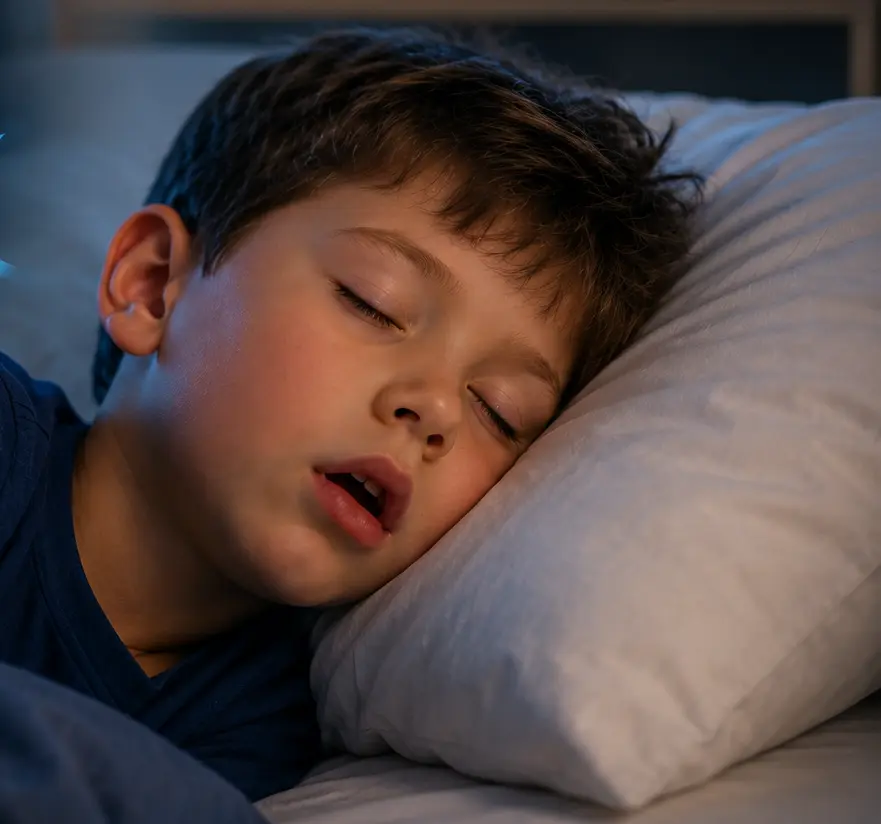
A child who is not sleeping well may wake up already behind. A child who breathes through the mouth during sleep may not be getting the same quality of rest. A child whose airway is not well supported may spend the night working harder than they should just to breathe comfortably.
That stress can show up during the day.
For some children, it looks like anxiety. For others, it looks like hyperactivity or difficulty sitting still. Some children become emotional, reactive, sensitive, or easily overwhelmed. Others seem distracted, impulsive, tired, irritable, or unmotivated.
Parents may hear that their child needs to try harder.
A better question may be this: What is making it so hard for this child to function?
When the brain and body are not well rested, emotional regulation becomes harder. Focus becomes harder. Learning becomes harder. Even simple daily routines can feel like too much.
This is what many people mean when they say a child is stuck in survival mode.
What Survival Mode Can Look Like in Children
Survival mode does not always look dramatic. It can look like a child who overreacts to small problems, becomes fearful easily, or melts down after school. It can also look like a child who is constantly moving, avoids hard tasks, argues often, or seems unable to settle.
Parents may notice signs such as:
- Mouth breathing during the day or night
- Sleeping with the mouth open
- Snoring or noisy breathing during sleep
- Restless sleep
- Teeth grinding
- Waking up tired
- Dark circles under the eyes
- Difficulty waking in the morning
- Trouble focusing at school
- Emotional outbursts
- Frequent fatigue
- Crowded teeth
- Low tongue posture
- Forward head posture
- Preference for soft foods
- Messy chewing or swallowing patterns
These signs do not automatically mean there is a serious problem. They do suggest that it may be time to look deeper at breathing, sleep quality, oral function, and airway development.
A child’s behavior is often the signal. The root cause may be happening beneath the surface.
The Connection Between Breathing, Sleep, and the Brain
Sleep is not just rest. For children, sleep is when the brain and body recover, grow, organize information, and reset for the next day.
Quality sleep supports memory, attention, learning, emotional balance, and healthy development. When sleep quality is disrupted, the effects may show up in a child’s mood, focus, energy, and behavior.
Breathing plays a major role in that process.
Nasal breathing supports healthy function during rest. It also helps the tongue, lips, and jaw work together in a way that supports proper oral posture and facial development.
Mouth breathing is different.
When a child regularly breathes through the mouth, especially during sleep, it may be a sign that the body is compensating. The mouth may stay open because the child is struggling to breathe comfortably through the nose, because the tongue is not resting properly, or because jaw and airway development need attention.
Over time, these patterns can affect more than sleep. They may influence the way a child’s face and jaw develop, how the teeth come in, how the tongue rests, and how well the airway is supported.
That is why mouth breathing in kids should not be brushed off as a harmless habit.
Why Jaw Development Matters
The jaw is not just about the smile.
A child’s jaw development can influence the space available for the tongue, the width of the palate, the position of the teeth, and the support of the airway.
When the upper jaw is narrow, the tongue may not have enough room to rest properly in the roof of the mouth. When the tongue rests low, the mouth may open more often. When the mouth stays open, nasal breathing may become less consistent.
This pattern can create a cycle.
Poor oral posture can affect jaw development. Jaw development can affect airway support. Airway challenges can affect sleep. Poor sleep can affect focus, mood, and behavior.
This is one reason early orthodontics and pediatric myofunctional therapy are about more than straight teeth. Straight teeth matter, but they are only one part of the bigger picture.
The deeper question is not only, “Are the teeth crowded?”
The better question is, “Why is the mouth developing this way?”
How Pediatric Myofunctional Therapy Can Help
Pediatric myofunctional therapy focuses on the function of the muscles of the mouth, tongue, lips, cheeks, and face.
At MyoWay Centers for Kids, this approach is used to support healthier oral habits, encourage nasal breathing, and promote proper jaw and airway development in children.
The goal is not to label a child or make parents feel worried. The goal is to identify patterns early and support the child while growth is still happening.
A free evaluation can help parents better understand questions such as:
- Is my child breathing through the mouth during the day or night?
- Is the tongue resting in the right position?
- Is jaw development supporting the airway?
- Could sleep quality be affecting focus or emotional regulation?
- Are crowded teeth part of a larger growth and function pattern?
- Would my child benefit from pediatric myofunctional therapy?
This kind of evaluation can provide clarity. It can also support collaboration with pediatricians, dentists, orthodontists, ear, nose, and throat specialists, speech professionals, and other members of a child’s care team.
Children benefit when providers work together.
Parents benefit when someone helps connect the dots.
Why Tired Children Do Not Always Look Tired
One of the most confusing parts for parents is that tired children do not always act sleepy.
Adults often think of fatigue as yawning, low energy, or wanting to rest. Children may show fatigue in very different ways.
A tired child may become wired. They may seem impulsive, silly, emotional, argumentative, distracted, or unable to follow directions. They may have trouble transitioning from one task to another. They may struggle at school and then fall apart at home.
This is why poor sleep can sometimes look like a behavior problem or attention problem.
Some children who struggle with focus may also have signs of poor sleep, mouth breathing, or airway stress. That does not mean every attention concern is caused by breathing. It does mean sleep and breathing should be part of the conversation.
Before assuming a child simply needs more discipline, more motivation, or more support at school, it may be helpful to ask:
How is this child sleeping?
How is this child breathing at night?
Is the body getting the recovery it needs?
A More Supportive Way to Look at Childhood Behavior
When parents are dealing with daily meltdowns, school concerns, bedtime battles, or emotional outbursts, it is easy to feel frustrated. It can feel like every day is harder than it should be.
A root focused approach helps shift the conversation.
Instead of asking only, “How do we stop this behavior?”
We can also ask, “What is this behavior trying to tell us?”
That question changes everything.
It does not excuse difficult behavior. It helps explain why the child may be having such a hard time. It also gives parents a new path forward.
A child who is fearful, reactive, distracted, or exhausted is not broken. A child who struggles with behavior is not always choosing to make life harder. A child stuck in survival mode may be showing us that the body needs support.
At MyoWay Centers for Kids, we help families look beyond symptoms and consider how breathing, sleep, oral function, and airway development may be influencing the child’s daily life.
What Parents Often Notice
Every child is different, and outcomes vary. MyoWay does not promise to cure or eliminate behavioral, sleep, or developmental concerns.
Many parents, however, are relieved when they finally understand that their child’s symptoms may be connected. They begin to see how breathing, sleep, jaw development, and oral habits can work together.
Some families notice changes in awareness, sleep routines, nasal breathing, posture, or confidence as their child builds better function. Others feel more empowered because they finally know what questions to ask and what signs to watch.
That clarity matters.
When parents understand the connection, they can stop chasing isolated symptoms and begin supporting the foundation.
When Should Parents Schedule a Free Evaluation?
Parents do not need to wait until symptoms become severe to ask questions.
A free evaluation may be helpful if your child:
- Snores or breathes loudly during sleep
- Sleeps with the mouth open
- Breathes through the mouth during the day
- Wakes up tired
- Grinds teeth at night
- Has crowded teeth
- Struggles with focus
- Has frequent emotional outbursts
- Seems anxious, fearful, or easily overwhelmed
- Has restless sleep
- Shows signs of poor oral posture
The goal is not to create fear. The goal is to create awareness.
Early evaluation gives families the opportunity to understand what may be happening while the child is still growing. It also helps parents make informed decisions before patterns become harder to change.
Frequently Asked Questions
Can mouth breathing affect my child’s sleep?
Yes, mouth breathing may be connected to lower quality sleep in some children. When a child breathes through the mouth during sleep, it can be a sign that nasal breathing, oral posture, or airway support needs attention.
Can poor sleep affect my child’s behavior?
Yes, poor sleep can affect focus, mood, emotional regulation, learning, and daily behavior. Some children who are tired may not act sleepy. They may appear hyperactive, emotional, distracted, or easily overwhelmed.
What is pediatric myofunctional therapy?
Pediatric myofunctional therapy supports the function of the tongue, lips, cheeks, and facial muscles. It helps children build healthier oral patterns that encourage nasal breathing, proper tongue posture, and better support for jaw and airway development.
Is snoring normal in children?
Occasional noise during sleep can happen, but regular snoring should not be ignored. Snoring may be a sign that a child is working harder to breathe during sleep. Parents should seek an evaluation if snoring is frequent or paired with restless sleep, mouth breathing, or daytime behavior concerns.
Can airway development affect focus and learning?
Airway development can play an important role in sleep quality and breathing function. When a child is not sleeping well, focus, learning, and emotional regulation may become harder. This is why airway health is an important part of pediatric development.
Does my child need an evaluation if they already see a dentist or orthodontist?
A dentist or orthodontist is an important part of your child’s care team. A myofunctional evaluation looks more closely at oral function, tongue posture, breathing patterns, and habits that may affect jaw and airway development. These services can often work together.
What age is best for a pediatric myofunctional evaluation?
Many families benefit from asking questions early, especially if they notice mouth breathing, snoring, crowded teeth, restless sleep, or focus concerns. Since children are still growing, early awareness can help support better development over time.
Helping Your Child Move Out of Survival Mode
Fear, anxiety, emotional outbursts, poor focus, and sleep struggles can be overwhelming for families. It is easy to focus only on what is happening on the outside, such as the tears, the arguments, the school concerns, or the bedtime battles.
Yet sometimes the most important answers are found beneath the surface.
A child’s brain and body need quality sleep, healthy breathing, and proper development to function well. When those foundations are strained, the child may seem stuck in survival mode.
MyoWay Centers for Kids helps families look deeper through pediatric myofunctional therapy, airway focused care, medical grade appliances, and early evaluation.
Your child deserves more than symptom management. Your child deserves support that looks at the whole picture.
Book your free evaluation in under 5 minutes.
https://mychart.myoryx.com/patient/#/auth/onlineschedule?realm=myoway&univers=com