The Signs Parents Are Often Told Not to Worry About
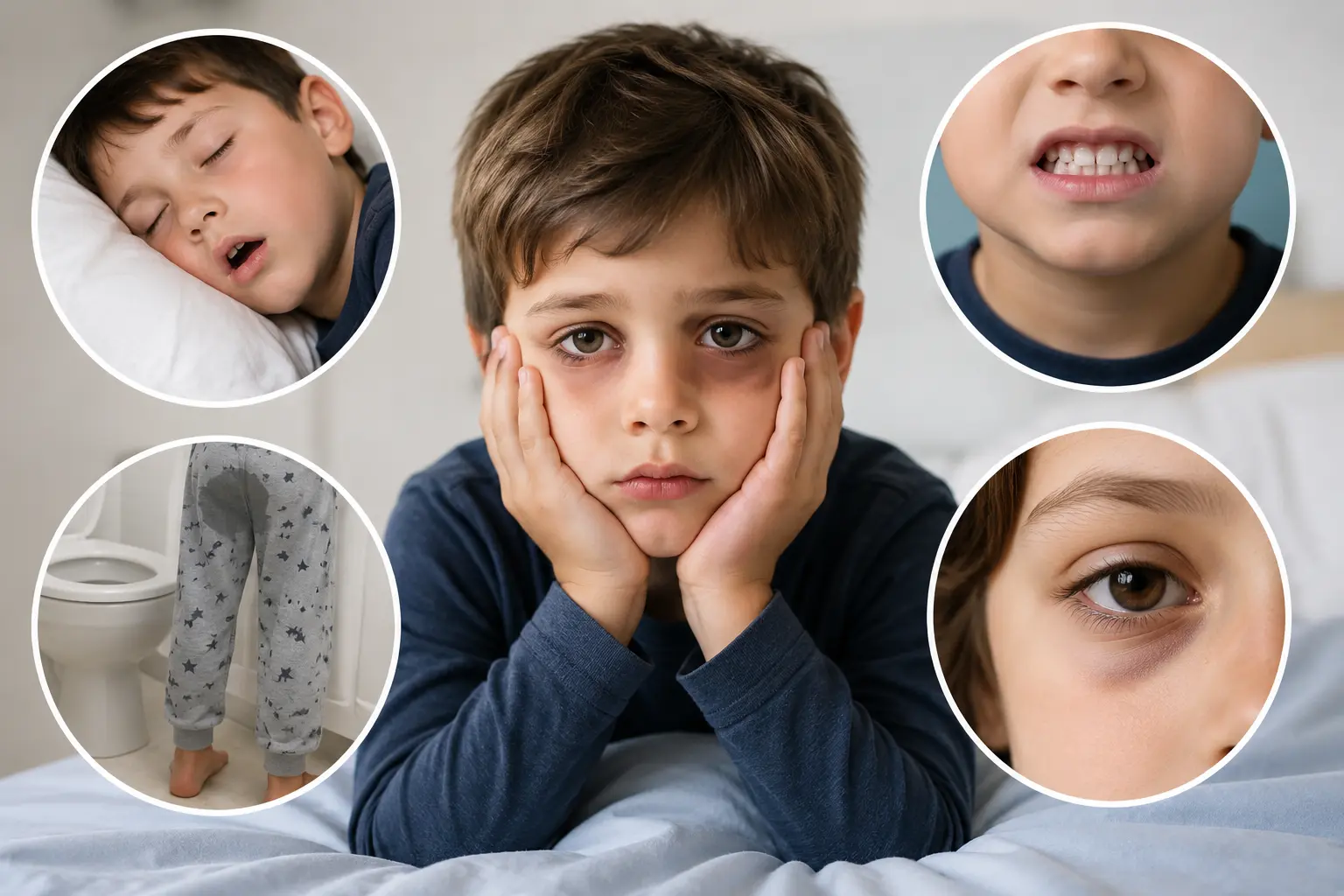
Bedwetting, teeth grinding, mouth breathing, and dark circles under the eyes can feel like four separate childhood issues.
One sounds like a sleep concern. One sounds like a dental concern. One may be blamed on allergies. One may be brushed off as genetics or tiredness.
For many families, these signs are easy to explain away because they are usually looked at one at a time.
A child who wets the bed may be told they will outgrow it. A child who grinds their teeth may be told it is just stress. A child who sleeps with their mouth open may be described as congested or simply a noisy sleeper. A child with dark circles may be seen as tired, sensitive, or allergy prone.
Sometimes those explanations are part of the story.
The concern is when these signs show up together.
When they do, they may point to a bigger question:
Is your child breathing and sleeping as well as they should?
At MyoWay Centers for Kids, this is the question we help families explore. We look at how oral function, nighttime breathing, jaw development, and sleep quality may be connected, especially when a child’s symptoms do not seem to fit into one simple category.
Bedwetting, teeth grinding, mouth breathing, and dark circles under the eyes may be connected through sleep quality and nighttime breathing.
These symptoms do not automatically mean something serious is wrong. They do mean your child’s body may be giving clues that sleep is not as restful as it should be.
When a child works harder to breathe at night, the effects can show up in surprising ways, including restless sleep, difficulty waking, poor focus, emotional outbursts, and daytime fatigue.
The Sleep Related Breathing Disorder Quiz on our website can help parents start recognizing these patterns.
Why Sleep Problems in Kids Can Be Hard to Spot
Children do not always act tired when they are tired.
That is one of the reasons sleep related concerns are often missed.
An adult who sleeps poorly may drag through the day, drink more coffee, or talk about feeling exhausted. A child may show it very differently.
A tired child may look:
- Hyperactive
- Emotional
- Impulsive
- Restless
- Irritable
- Unfocused
- Easily frustrated
- Difficult to wake in the morning
This can make the real issue hard to recognize.
Parents may focus on behavior, school performance, mood, or discipline without realizing that sleep quality could be part of the picture.
A child can spend enough hours in bed and still not get the kind of deep, restorative sleep their brain and body need. If breathing is disrupted or inefficient at night, sleep may look normal from the outside while the body is still working too hard.
That is why small signs matter.
They may be the body’s way of telling us something is off.
Bedwetting and Sleep Quality
Bedwetting can be frustrating for parents and discouraging for children.
Many families try the usual suggestions first. They limit drinks before bed. They wake the child during the night. They use reward charts. They change routines. Sometimes these things help. Sometimes they do not.
Bedwetting can be part of normal development, especially in younger children. Yet when it continues or appears alongside other signs, it may be worth looking at sleep quality and nighttime breathing.
When sleep is not restful, the body may not regulate nighttime signals as expected. A child may sleep restlessly, remain in lighter sleep stages, or experience stress during the night that affects how the body functions.
Bedwetting does not always mean there is a breathing concern.
It is one clue.
It becomes more meaningful when parents also notice signs such as:
- Mouth breathing
- Snoring
- Restless sleep
- Teeth grinding
- Dark circles under the eyes
- Difficulty waking up
- Daytime tiredness
- Poor focus
- Big emotional reactions
When these signs appear together, it may be time to ask whether the child is truly sleeping well.
Teeth Grinding Is Not Always Just a Dental Issue
Teeth grinding can be hard to ignore.
Some parents hear it at night and worry about the sound. Others do not realize it is happening until a dentist points out worn teeth or jaw tension.
It is common to think of teeth grinding as a dental problem only. In reality, it may involve several factors, including stress, bite development, muscle tension, oral habits, and sleep quality.
In some children, grinding may happen when the body is working harder during sleep. The jaw and oral muscles may become active as the body responds to disrupted sleep or changes in breathing.
This does not mean every child who grinds their teeth has an airway issue.
It does mean the symptom should be viewed in context.
Teeth grinding may deserve a closer look when it happens with:
- Mouth breathing
- Open mouth posture
- Snoring
- Restless sleep
- Bedwetting
- Dark circles under the eyes
- Crowded teeth
- Morning tiredness
- Focus struggles
- Daytime behavior changes
At MyoWay Centers for Kids, we do not look at grinding as an isolated symptom. We look at the whole child, including oral function, jaw development, breathing patterns, and sleep quality.
Mouth Breathing in Kids Is a Sign Worth Noticing
Mouth breathing in kids is often overlooked because it can seem harmless.
A child sleeping with their mouth open may even look peaceful. The problem is that mouth breathing can be a sign that nasal breathing is not happening comfortably or consistently.
Children may breathe through their mouths temporarily when they are sick or congested. The concern is when mouth breathing becomes their regular pattern during sleep, rest, or daily activity.
Nasal breathing supports healthy sleep, oral posture, jaw development, and airway function.
When a child breathes through the mouth often, the tongue may rest low in the mouth instead of resting against the roof of the mouth. Over time, this can influence how the jaws and dental arches develop.
Parents may notice:
- Open mouth posture
- Dry mouth
- Chapped lips
- Bad breath
- Snoring
- Restless sleep
- Crowded teeth
- Narrow dental arches
- Dark circles under the eyes
- Daytime tiredness
- Difficulty focusing
Mouth breathing is not just a habit to ignore.
It is a sign that the body may be compensating. If a child cannot comfortably breathe through the nose, it is important to understand why.
Dark Circles Under the Eyes and Restless Sleep
Dark circles under a child’s eyes are often blamed on allergies, genetics, or tiredness.
Those may all play a role.
Still, dark circles can also be one of the visible signs that a child is not getting quality sleep.
A child can be in bed all night and still wake up tired if their sleep is interrupted, restless, or not restorative. When breathing is inefficient during sleep, the body may not settle fully into the deep rest it needs.
Parents may notice that their child:
- Looks tired in the morning
- Has shadows under the eyes
- Wakes up groggy
- Has trouble getting moving
- Seems wired later in the day
- Becomes emotional quickly
- Melts down over small things
- Struggles to focus
Dark circles alone do not tell the whole story.
When they appear with mouth breathing, grinding, bedwetting, or restless sleep, they may become part of a larger pattern.
The Pattern Parents Should Look For
One symptom by itself may not mean much.
Several symptoms together tell a clearer story.
The question is not, “Does my child have one of these signs?”
The better question is, “How many of these signs are showing up, and how often?”
Nighttime signs may include:
- Mouth breathing
- Snoring
- Teeth grinding
- Restless sleep
- Bedwetting
- Sweating during sleep
- Frequent waking
- Sleeping in unusual positions
- Open mouth posture
- Dry mouth in the morning
Daytime signs may include:
- Dark circles under the eyes
- Morning tiredness
- Hyperactivity
- Trouble focusing
- Emotional outbursts
- Irritability
- Difficulty waking up
- Learning challenges
- Behavior concerns
- Low frustration tolerance
This is where many parents have an “aha” moment.
They realize the symptoms they thought were separate may actually be connected through sleep, breathing, and oral development.
Why Airway Development Matters
A child’s airway, jaw growth, tongue posture, and oral function are all connected.
The tongue should rest gently against the roof of the mouth when the body is at rest. This posture helps support healthy oral and jaw development.
When the mouth stays open and the tongue rests low, development may be affected over time.
This can contribute to issues such as:
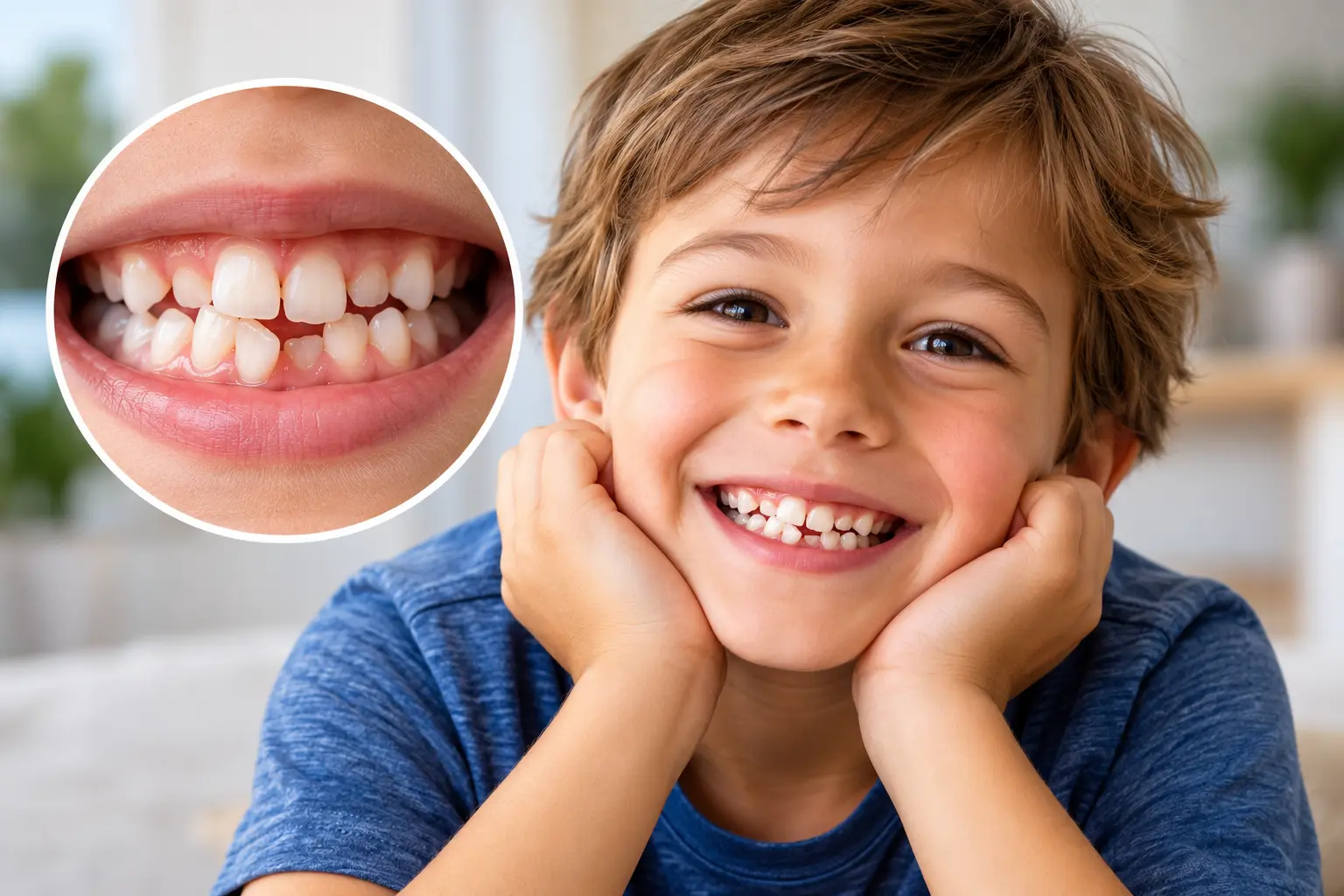
- Narrow dental arches
- Crowded teeth
- Open mouth posture
- Mouth breathing
- Poor oral rest posture
- Inefficient oral function
- Sleep related breathing concerns
Airway development matters because children are still growing. Early signs can give parents an opportunity to better understand what is happening before concerns become more complex.
This is where pediatric myofunctional therapy and early orthodontic guidance may be helpful.
How Pediatric Myofunctional Therapy Fits In
Pediatric myofunctional therapy focuses on the muscles and patterns involved in breathing, tongue posture, lip closure, swallowing, and oral rest posture.
At MyoWay Centers for Kids, we help families understand how these functions may connect to sleep, breathing, and development.
The goal is to support healthier patterns while the child is still growing.
Pediatric myofunctional therapy may support:
- Nasal breathing habits
- Proper tongue resting posture
- Lip closure
- Oral muscle function
- Healthy swallowing patterns
- Better awareness of oral habits
- Airway focused development
- Improved sleep related function
Every child is different. The right next step depends on what signs are present, how long they have been happening, and how they are affecting the child’s daily life.
That is why an evaluation matters.
What Is the Sleep Related Breathing Disorder Quiz?
The Sleep Related Breathing Disorder Quiz on our website is a simple tool for parents who are noticing signs but are not sure what they mean.
It helps families think through symptoms related to:
- Sleep
- Breathing
- Oral habits
- Behavior
- Focus
- Daytime energy
- Jaw and airway development
The quiz is not a diagnosis.
It is a starting point.
Many parents find that the quiz helps them organize what they have been seeing and decide whether a consultation would be helpful.
It may be a good next step if your child has several signs such as:
- Bedwetting
- Teeth grinding
- Mouth breathing
- Dark circles under the eyes
- Snoring
- Restless sleep
- Difficulty waking up
- Hyperactivity
- Poor focus
- Emotional outbursts
- Crowded teeth
- Open mouth posture
What Families Can Expect From MyoWay Centers for Kids
Families often come to MyoWay Centers for Kids after being told to wait and see.
They know something is not quite right, but the symptoms have been treated as separate concerns.
Our role is to help parents connect the dots.
We look at the child’s symptoms, oral function, breathing patterns, jaw development, and sleep related concerns together. This gives families a clearer understanding of what may be contributing to what they see at home.
Parents may learn more about:
- Why mouth breathing matters
- How tongue posture affects development
- How airway development may influence sleep
- Whether pediatric myofunctional therapy may be appropriate
- How early support may help encourage healthier growth and function
The goal is not to create fear.
The goal is to give families clarity, education, and a plan for what to consider next.
Frequently Asked Questions
Can bedwetting be connected to mouth breathing?
Yes, bedwetting and mouth breathing may be connected in some children through sleep quality and nighttime breathing patterns. Bedwetting alone does not confirm a breathing concern. When it appears with mouth breathing, snoring, teeth grinding, or restless sleep, it may be worth taking a closer look.
Is teeth grinding in children always a dental problem?
No, teeth grinding is not always only a dental problem. It may involve bite development, muscle tension, stress, oral habits, or sleep quality. When grinding appears with mouth breathing, dark circles, restless sleep, or daytime fatigue, parents may want to explore whether sleep and airway factors are involved.
Is mouth breathing in kids normal?
Occasional mouth breathing can happen when a child is sick or congested. Regular mouth breathing during sleep, rest, or daily activity should not be ignored. It may affect sleep quality, oral posture, jaw development, and airway function.
Why does my child have dark circles even after sleeping all night?
A child can spend enough time in bed and still not get high quality sleep. Dark circles may be related to allergies, genetics, fatigue, or poor sleep quality. When dark circles appear with mouth breathing, teeth grinding, snoring, or restless sleep, nighttime breathing may be worth evaluating.
What is the Sleep Related Breathing Disorder Quiz?
The Sleep Related Breathing Disorder Quiz on our website helps parents identify patterns in their child’s sleep, breathing, oral habits, and daytime symptoms. It is not a diagnosis. It is a first step to help families decide whether a consultation may be helpful.
Can pediatric myofunctional therapy support better sleep?
Pediatric myofunctional therapy may support healthier oral function, nasal breathing habits, tongue posture, and airway related development. Since oral function and breathing are connected to sleep quality, some children may benefit from an evaluation to see whether this approach is appropriate.
When should I schedule a consultation?
A consultation may be helpful if your child has several signs such as mouth breathing, bedwetting, teeth grinding, dark circles under the eyes, snoring, restless sleep, difficulty waking, poor focus, or daytime behavior challenges. Early evaluation can help parents understand what may be contributing to these symptoms.
The Bottom Line for Parents
Bedwetting, teeth grinding, mouth breathing, and dark circles under the eyes may look unrelated at first.
Together, they may be signs that your child is working harder than they should to breathe and sleep well at night.
This does not mean parents need to panic. It means the signs are worth paying attention to.
When children breathe well, sleep well, and develop well, their whole body benefits. Better sleep can support focus, mood, growth, energy, and daily function.
At MyoWay Centers for Kids, we help families look beyond isolated symptoms and understand the bigger picture.
Next Step
Take the Sleep Related Breathing Disorder Quiz on our website to better understand what your child’s symptoms may be telling you.
Book your free consultation in under 5 minutes.
https://mychart.myoryx.com/patient/#/auth/onlineschedule?realm=myoway&univers=com