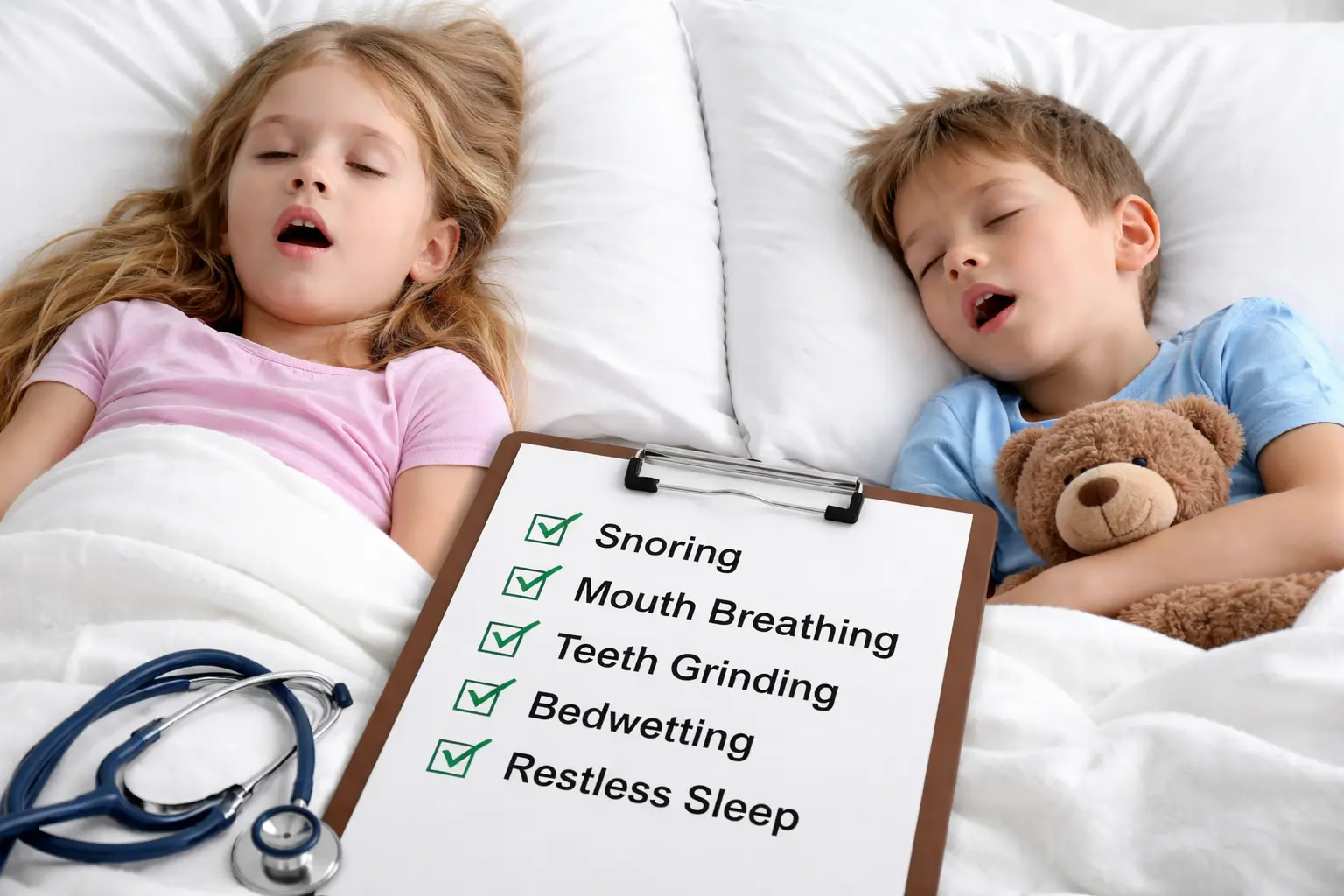

If you searched “myofunctional therapy near me,” you are probably not starting from scratch. Most families arrive at this search after months or years of trying to solve symptoms that keep showing up in different areas of their child’s life. Parents often begin with sleep issues, behavior concerns, crowded teeth, or speech therapy. The turning point happens when they realize that no one has stepped back to assess the foundation: how their child’s jaw and airway are developing, how breathing is happening day and night, and how the tongue, lips, and facial muscles are functioning.
This article explains what that search often means, what signs can point to a bigger pattern, and how myofunctional therapy can support healthy development early, before functional habits become harder to change.
What Is Myofunctional Therapy?
Myofunctional therapy is a structured program of exercises and habit training that supports healthy function of the tongue, lips, cheeks, jaw, and breathing patterns.
In practical terms, it focuses on improving:
-
Nasal breathing when possible
-
Lip seal and comfortable closed mouth posture at rest
-
Healthy tongue resting posture
-
Efficient chewing and swallowing patterns
-
Balanced facial muscle function that supports growth and stability
Myofunctional therapy is not a replacement for medical care, dental care, orthodontic care, or speech services. It is often the missing layer that connects them.
Why Parents Search “Myofunctional Therapy Near Me” After Trying Everything Else
Many families arrive here after doing all the right things.
A parent might have:
-
Talked with a pediatrician about fatigue, restlessness, or sleep disruption
-
Tried support for allergies or chronic congestion
-
Worked with a speech language pathologist for articulation or oral coordination
-
Consulted an orthodontic provider about crowding or bite concerns
-
Heard concerns from teachers about attention, mood, or school stamina
Those steps can be helpful. The frustration is that each concern can be addressed separately without anyone connecting the pattern underneath. Many children are living with functional habits that influence growth every day, including how they breathe, where the tongue rests, and how the jaw muscles are working.
That is why the search “myofunctional therapy near me” often signals something important: a parent is ready to stop chasing symptoms and start exploring root cause function.
Common Signs That Can Point to a Root Cause Pattern
A single symptom does not tell the whole story. Patterns matter. Here are common concerns families report before exploring myofunctional therapy.
Sleep and breathing signs
-
Mouth breathing during sleep or during the day
-
Snoring or noisy breathing at night
-
Restless sleep, frequent waking, or difficulty staying asleep
-
Teeth grinding or clenching at night
-
Waking tired even after a full night in bed
-
Dark circles under the eyes
Daytime behavior and performance concerns
-
Difficulty focusing or staying on task
-
Hyperactivity or constant movement
-
Irritability or emotional ups and downs
-
Afternoon fatigue
-
Reduced school stamina, memory challenges, or slower processing during the day
Dental and facial development concerns
-
Crowded teeth or early spacing concerns
-
Narrow palate or high palate
-
Open mouth posture at rest
-
Lips that do not rest together comfortably
-
A tongue that rests low or pushes forward when swallowing
-
Forward head posture that can accompany inefficient breathing
Speech and feeding considerations
-
Speech therapy progress that feels limited by oral coordination
-
Tongue thrust patterns that affect speech or swallow
-
Picky eating, texture sensitivity, or slow chewing
-
Messy chewing or fatigue with meals
These signs can have multiple causes. Myofunctional therapy focuses on functional habits that can contribute to or reinforce these patterns over time.
The Root Cause Link: Airway Function, Jaw Growth, and Oral Muscles
Parents often sense that sleep, behavior, teeth, and speech are connected, even when each area is treated separately.
Here is the simplest way to understand the connection:
-
Breathing influences tongue posture and mouth posture
-
Tongue posture influences palate shape and space for teeth
-
Mouth posture and swallow patterns influence facial muscle balance
-
Sleep quality can influence daytime mood, focus, and behavior
When a child is not breathing efficiently, the body adapts. Mouth breathing can become the default. The tongue may rest low instead of supporting the palate. Over time, these patterns can influence how the jaw develops and how much space is available for teeth. Myofunctional therapy looks at function first, then builds healthier patterns through guided practice and habit change.
What a Myofunctional Evaluation Typically Includes
A quality evaluation should be more than a quick glance at teeth. A functional evaluation often includes:
-
Health history focused on sleep, breathing, and oral habits
-
Observation of oral rest posture, including lip seal and tongue resting position
-
Assessment of swallowing pattern and chewing mechanics
-
Screening for oral habits that may influence function
-
Discussion of daily breathing patterns and environmental factors
-
A personalized plan with clear goals and home practice expectations
Some children may also benefit from collaborative care with providers such as:
-
Dental and orthodontic providers
-
Ear, nose, and throat specialists
-
Allergy providers
-
Speech language pathologists
The main outcome of an evaluation is clarity. Parents often feel relief when the pattern finally makes sense.
What Myofunctional Therapy Can Support During Growth
Myofunctional therapy supports function. It does not promise a single outcome for every child. Progress often looks like skill building over time, similar to other forms of therapy.
Many families notice improvements such as:
-
Increased awareness of mouth posture during the day
-
Improved ability to keep lips together at rest
-
Healthier tongue resting posture
-
Better chewing coordination and swallowing patterns
-
Reduced facial tension during meals
-
More consistent nasal breathing habits when appropriate
Every child is different. Outcomes depend on growth stage, airway status, consistency with home practice, and whether co treatment is needed.
How Myofunctional Therapy Fits With Orthodontics and Speech Therapy
Many parents worry they must choose one path. In many cases, a team approach is ideal.
With orthodontic care
Myofunctional therapy can support the functional habits that influence stability, including:
-
Tongue posture
-
Lip seal
-
Swallow patterns
-
Oral muscle balance
This can complement orthodontic planning and help support long term results.
With speech therapy
When tongue mobility, oral rest posture, and breathing patterns improve, many families find that carryover can be easier. Myofunctional therapy can support the functional foundation behind speech placement and oral coordination.
How to Choose a Provider When You Search “Myofunctional Therapy Near Me”
Not all programs are the same. Consider asking these questions:
-
Do you evaluate breathing habits, oral rest posture, chewing, and swallowing?
-
Do you provide a structured plan with measurable goals?
-
Do you give clear home practice guidance for families?
-
Do you collaborate with dental, orthodontic, and medical providers when needed?
-
Do you focus on function and development without making unrealistic promises?
Choosing the right provider often means choosing a clinic that educates you, builds a plan, and supports consistency.
Frequently Asked Questions
What is myofunctional therapy for children?
Myofunctional therapy for children is a structured program that supports healthy tongue posture, lip seal, chewing, swallowing, and breathing habits. It focuses on improving oral muscle function that can influence development over time.
Why do parents search “myofunctional therapy near me”?
Parents often search this after trying to address symptoms like poor sleep, behavior concerns, crowded teeth, or speech therapy needs. The search usually means a parent is looking for root cause answers related to breathing, jaw growth, and oral muscle function.
Can myofunctional therapy help mouth breathing in kids?
Myofunctional therapy can support healthier breathing habits by training oral posture and muscle function that encourages nasal breathing when appropriate. Some children may also need co treatment if nasal obstruction is present.
What are signs my child might need a myofunctional evaluation?
Common signs include mouth breathing, snoring, restless sleep, teeth grinding, open mouth posture, crowded teeth, low tongue posture, and challenges with chewing or swallowing. A pattern of symptoms is often more meaningful than one sign alone.
How long does myofunctional therapy take?
Length varies by child and consistency. Many programs involve regular visits over several months with daily home practice. Your provider should outline goals and expected timelines after an evaluation.
Is myofunctional therapy the same as speech therapy?
They are different but can complement each other. Speech therapy focuses on communication and speech sound patterns. Myofunctional therapy focuses on oral muscle function and habits like tongue posture, swallow, chewing, and breathing.
Do I need orthodontics if my child does myofunctional therapy?
Some children still need orthodontic care. Myofunctional therapy can support functional habits that may help orthodontic stability and long term outcomes. A collaborative plan is often best.
Key Takeaways for Parents
If you are searching “myofunctional therapy near me,” you are likely noticing a bigger pattern. Sleep issues, behavior concerns, crowded teeth, and speech challenges can share a functional foundation in breathing habits and oral muscle patterns. A myofunctional evaluation can help you understand what is happening, what to prioritize, and which next steps make sense for your child.
Book Your Free Consultation
Book your free consultation in under 5 minutes.
https://mychart.myoryx.com/patient/#/auth/onlineschedule?realm=myoway&univers=com