Mouth Breathing? Bedwetting? Teeth Grinding? Behavior Problems?
What Parents Are Saying
Posted on Google
 JoBeth Smith
Trustindex verifies that the original source of the review is Google.
We cannot say enough wonderful things about Myoway! From our very first visit, the entire team was so welcoming and genuinely incredible with kids. They took the time to truly listen to our concerns, but they also opened our eyes to the broader, long-term benefits this therapy could provide. A huge part of our success has been Brit. She made this entirely my daughter’s journey from the start. Even though my daughter was only five years old when we began, Brit was persistent in teaching her to take ownership of the work. That approach made all the difference—six months in, my daughter is the one reminding me when it’s time to do her therapy exercises! The physical results speak for themselves: she has completely stopped sucking her fingers, and her mouth palate has visibly changed and reshaped for the better. It is such a fantastic program run by truly wonderful, caring people. We are so grateful for the difference they’ve made for our family and couldn't recommend them more highly!Posted on Google Mallory PerellaMy 5 year old daughter has had an amazing experience at MyoWay and I would highly recommend them. The staff are all incredible and so nice to work with. They have completely transformed my daughter’s sleep - she no longer grinds her teeth, snores or wets the bed. She is now well rested and can function during the day and her jaw has grown and developed beautifully. I cannot thank them enough!Posted on Google
 Emily CicconiMy daughter has made meaningful progress across several areas since starting therapy at Myoway: Feeding & Oral Function Elli is now able to close her lips around a bottle and drink part of a smoothie—something she had never been able to do before. This was a surprising and exciting milestone. Historically, she has not been able to take liquids by mouth, so drinking half of a small smoothie in one sitting is a significant improvement. At school, she is also eating more during lunch and within a single sitting. She has progressed from not finishing a small container of avocado mash to now completing it, along with cheese, crackers, and some of her smoothie. Speech & Communication Elli’s speech has improved noticeably, and her peers at school now have no difficulty understanding her. Health & Resilience Since beginning the program, Elli has experienced two illnesses that would historically have resulted in hospitalization, but she was able to remain at home during both. Prior to starting therapy, Elli was hospitalized with pneumonia. During her illness, her pulmonologist reviewed her chest X-ray and ordered a follow-up CT scan after discharge due to concerns about her left lung. At her follow-up (around January 2026, after starting Myoway in November 2025), the pulmonologist was surprised by how healthy her lung appeared and even questioned whether it was the same Elli. Breathing & Endurance Elli is now able to take deeper, more intentional breaths, which is an improvement from her previous difficulty expanding her diaphragm. While it’s difficult to directly attribute, her overall endurance has also improved: She kept up during a family hike in Arizona She walked over 24,000 steps at an event without showing fatigue—and was actually leading the way. She regularly completes 3-mile walks with significant hills at home, keeping pace with adults and her sister without needing encouragement. During a recent weekend, she again walked over 23,000 steps without any issues and even resisted going to bed that evening. 🙂 Additional Observations While not certain if it is related, her smile appears more symmetrical than in the past, which is notable given her diagnosis of Moebius syndrome. Overall Impact We have seen improvements in Elli’s daily functioning in ways that traditional therapies have not achieved. This therapy appears to address underlying challenges, allowing her to make progress across multiple areas of her life. We are incredibly encouraged by Elli’s progress in just a few short months and are excited to see what continued therapy will bring. We are hopeful this will support her future goals, including getting braces and further improving her oral function (managing food, secretions during illness, speech) and lung capacity.Posted on Google
 Lindsay DavisMyoWay has been incredible for my daughter. I used to have a lot of anxiety hearing her have several pauses in her breathing and gasping for breath while she was asleep. Since being enrolled in MyoWay, her breathing is normal, her palette is forming correctly, and her sleep has improved dramatically. Couldn't be happier with her results.Posted on Google
 Kaila NelkoMy three year old had a pretty severe tongue thrust and his dentist suggested having a consultation here. I had heard of it before, but never knew someone personally who had done it. I was definitely a skeptic. We’re now 8 months into his program, and I am a total believer! I am so amazed at his transformation. When I see pictures of when we started I am stunned. I forget just how bad it was. Britt is absolutely fantastic. From a skeptic turned to believer - get a free consultation!!Posted on Google
 katie rulloBefore we started the treatment, my son was grinding his teeth, sleeping with his mouth open, and snoring. Now he is sleeping soundly and his jaw, lip and tongue muscles have strengthened so much that there is not more muscle dysfunction. We are extremely happy with our outcome!Posted on Google
 Stephanie ReillyOur five year old was struggling with a multitude of symptoms from years of thumb sucking as an infant and toddler. She had extremely crowded teeth, an open bite when she smiled, constant dark circles under her eyes and what seemed to us as very restless sleep. She also snored when sleeping and we would notice her mouth breathing not only at night but also throughout the day while she was playing or watching TV. Most concerning; however, was her chronic strep throat infections. We were advised by her pediatrician that if the infections kept up at the rate we were going, she would need her tonsils and adenoids removed. We’re 7 months into the program, and the results are truly astounding. She sleeps soundly with less moving around and wakes up rested - no more dark circles under her eyes. She hardly ever snores anymore and we’ve noticed her bite and the shape of her mouth/face completely change for the better. Her bite is almost closed and her top teeth are far more spaced. At this point, I would say 90% of the time she is breathing through her nose. Most incredibly though, she has had only 1 strep throat infection since the start of the program whereas before we were seeing 6+ a year. While it can be taxing to get an energetic 5 year old to sit and do her exercises, the staff at MyoWay could not be more supportive and helpful. It’s obvious they genuinely care for their little patients and our girl who can be slow to warm up in new situations does a wonderful job with both in person and virtual appointments. We can’t recommend MyoWay enough - the whole experience has been a blessing and we are excited to see our daughter continue to improve and thrive.Posted on Google
 Michael KobiereckiThe program has drastically helped improve my daughter's over bite and address issues which could lead to orthodontics in the future. The staff was wonderful working with my daughter.Posted on Google
 Megan MaggieMy child and I have been working with Brittany and she has been absolutely wonderful! Tyler is so kind and understanding every time we call/come into the office. I am absolutely amazed at the progress my child has made over the past few months and I am incredibly happy with our decision to do therapy vs surgery! I can't say enough wonderful things about this staff and place❤️Posted on Google
 Kathleen GrahamWe have had such a wonderful experience with MyoWay Therapy. From the very beginning, the staff has been incredibly kind, welcoming, and knowledgeable. They take the time to truly sit with us, carefully explaining each exercise and addressing any concerns or questions we have along the way. You can tell they genuinely care about the children and families they work with. What has meant the most to us is seeing the real, tangible progress in our son. Since starting therapy, we’ve noticed significant improvements in his ability to focus, better sleep, reduced bedwetting, and even improved swallowing. These changes have made such a positive impact on his daily life and overall confidence.
Specialized Programs for Your Child's Development
Evidence-based therapy programs designed to address the root causes of sleep, breathing, and developmental challenges
Pediatric Myofunctional Therapy
Strengthen oral and facial muscles to improve breathing, swallowing, and speech patterns. Addresses tongue posture, lip seal, and proper swallowing mechanics.
Sleep & Behavior Support
Tackle snoring, restless sleep, and behavior challenges linked to poor sleep quality. Buteyko breathing techniques for better rest and daytime focus.
Guided Jaw Growth & Airway Development
Support natural jaw expansion and airway development during critical growth years. Prevent long-term orthodontic and breathing complications.
Is Your Child Showing These Signs?
These common symptoms may indicate underlying airway or myoway functional concerns that can be addressed with proper therapy
Mouth Breathing
Breathing through the mouth instead of the nose, especially during sleep or at rest
Snoring & Sleep Disruption
Loud snoring, restless sleep, or waking up frequently during the night
Behavioral & Focus Concerns
Difficulty concentrating, hyperactivity, or mood changes linked to poor sleep
Narrow Palate
A high, narrow roof of the mouth that can restrict airway development
Airway Restriction
Limited nasal breathing capacity or enlarged tonsils affecting airflow
Jaw Growth Imbalance
Underdeveloped jaw or facial asymmetry during critical growth years
Early Intervention Makes All the Difference
Don’t wait for these concerns to become bigger problems. Schedule a consultation to learn how we can help your child breathe better and sleep soundly.
Hear from real parents of patients
Posted on GoogleJoBeth SmithWe cannot say enough wonderful things about Myoway! From our very first visit, the entire team was so welcoming and genuinely incredible with kids. They took the time to truly listen to our concerns, but they also opened our eyes to the broader, long-term benefits this therapy could provide. A huge part of our success has been Brit. She made this entirely my daughter’s journey from the start. Even though my daughter was only five years old when we began, Brit was persistent in teaching her to take ownership of the work. That approach made all the difference—six months in, my daughter is the one reminding me when it’s time to do her therapy exercises! The physical results speak for themselves: she has completely stopped sucking her fingers, and her mouth palate has visibly changed and reshaped for the better. It is such a fantastic program run by truly wonderful, caring people. We are so grateful for the difference they’ve made for our family and couldn't recommend them more highly!Posted on GoogleMallory PerellaMy 5 year old daughter has had an amazing experience at MyoWay and I would highly recommend them. The staff are all incredible and so nice to work with. They have completely transformed my daughter’s sleep - she no longer grinds her teeth, snores or wets the bed. She is now well rested and can function during the day and her jaw has grown and developed beautifully. I cannot thank them enough!Posted on GoogleEmily CicconiMy daughter has made meaningful progress across several areas since starting therapy at Myoway: Feeding & Oral Function Elli is now able to close her lips around a bottle and drink part of a smoothie—something she had never been able to do before. This was a surprising and exciting milestone. Historically, she has not been able to take liquids by mouth, so drinking half of a small smoothie in one sitting is a significant improvement. At school, she is also eating more during lunch and within a single sitting. She has progressed from not finishing a small container of avocado mash to now completing it, along with cheese, crackers, and some of her smoothie. Speech & Communication Elli’s speech has improved noticeably, and her peers at school now have no difficulty understanding her. Health & Resilience Since beginning the program, Elli has experienced two illnesses that would historically have resulted in hospitalization, but she was able to remain at home during both. Prior to starting therapy, Elli was hospitalized with pneumonia. During her illness, her pulmonologist reviewed her chest X-ray and ordered a follow-up CT scan after discharge due to concerns about her left lung. At her follow-up (around January 2026, after starting Myoway in November 2025), the pulmonologist was surprised by how healthy her lung appeared and even questioned whether it was the same Elli. Breathing & Endurance Elli is now able to take deeper, more intentional breaths, which is an improvement from her previous difficulty expanding her diaphragm. While it’s difficult to directly attribute, her overall endurance has also improved: She kept up during a family hike in Arizona She walked over 24,000 steps at an event without showing fatigue—and was actually leading the way. She regularly completes 3-mile walks with significant hills at home, keeping pace with adults and her sister without needing encouragement. During a recent weekend, she again walked over 23,000 steps without any issues and even resisted going to bed that evening. 🙂 Additional Observations While not certain if it is related, her smile appears more symmetrical than in the past, which is notable given her diagnosis of Moebius syndrome. Overall Impact We have seen improvements in Elli’s daily functioning in ways that traditional therapies have not achieved. This therapy appears to address underlying challenges, allowing her to make progress across multiple areas of her life. We are incredibly encouraged by Elli’s progress in just a few short months and are excited to see what continued therapy will bring. We are hopeful this will support her future goals, including getting braces and further improving her oral function (managing food, secretions during illness, speech) and lung capacity.Posted on GoogleLindsay DavisMyoWay has been incredible for my daughter. I used to have a lot of anxiety hearing her have several pauses in her breathing and gasping for breath while she was asleep. Since being enrolled in MyoWay, her breathing is normal, her palette is forming correctly, and her sleep has improved dramatically. Couldn't be happier with her results.Posted on GoogleKaila NelkoMy three year old had a pretty severe tongue thrust and his dentist suggested having a consultation here. I had heard of it before, but never knew someone personally who had done it. I was definitely a skeptic. We’re now 8 months into his program, and I am a total believer! I am so amazed at his transformation. When I see pictures of when we started I am stunned. I forget just how bad it was. Britt is absolutely fantastic. From a skeptic turned to believer - get a free consultation!!Posted on Googlekatie rulloBefore we started the treatment, my son was grinding his teeth, sleeping with his mouth open, and snoring. Now he is sleeping soundly and his jaw, lip and tongue muscles have strengthened so much that there is not more muscle dysfunction. We are extremely happy with our outcome!Posted on GoogleStephanie ReillyOur five year old was struggling with a multitude of symptoms from years of thumb sucking as an infant and toddler. She had extremely crowded teeth, an open bite when she smiled, constant dark circles under her eyes and what seemed to us as very restless sleep. She also snored when sleeping and we would notice her mouth breathing not only at night but also throughout the day while she was playing or watching TV. Most concerning; however, was her chronic strep throat infections. We were advised by her pediatrician that if the infections kept up at the rate we were going, she would need her tonsils and adenoids removed. We’re 7 months into the program, and the results are truly astounding. She sleeps soundly with less moving around and wakes up rested - no more dark circles under her eyes. She hardly ever snores anymore and we’ve noticed her bite and the shape of her mouth/face completely change for the better. Her bite is almost closed and her top teeth are far more spaced. At this point, I would say 90% of the time she is breathing through her nose. Most incredibly though, she has had only 1 strep throat infection since the start of the program whereas before we were seeing 6+ a year. While it can be taxing to get an energetic 5 year old to sit and do her exercises, the staff at MyoWay could not be more supportive and helpful. It’s obvious they genuinely care for their little patients and our girl who can be slow to warm up in new situations does a wonderful job with both in person and virtual appointments. We can’t recommend MyoWay enough - the whole experience has been a blessing and we are excited to see our daughter continue to improve and thrive.Posted on GoogleMichael KobiereckiThe program has drastically helped improve my daughter's over bite and address issues which could lead to orthodontics in the future. The staff was wonderful working with my daughter.Posted on GoogleMegan MaggieMy child and I have been working with Brittany and she has been absolutely wonderful! Tyler is so kind and understanding every time we call/come into the office. I am absolutely amazed at the progress my child has made over the past few months and I am incredibly happy with our decision to do therapy vs surgery! I can't say enough wonderful things about this staff and place❤️Posted on GoogleKathleen GrahamWe have had such a wonderful experience with MyoWay Therapy. From the very beginning, the staff has been incredibly kind, welcoming, and knowledgeable. They take the time to truly sit with us, carefully explaining each exercise and addressing any concerns or questions we have along the way. You can tell they genuinely care about the children and families they work with. What has meant the most to us is seeing the real, tangible progress in our son. Since starting therapy, we’ve noticed significant improvements in his ability to focus, better sleep, reduced bedwetting, and even improved swallowing. These changes have made such a positive impact on his daily life and overall confidence.
The MyoWay Centers for Kids Approach
Personalized jaw, airway, and myofunctional therapy for kids
Programs starting at $99/month
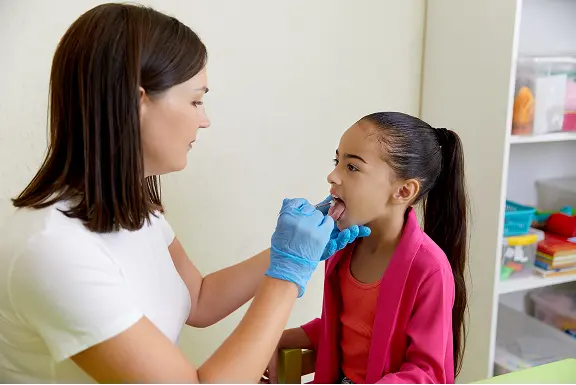
At MyoWay Centers for Kids, we believe how a child breathes and sleeps directly affects how they grow, learn, focus, and function.
Our approach looks at the full system behind healthy jaw and airway development. Some programs may only provide an appliance, exercises, or basic breathing advice. MyoWay Centers for Kids addresses the structure, muscles, breathing patterns, and oxygen efficiency together.
We treat the Three Pillars of development together:
Form: the bone and structure of the jaw
Function: the muscles of the tongue, lips, cheeks, and airway
Fuel: breathing efficiency and oxygen utilization
By addressing the bone, the muscles, and the breathing system as one integrated system, we help create a stronger foundation for better growth, better sleep, clearer speech, healthier breathing, improved oral function, development, overall health, and long-term stability.
Every child receives a personalized roadmap based on age, development, airway patterns, oral function, breathing habits, sleep concerns, and clinical needs.
Most programs include therapist-guided sessions, medical-grade myofunctional therapy appliances, breathing retraining, myofunctional exercise support, and at-home video guidance designed to make the process easier for families.
Flexible monthly payment options are available, with plans starting at $99/month.
The Foundation: The Three Pillars of Development
- Pillar 1: Form
The Bone And Structure Of The Jaw
The MyoWay Centers for Kids approach: Passive Myofunctional Therapy
A wide, U-shaped jaw is the essential foundation for a healthy airway and a stable smile.
When the upper jaw is narrow, the tongue often does not have enough room to rest properly. This can create a crowded mouth environment that contributes to chronic mouth breathing, low tongue posture, dental crowding, impaired speech articulation, poor sleep, and future orthodontic problems.
MyoWay Centers for Kids uses patented medical-grade myofunctional orthopedic appliances to provide gentle structural guidance.
These appliances are designed to support natural growth by helping develop the dental arches and creating the room needed for permanent teeth to erupt properly.
By developing the bone early, we create the necessary space for the tongue to rest in the correct position and for the airway to develop more fully.
Without this space, children may continue to struggle with chronic breathing dysfunction, complex dental issues, sleep disruption, and impaired speech articulation.
The goal of Form is to support healthy jaw structure while the child is still growing.
- Pillar 2: Function
The Muscles That Shape Growth
The MyoWay Centers for Kids approach: Active Myofunctional Therapy
Muscles are the architects of the bone.
The tongue, lips, cheeks, and airway muscles influence how a child breathes, sleeps, swallows, chews, speaks, and grows.
When these muscles are weak, dysfunctional, or poorly coordinated, the jaw and airway may not develop the way they should.
Through specialized myofunctional therapy, we retrain the tongue, lips, cheeks, and airway muscles to function properly.
To support this process, MyoWay Centers for Kids uses a combination of active and passive myofunctional exercise appliances. These tools provide targeted resistance and guidance needed to build muscle tone, improve oral posture, and help maintain an open, patent airway.
This is not just about doing exercises. It is about retraining the neuromuscular system.
By correcting muscle dysfunction, we help provide the neuromuscular foundation required for:
Growth
Better breathing
Better jaw development
Clearer speech
Healthier swallowing
Improved nasal breathing
Better oral posture
A more stable airway
Long-term orthodontic retention
The goal of Function is to help the muscles support the structure instead of working against it.
- Pillar 3: Fuel
Breathing And Oxygen Efficiency
The MyoWay Centers for Kids approach: Buteyko Breathing Exercises
Nasal breathing is the necessary starting point for healthy development, but true breathing health goes beyond simply using the nose.
The true fuel for the body is efficient oxygen utilization.
At MyoWay Centers for Kids, we integrate evidence-based Buteyko Breathing exercises to help biologically reset the breathing center and improve the way the body breathes.
Our focus is to move beyond “just breathe through your nose” and help the body become physiologically capable of delivering and using oxygen correctly at a cellular level.
This matters because a child can have an open airway and still have poor breathing patterns. A child can breathe through the nose and still overbreathe, mouth breathe at night, sleep poorly, or fail to use oxygen efficiently.
Buteyko Breathing is used to support healthier breathing rhythms, better carbon dioxide tolerance, improved oxygen delivery, and more efficient oxygen use at a cellular level.
When oxygen utilization improves, the body and brain are better supported.
This optimized fuel supply supports the prefrontal cortex, which plays an important role in:
Improved school performance
Increased memory
Emotional regulation
Behavioral stability
Sleep quality
Daytime energy
The goal of Fuel is to improve the breathing and oxygen system that supports the child’s brain, body, sleep, and development.
Common Red Flags
At MyoWay Centers for Kids, we focus on a synergy of three distinct training components to create meaningful structural and functional change that supports the airway for a lifetime.
Snoring
Restless sleep
Mouth breathing
Teeth grinding
Waking up tired
Dark circles under the eyes
Enlarged tonsils or adenoids
Chronic congestion
Forward head posture
Difficulty focusing
Hyperactivity
Emotional outbursts
Picky eating
Trouble chewing
Thumb sucking
Prolonged pacifier use
Speech concerns
Lisps
Muffled speech
Crowded teeth
Narrow upper jaw
Recessed chin
These symptoms often connect back to how the child is breathing, sleeping, growing, and developing.
Why MyoWay Centers for Kids Is Different
Many programs focus on only one part of the problem.
Some focus only on appliances. Some focus only on myofunctional exercises. Some focus only on nasal breathing.
At MyoWay Centers for Kids, we address Form, Function, and Fuel at the same time
This matters because the jaw, tongue, lips, cheeks, airway muscles, sleep quality, nasal breathing, and oxygen efficiency all influence one another.
When these systems are not working together properly, children may develop symptoms such as mouth breathing, snoring, restless sleep, crowded teeth, speech challenges, poor focus, emotional dysregulation, and long-term orthodontic instability.
The goal of MyoWay Centers for Kids therapy is not simply to manage symptoms.
The goal is to retrain the system so your child can breathe, sleep, grow, and function better.
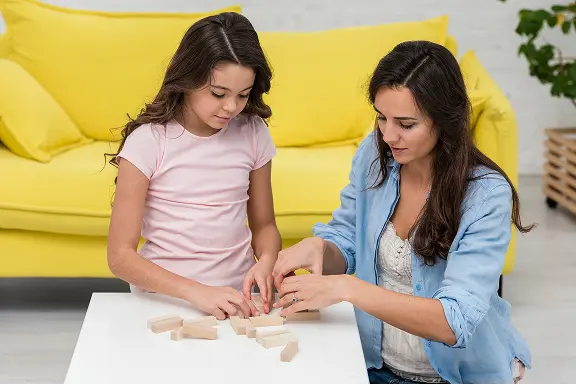
The Statistics Every Parent Should Know
Modern research continues to show a connection between oral development, airway health, sleep quality, and overall quality of life.
The 60% Growth Milestone
By age 6, approximately 60% of a child’s craniofacial growth is complete
This is why early evaluation matters.
Intervening during growth gives us the opportunity to guide the jaw while the child is still developing. It is much easier to guide growth while the structure is still forming than to try to correct a finished structure later.
Special Needs and Airway
Children with neurodevelopmental differences, including Autism Spectrum Disorder, are significantly more likely to suffer from sleep-disordered breathing.
Proper airway support can be an important part of helping with sleep quality, behavioral stability, regulation, and daily function.
The ADHD Link
Up to 50% of children diagnosed with ADHD may have an underlying sleep-related breathing disorder.
When a child’s brain is not receiving oxygenated, restorative sleep, it can show up as hyperactivity, emotional volatility, impulsivity, difficulty focusing, and poor regulation.
In some children, symptoms that look like ADHD may actually be connected to sleep and airway dysfunction.
Mouth Breathing and Cognitive Impact
Untreated airway issues can lead to fragmented sleep.
Some studies link chronic sleep disruption and airway concerns to lower cognitive performance when compared to nasal-breathing peers.
Better breathing and better sleep can support the brain’s ability to learn, focus, regulate, and recover.
Frequently Asked Questions
How is MyoWay different from traditional orthodontics?
MyoWay Centers for Kids does not provide orthodontic treatments, but rather complements orthodontics with myofunctional therapy. Traditional orthodontics often focuses on straightening teeth once they have already come in crooked (the “symptom”). MyoWay focuses on the “root cause”—ensuring the jaw is wide enough and forward enough to fit all the teeth and, more importantly, to support a wide-open airway for optimal breathing.
My child is only 4 or 5—isn't it too early to start?
Actually, we see children as early as birth for screenings! The majority of facial development is happening in the first 2 years of life. Age 4-5 is the “Golden Window.” Because 60% of growth happens by age 6, so intervening now allows us to use your child’s natural growth hormones to guide the jaw. It is much easier to guide growth than it is to fix a finished structure later in life.
My child has special needs (ASD/Sensory Processing). Can they do this?
Yes! In fact, these children often benefit the most from airway therapy. Improved oxygenation and sleep quality can lead to better emotional regulation and reduced sensory meltdowns. We tailor our approach to each child’s specific sensory and behavioral needs to ensure a positive experience.
Will this replace the need for braces?
MyoWay Centers for Kids does not provide orthodontic treatments, but rather complements orthodontics with myofunctional therapy. However, in many cases, early airway and jaw intervention significantly reduces the time a child needs to spend in braces later. For some, it may eliminate the need for braces entirely by creating enough space for the teeth to erupt naturally.
Can my child do this while seeing other specialists?
Absolutely. We often work as part of a “Dream Team” alongside Pediatricians, ENTs, Orthodontists, and Speech Therapists. Proper jaw structure and tongue posture often make these other therapies more effective and help prevent “relapse” after braces are removed.
Do I pay for every individual visit, or is it a program package?
We utilize All-Inclusive Program Packages rather than a “pay-per-visit” model. We’ve found that pay-per-visit models are not only more costly over the long term, but they often lead to fragmented care and lower follow-through. Clinical success in myofunctional and airway therapy depends on consistency; by bundling the care into a single program, we ensure your child receives every necessary step for success without financial friction. This model provides transparent, affordable pricing and significantly higher success rates for our patients.
Why doesn't insurance usually cover this therapy?
Most insurance models are “reactive” rather than “preventative.” Insurance companies often want to wait until a child shows severe, late-stage symptoms—such as full Obstructive Sleep Apnea or major skeletal deformities—before they authorize coverage. Unfortunately, by the time those symptoms meet insurance criteria, the most critical windows for easy, non-invasive growth guidance have often passed. We believe in “proactive” care: treating the root cause now to avoid the invasive surgeries and chronic health issues that insurance eventually pays for later.
Can I get reimbursed if I have insurance?
Yes. While we are a direct-pay facility to ensure your child’s care is never compromised by insurance restrictions, we provide all the necessary information and itemized documentation required for you to seek direct reimbursement from your insurance provider. We aim to make this process as seamless as possible for your family.

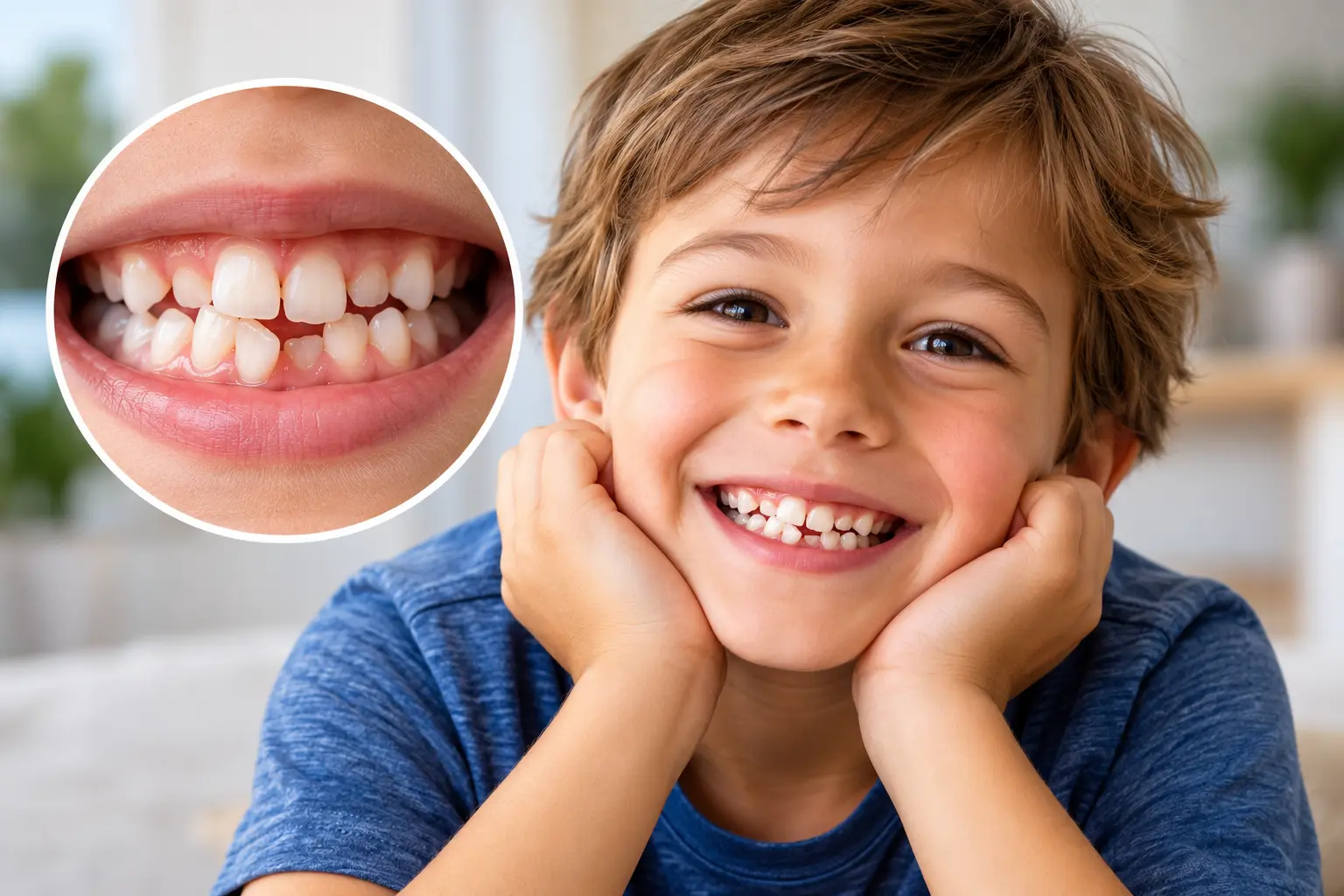

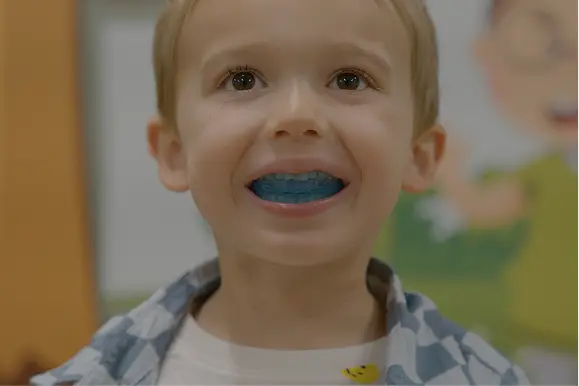
Easy to do programs. Life-changing results.
Appliance guided therapy fits effortlessly into your child’s day. No pain. No stress. Just healthier breathing, better sleep, and lasting growth from the inside out. Click the button below, take the quiz and find out if your child is at risk.
Contact Our Team
Have a question? Send us a message and we’ll get back to you soon.