

Parents often ask what progress should look like during pediatric myofunctional therapy.
Should their child sleep better? Should snoring decrease? Will they notice changes in energy, breathing, tongue posture, or jaw development?
The answer depends on the child. Progress does not always appear in one place or follow the same timeline.
At MyoWay Centers for Kids, we look at several factors together. These may include sleep-related symptoms, breathing habits, oral muscle function, tongue posture, dental arch development, bite relationships, and parent observations at home.
Olivia’s experience offers a useful example.
When she started her MyoWay program, Olivia told us, “I am always so tired.” Her family also reported nightly snoring, frequent nighttime waking, intermittent headaches, and daytime fatigue.
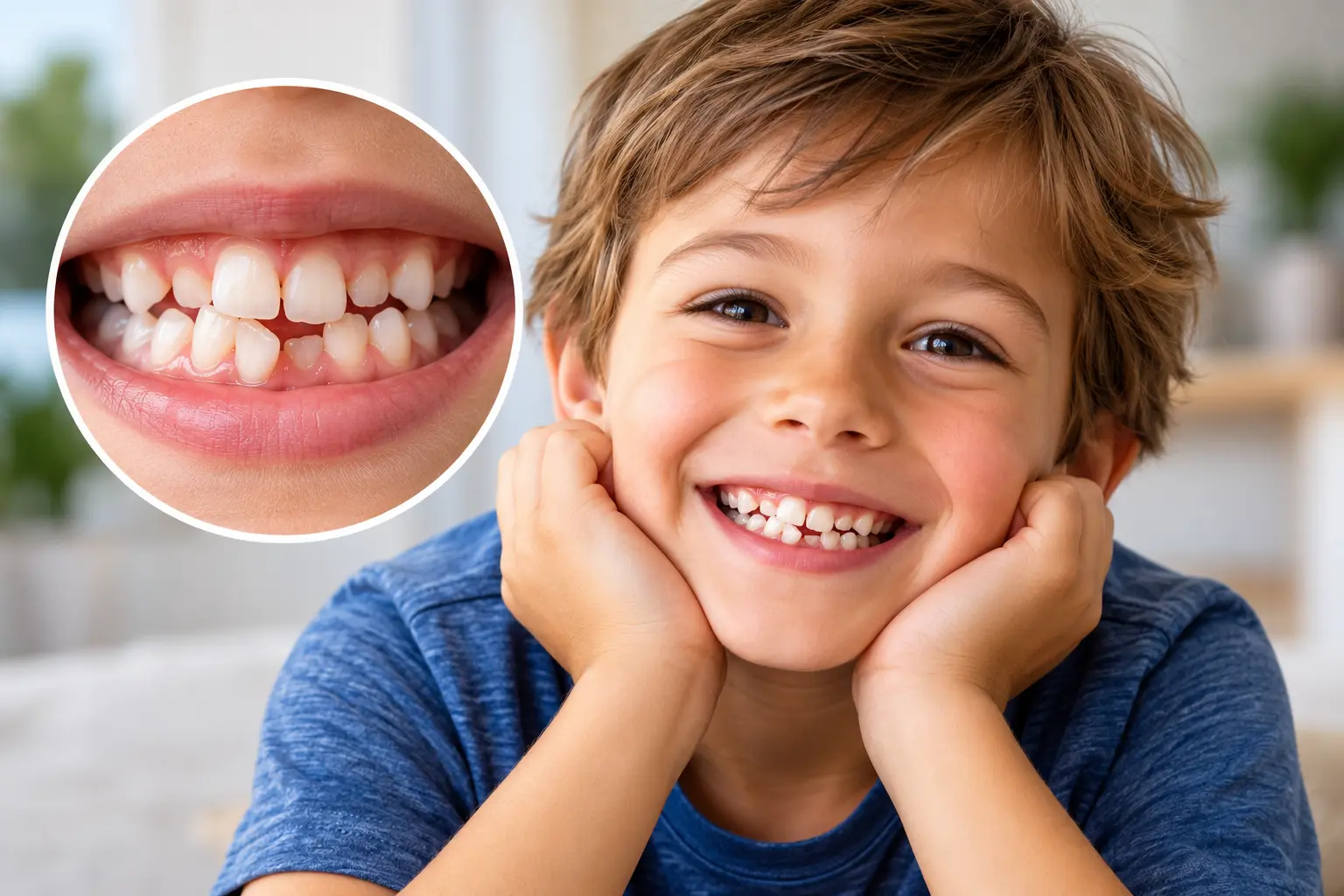
Her evaluation showed a narrow, V-shaped upper palate, a narrow lower arch, and a deep overbite.
By her fourth therapy session, her family noticed meaningful changes in how she slept and felt during the day. Her clinical review also showed visible changes in her oral development.
Olivia’s results are specific to her. They do not predict how another child will respond. Her story does show why progress involves more than one symptom or one photograph.
Why We Look at Symptoms and Structure Together
Parents usually notice changes in daily function first.
They may hear snoring at night. They may see their child sleeping with an open mouth. Some children wake repeatedly or struggle to feel rested in the morning.
Other families notice headaches, low energy, irritability, or difficulty staying focused during the day.
A clinical evaluation may reveal another part of the picture. A provider might observe a narrow dental arch, limited oral space, unusual tongue posture, bite concerns, or difficulty maintaining comfortable nasal breathing.
These signs do not automatically point to a single diagnosis.
For example, a narrow palate does not prove that a child has a sleep disorder. Snoring does not automatically mean a child has obstructive sleep apnea. Fatigue can have many causes.
That distinction matters.
Research has explored connections between craniofacial development and sleep-disordered breathing in children. A systematic review published in the Journal of Clinical Sleep Medicine found some craniofacial differences in children with obstructive sleep apnea, although the authors also noted limits in the overall certainty of the evidence.
Parents can review the systematic review of craniofacial features in children with obstructive sleep apnea for more detail.
Rather than relying on one structural feature, MyoWay looks at the whole child.
Our pediatric myofunctional therapy programs consider breathing, oral function, sleep-related concerns, jaw development, tongue posture, and muscle patterns together.
Olivia’s Starting Point
Olivia’s family came to MyoWay with several concerns.
She snored every night. She often woke during the night and experienced daytime fatigue. Intermittent headaches also affected her.
Most importantly, Olivia herself expressed how she felt.
“I am always so tired.”
Her clinical evaluation added another layer of information.
Olivia had a narrow, V-shaped upper palate. Her lower arch appeared narrow and relatively flat, and she had a deep overbite.
No single finding gave us the entire answer.
Together, however, these observations gave the team several areas to monitor as Olivia progressed through her program.
Parents who notice similar patterns can also review our guide to pediatric airway warning signs parents should know.
Why Snoring Matters During a Progress Review
Snoring gives parents something practical to observe at home.
A parent may not know what a dental arch measurement means, but they can usually tell whether their child still snores every night.
Persistent childhood snoring deserves attention.
The American Academy of Pediatrics recommends that healthcare professionals ask about snoring when evaluating children. The organization also recommends further assessment when a child snores and shows additional signs that may suggest obstructive sleep apnea.
You can review the American Academy of Pediatrics clinical guideline on childhood obstructive sleep apnea.
Not every child who snores has sleep apnea.
Still, families should not automatically dismiss frequent snoring as harmless.
At Olivia’s mid-program review, her mother reported that she was no longer snoring.
That change mattered because snoring had been one of the family’s original concerns.
We still describe the result carefully. It represents a parent-reported change during Olivia’s individual therapy program. It does not mean that myofunctional therapy cures snoring or that every child will experience the same outcome.
Daytime Changes Can Matter as Much as Nighttime Changes
Parents sometimes focus only on what happens while their child sleeps.
Daytime behavior and energy can provide important information too.
Before starting her MyoWay program, Olivia regularly felt tired. Her family also reported nighttime waking and intermittent headaches.
By her fourth therapy session, her mother described more restful sleep and much better daytime energy.
Nighttime awakenings had become rare. Her family also reported that the headaches they had previously noticed were no longer occurring.
Those observations provide useful information because they relate directly to the concerns Olivia had before therapy.
They do not prove that one factor caused every symptom.
Headaches and fatigue can come from many sources. A child who experiences ongoing symptoms may still need evaluation from a pediatrician or another appropriate healthcare professional.
Progress reviews help us compare current observations with the child’s original baseline.
What Does Structural Progress Mean?
Olivia’s fourth-session review also included her oral development.
We compared her upper palate, lower arch, bite, and jaw with her earlier records.
Visible changes had occurred in several of these areas.
Providers monitor these structures because childhood represents an important period of dental and facial development.
The American Academy of Pediatric Dentistry emphasizes careful diagnosis and treatment planning when clinicians manage developing teeth and bite relationships.
Their guidance on developing dentition and occlusion explains the importance of evaluating growth, eruption, bite relationships, and treatment timing.
At MyoWay, structural changes represent one part of a larger picture.
We also care about how a child uses the available oral space.
Tongue position, lip function, swallowing patterns, nasal breathing, and muscle coordination can all influence how a child functions.
Simply changing oral structure does not guarantee healthy function.
That is why we evaluate both.
Form and Function Work Together
Parents often hear the phrase “form and function,” but the relationship deserves some explanation.
Form refers to structure. In this context, that can include the palate, dental arches, jaw relationships, and available oral space.
Function refers to how the child uses those structures.
A child’s tongue posture, swallowing pattern, lip seal, breathing habits, and muscle coordination all fall into this category.
Structure can influence function. Function may also influence developing structures over time.
Still, the relationship is not always simple.
Genetics, growth patterns, nasal obstruction, allergies, tonsils, adenoids, oral habits, orthodontic factors, and other variables may all contribute to a child’s development.
For that reason, MyoWay does not rely on one appliance or one exercise alone.
Our approach combines several components based on each child’s needs. Parents can learn more about this process in The MyoWay Centers for Kids System.
What Myofunctional Therapy Actually Works On
Myofunctional therapy focuses on oral function and muscle patterns.
Depending on the child’s needs, therapy may address tongue posture, lip closure, swallowing mechanics, oral muscle coordination, or nasal breathing habits.
Children also need practice.
Healthy patterns usually require repetition. A child may work on a new tongue position during an appointment, but the goal involves carrying that pattern into daily life.
Home exercises can support that learning process when they form part of the child’s treatment plan.
MyoWay may also use medical-grade myofunctional appliances as part of a broader program.
The appliance does not replace the functional work.
Instead, the overall program aims to provide an environment where the child can learn, practice, and reinforce healthier oral patterns.
Why Mid-Program Reviews Are Important
A progress review gives families and providers a chance to compare current findings with the child’s starting point.
The conversation often begins with simple questions.
Is the child still snoring?
Does the child wake as often during the night?
Has morning fatigue changed?
What does the parent notice about mouth breathing?
How consistently does the child complete home practice?
The provider can also reassess oral function, tongue posture, dental arches, bite relationships, and appliance use when appropriate.
These reviews serve another important purpose.
They can show when progress is not following the expected direction.
If a child continues to snore heavily, struggles to breathe through the nose, or develops other concerning symptoms, the care team may recommend further evaluation.
The goal is not to force every child through the same program.
The goal is to respond to what that individual child needs.
Pediatric Airway Care Often Requires a Team
No single provider can address every possible cause of breathing or sleep concerns.
A pediatrician evaluates the child’s broader health.
An ear, nose, and throat specialist can evaluate tonsils, adenoids, nasal obstruction, and related anatomical concerns.
An orthodontic provider examines dental and jaw development.
A sleep specialist may recommend formal testing when symptoms suggest a possible sleep disorder.
A myofunctional provider focuses on oral function, muscle patterns, tongue posture, swallowing, and related habits.
These areas can overlap, which makes collaboration valuable.
MyoWay explains this approach further in why pediatric airway care often requires a team.
Myofunctional therapy does not replace medical evaluation.
It also does not diagnose obstructive sleep apnea or correct every anatomical cause of airway difficulty.
The right provider depends on the child’s symptoms and clinical findings.
What Research Says About Myofunctional Therapy
Research on orofacial myofunctional therapy continues to develop.
A 2024 systematic review and meta-analysis examined myofunctional therapy for obstructive sleep apnea.
The researchers found encouraging results in several adult outcomes, although pediatric evidence remained limited.
Only one pediatric randomized controlled trial met the review criteria, and adherence created an important limitation.
The authors called for more pediatric research.
You can review the systematic review of orofacial myofunctional therapy for obstructive sleep apnea.
This evidence matters because it helps us separate promising clinical observations from established conclusions.
Parents deserve both optimism and accuracy.
One child’s successful experience should not become a guarantee for every family.
What Should Parents Track During Therapy?
Parents do not need to become clinicians.
Simple observations can provide useful information.
Consider the concerns that existed before therapy started.
If snoring was a major concern, has its frequency changed?
If the child often woke during the night, does that still happen?
If mornings were difficult, does the child seem more rested?
If open-mouth posture occurred frequently, has the family noticed any change?
Consistency matters more than one unusual day or night.
Illness, allergies, travel, missed practice, or temporary congestion can influence symptoms.
Looking at patterns over time gives families and providers more useful information.
Parents should also share concerns rather than waiting until the next formal progress review.
What Olivia’s Progress Teaches Us
Olivia’s mother captured her family’s experience with a memorable statement:
“The body wants to heal and is fully capable of healing given the right tools.”
For her family, those words reflected the excitement they felt when comparing Olivia’s starting point with her fourth-session review.
Her family reported better sleep, rare nighttime waking, improved daytime energy, no current snoring, and resolution of previously reported headaches.
The clinical review also showed visible changes in her palate, dental arches, bite, and jaw development.
Those findings belong to Olivia’s individual story.
They cannot tell us what another child will experience.
What they can show is the value of measuring several parts of progress together.
A meaningful review looks at symptoms, function, structure, parent observations, and the child’s own experience.
When Is It Worth Having Your Child Evaluated?
Parents do not need to figure out the cause of snoring, mouth breathing, restless sleep, fatigue, crowded teeth, a narrow palate, or unusual oral posture on their own.
A professional evaluation can help identify which findings are present and which may deserve closer attention.
The evaluation may also help determine whether myofunctional support, dental care, orthodontic care, medical evaluation, or collaborative treatment makes sense.
If you have noticed patterns in your child’s sleep, breathing, oral posture, or jaw development, you can request a free consultation with MyoWay Centers for Kids.
Every child develops differently. A useful plan starts with understanding that individual child rather than promising a specific result or timeline.
Pediatric myofunctional therapy progress may include changes in oral function, tongue posture, breathing patterns, sleep-related symptoms, dental arch development, and parent observations. Results vary by child, and no single symptom or structural change confirms an airway disorder. Regular progress reviews help families and providers evaluate meaningful changes over time.
Frequently Asked Questions
How do you know if pediatric myofunctional therapy is working?
Providers compare the child’s current function and symptoms with the original goals. They may monitor tongue posture, oral muscle coordination, swallowing, breathing habits, sleep-related concerns, home practice, and aspects of dental or jaw development.
How quickly can children show changes during myofunctional therapy?
There is no standard timeline. Age, development, anatomy, home practice, breathing ability, treatment goals, and other care can influence how quickly a child shows changes.
Can myofunctional therapy stop a child from snoring?
Some families report changes in snoring during therapy, but myofunctional therapy should not be presented as a guaranteed cure. Persistent snoring may require evaluation by a pediatrician, sleep specialist, or ear, nose, and throat specialist.
Does a narrow palate mean my child has an airway problem?
No. A narrow palate alone does not diagnose an airway problem or sleep disorder. A qualified provider should consider the child’s symptoms, medical history, oral function, and other clinical findings.
Can a child’s dental arches change during myofunctional therapy?
Dental arches naturally change as children grow. Some programs also use appliances that support oral and jaw development. Providers should interpret any change in the context of the child’s growth and complete treatment plan.
Does myofunctional therapy replace orthodontic treatment?
No. Myofunctional therapy focuses on oral muscle function and habits. Orthodontic treatment focuses primarily on tooth position and jaw relationships. Some children benefit from coordinated care.
Should my child see a doctor if snoring continues during therapy?
Persistent snoring, gasping, pauses in breathing, significant daytime sleepiness, or difficulty breathing through the nose should be discussed with an appropriate healthcare professional.
What happens during a myofunctional therapy progress review?
A provider may compare the child’s current symptoms, breathing patterns, tongue posture, oral muscle function, home practice, dental development, and other treatment goals with the original baseline.