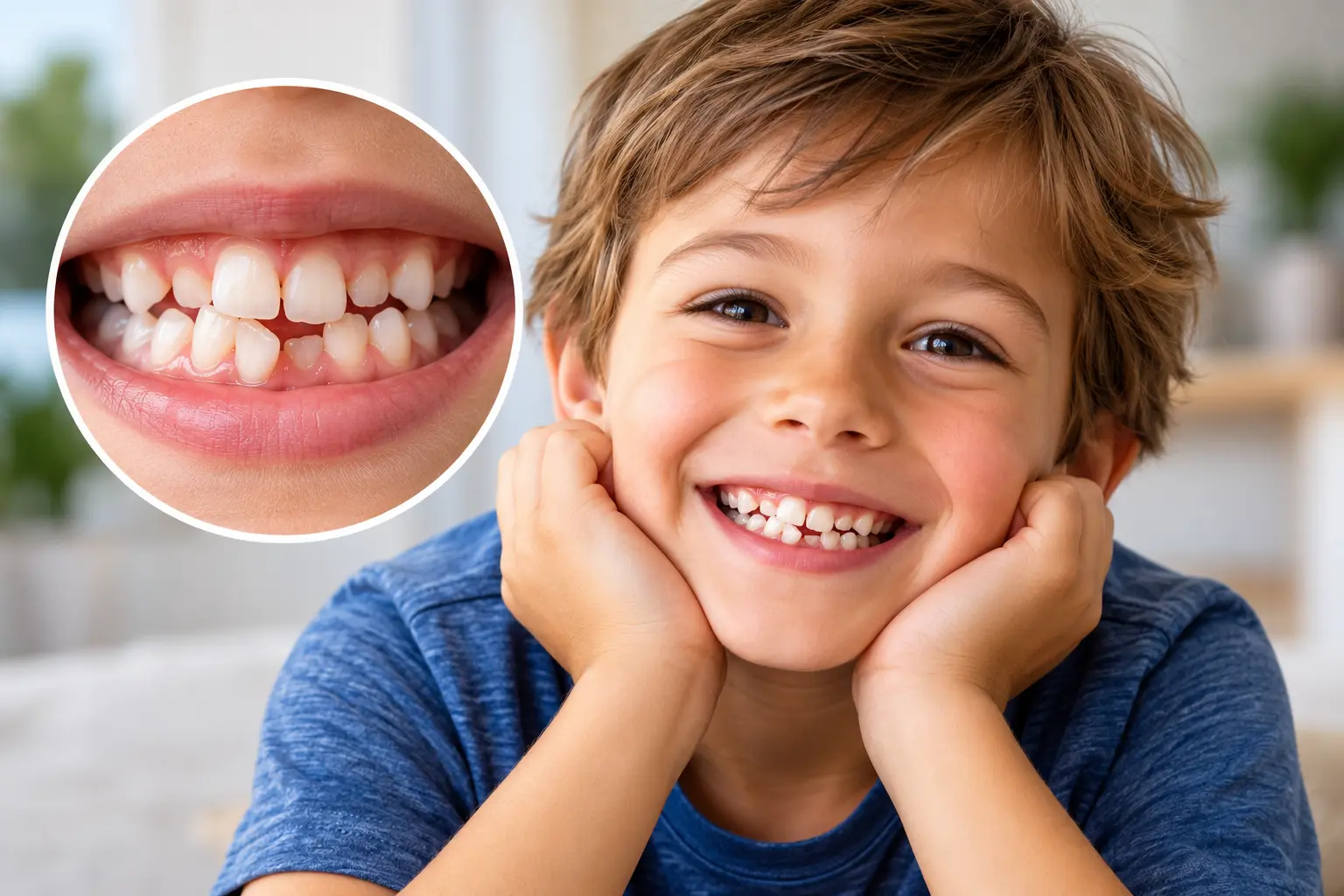


Mouth breathing. Restless sleep. Crowded teeth. Trouble focusing.
Parents often hear separate explanations for each of these concerns. A dentist may discuss the teeth. A pediatrician may address sleep or behavior. A teacher may notice attention problems at school.
Sometimes these concerns truly are separate. In other children, they may be pieces of a larger pattern involving breathing, sleep, oral function, and jaw development.
Recognizing that possibility does not mean assuming a diagnosis. It simply gives parents a better question to ask: Could some of these signs be connected?
Understanding the bigger picture can help families know what to observe, which questions to bring to their child’s healthcare providers, and when a more complete evaluation may be useful.
Why These Signs Are Often Evaluated Separately
Modern healthcare relies on specialists for good reason.
Dentists evaluate teeth and oral development. Pediatricians oversee general health. Ear, nose, and throat specialists can assess nasal obstruction, tonsils, and adenoids. Sleep physicians evaluate sleep disorders. Teachers and behavioral professionals see how children function during the day.
Each person sees an important part of the child.
Parents, however, often see something the individual providers cannot. They see the child across the entire day and night.
A parent may notice open-mouth sleeping, frequent movement at night, difficult mornings, crowded teeth, and trouble concentrating during homework. When those observations reach different providers at different times, the overall pattern can be easy to miss.
The American Academy of Pediatric Dentistry policy on obstructive sleep apnea encourages dental professionals to screen children for possible sleep-related breathing problems and refer them for appropriate medical evaluation when concerns arise. The policy also recognizes that pediatric obstructive sleep apnea can be associated with learning and behavioral difficulties.
The goal is not to assume that several symptoms share one cause. The goal is to make sure that breathing and sleep remain part of the conversation when the signs suggest they may be relevant.
Mouth Breathing Can Be an Important Clue
Children breathe through their mouths from time to time.
A cold, allergies, exercise, or temporary nasal congestion can make mouth breathing necessary. That is different from a child who regularly sits with their lips apart, sleeps with their mouth open, or seems unable to breathe comfortably through the nose.
Persistent mouth breathing can have several possible explanations.
Nasal congestion, allergies, enlarged tonsils or adenoids, structural differences, oral posture, and established breathing patterns may all contribute. That is why simply reminding a child to close their mouth may not solve the underlying issue.
A more useful question is:
Why is comfortable nasal breathing difficult for this child?
Research has found associations between chronic mouth breathing and differences in facial, jaw, and dental development. Researchers continue to study the exact relationship, and current evidence does not prove that mouth breathing alone causes a specific growth pattern.
A systematic review and meta-analysis of mouth breathing and facial skeletal development found measurable craniofacial differences between groups of children who primarily mouth breathed and those who primarily breathed through their noses.
Parents who want to explore this topic in greater detail can read MyoWay’s guide to what may be behind pediatric mouth breathing.
Mouth breathing alone does not provide a diagnosis. When it continues over time, however, it gives parents and clinicians useful information to investigate.
Restless Sleep Adds Another Piece
The amount of time a child spends in bed does not always tell us how well that child sleeps.
Some children appear to sleep for nine or ten hours but move frequently, breathe noisily, wake several times, or struggle to reach restful sleep.
Parents may notice signs such as:
- Regular snoring
- Open-mouth sleeping
- Frequent tossing and turning
- Teeth grinding
- Sweating during sleep
- Unusual sleeping positions
- Frequent waking
- Difficulty getting up in the morning
One sign by itself does not automatically indicate a sleep disorder.
Regular snoring and ongoing disturbed sleep, however, deserve attention.
The American Academy of Pediatrics has identified habitual snoring, disturbed sleep, and daytime neurobehavioral concerns among findings associated with pediatric obstructive sleep apnea in its clinical guideline on childhood obstructive sleep apnea.
This becomes particularly important when a child shows signs both day and night.
For example, a child may breathe through the mouth while watching television, sleep with the mouth open, snore regularly, and wake up tired. Looking at those observations together provides more information than treating each one as an isolated event.
Families who also notice school or attention concerns may find our article on how breathing can affect a child’s academic performance useful.
Where Crowded Teeth Fit Into the Picture
Parents usually think of crowded teeth as an orthodontic issue.
That makes sense. Still, teeth develop within a larger system that includes the jaws, tongue, lips, cheeks, palate, and surrounding muscles.
Dental crowding does not prove that a child has an airway problem.
It can provide another piece of information about oral and jaw development.
A narrow dental arch, limited space for permanent teeth, oral posture differences, and certain bite patterns may appear alongside breathing or sleep concerns in some children.
Research has reported associations between mouth breathing and several craniofacial measurements. These findings do not establish a simple cause-and-effect relationship. Genetics, skeletal growth, oral habits, muscle function, tongue posture, and other factors can also influence facial and dental development.
This distinction matters.
Parents should not assume that crowded teeth mean their child has an airway disorder. At the same time, clinicians do not need to view the teeth as completely separate from the child’s breathing patterns and oral function.
When dental crowding appears alongside persistent mouth breathing and restless sleep, a broader evaluation may help provide context.
Why Daytime Focus Matters
Trouble focusing can have many possible causes.
Some children have an attention disorder. Others may struggle because of anxiety, learning differences, stress, insufficient sleep, environmental factors, or several issues at once.
Parents should not use breathing or sleep as a substitute for an appropriate behavioral, developmental, or medical evaluation.
Sleep still deserves consideration when a child has both nighttime symptoms and daytime difficulties.
A systematic review and meta-analysis of neurocognitive outcomes in children with sleep-disordered breathing found differences across several areas of cognitive function when researchers compared children with sleep-disordered breathing with children without it.
The evidence varies across studies and across individual children. Sleep problems do not explain every attention or behavior concern.
Still, poor-quality sleep may contribute to difficulties with alertness, emotional regulation, learning, or attention in some children.
This makes one parent question especially valuable:
If my child is struggling during the day, what is happening while they sleep?
Look for Patterns, Not One Isolated Sign
One symptom often has many possible explanations.
A pattern gives parents and providers more context.
Consider two children with crowded teeth.
The first child breathes comfortably through the nose, sleeps quietly, wakes rested, and functions well throughout the day.
The second child also has crowded teeth, but regularly sleeps with an open mouth, snores, moves constantly at night, wakes tired, and struggles to concentrate at school.
Both children have dental crowding. Their overall pictures are very different.
The second child’s pattern does not tell us the diagnosis. It tells us that more questions may be worth asking.
That difference is important.
At MyoWay Centers for Kids, we look at the relationship between structure and function rather than focusing only on a single symptom. Families can learn more about this approach on our Programs and Therapy page.
Parents who are unfamiliar with myofunctional therapy can also read Pediatric Myofunctional Therapy: More Than Just Mouth Exercises.
What Parents Can Observe at Home
Parents do not need to diagnose anything.
Observation is enough.
Start by watching how your child breathes while relaxed. Do their lips stay together naturally, or is the mouth frequently open? Can your child breathe comfortably through the nose when they are not sick?
Then listen occasionally during sleep.
Quiet breathing is different from frequent snoring, loud breathing, gasping, or other unusual sounds.
Pay attention to movement as well. Some children toss and turn frequently, sweat heavily, sleep in unusual positions, or wake multiple times during the night.
Morning behavior can provide clues too.
Does your child wake refreshed, or does every morning feel like a struggle? Do they complain of being tired despite spending enough time in bed?
Daytime patterns matter as well.
A teacher may mention concentration difficulties. Parents may notice irritability, unusually high activity, sleepiness, or difficulty completing homework.
Finally, think about what your child’s dentist or orthodontic provider has said about development. Dental crowding, narrow arches, certain bite relationships, oral habits, or tongue posture may add useful context.
No single observation confirms a diagnosis.
The value comes from recognizing a pattern and sharing it with the appropriate professionals.
Who Should Evaluate These Concerns?
Different children need different types of evaluation.
A child with persistent nasal congestion or suspected obstruction may need assessment by a pediatrician or an ear, nose, and throat specialist.
Regular snoring, gasping, pauses in breathing, or concern about sleep apnea should prompt a conversation with an appropriate medical provider. A sleep specialist may recommend further testing when necessary.
A dentist or orthodontic professional should evaluate concerns involving teeth, bite, and jaw development.
Clinicians trained in pediatric myofunctional therapy can assess areas such as oral rest posture, tongue and lip function, swallowing patterns, and established oral breathing habits.
Collaboration often provides the clearest picture.
The American Academy of Pediatric Dentistry also supports multidisciplinary management when a child may have obstructive sleep apnea rather than relying on a single dental intervention without appropriate medical assessment.
Sometimes an evaluation confirms that a concern needs treatment. Other times, its greatest value is helping a family understand what does not need treatment and which professional, if any, should be involved next.
Why Early Awareness Can Help
Parents sometimes hesitate to ask questions because they worry about overreacting.
The goal is not to turn every restless night or open mouth into a medical concern.
Children get congested. They have occasional poor nights of sleep. Teeth can become crowded for many reasons.
Frequency and persistence matter.
A child who occasionally mouth breathes during a cold presents a different picture from a child who regularly mouth breathes, snores, wakes tired, and struggles during the day.
Recognizing those patterns earlier gives parents more time to gather information and involve the appropriate providers.
An evaluation can help determine whether oral function, nasal breathing, sleep, dental development, or another factor deserves further attention.
Join Our Parent Education Event on October 13
Many families come to MyoWay after receiving separate explanations for separate symptoms.
That experience inspired our upcoming Parent Education Event at MyoWay Centers for Kids on October 13 from 7:00 to 8:00 p.m.
During the event, Dr. Leslie Pasco will help parents explore the connections between breathing, sleep, jaw development, and how children function during the day.
The purpose is education, not diagnosis.
Parents will learn which signs may deserve attention, how to look at several concerns as part of a larger picture, and what questions they can start asking their child’s healthcare providers.
If you have noticed mouth breathing, restless sleep, crowded teeth, trouble focusing, or a combination of these signs, the event is an opportunity to learn more and ask questions in a parent-focused setting.
Sometimes the first helpful step is simply understanding what you are seeing.
Frequently Asked Questions
Are mouth breathing, restless sleep, crowded teeth, and attention problems always connected?
No. Each concern can have several possible causes. When multiple signs occur together, it may be helpful to consider breathing, sleep, oral function, and jaw development as parts of the larger clinical picture.
Does mouth breathing cause crowded teeth?
Current research shows an association between mouth breathing and some facial and dental development patterns, but it does not prove that mouth breathing alone causes crowded teeth. Genetics, growth, oral habits, tongue posture, and muscle function can also contribute.
Can poor sleep affect a child’s ability to focus?
Yes, it may. Research has associated sleep-disordered breathing with differences in attention, learning, behavior, and other areas of cognitive function in some children. Sleep problems do not explain every attention concern, so children with persistent difficulties still need appropriate evaluation.
Is snoring normal in children?
Children may occasionally snore during a cold or temporary congestion. Regular snoring deserves more attention, particularly when it occurs with mouth breathing, restless sleep, gasping, breathing pauses, or daytime concerns.
Do crowded teeth mean my child has an airway problem?
No. Crowded teeth cannot diagnose an airway problem. They can become one piece of information when a provider evaluates jaw development, oral function, breathing patterns, and other symptoms.
Does every child who mouth breathes need myofunctional therapy?
No. The appropriate next step depends on why the child mouth breathes. Nasal obstruction, allergies, enlarged tonsils or adenoids, structural factors, oral function, learned patterns, or several factors may contribute. An evaluation can help clarify what type of support is appropriate.
What does a pediatric myofunctional evaluation look at?
An evaluation may examine oral rest posture, tongue and lip function, swallowing patterns, breathing habits, oral behaviors, sleep-related symptoms, and aspects of dental and jaw development. When findings suggest a medical concern, collaboration with or referral to the appropriate healthcare professional may be necessary.
When should I have my child evaluated?
Consider discussing your concerns with an appropriate provider when mouth breathing, snoring, restless sleep, dental development concerns, or daytime difficulties become frequent, persistent, or occur together. Seek prompt medical attention for significant breathing difficulty or concerning pauses in breathing.
Start by Looking at the Whole Child
Parents do not need to decide on a treatment simply because several signs look familiar.
Start with questions.
How does your child breathe when relaxed? How do they sleep? Do they wake refreshed? How are their jaws and teeth developing? What happens during the school day?
Looking at those areas together can help families make more informed decisions about which professionals should become involved.
Parents who want to learn more can join us at MyoWay Centers for Kids on October 13 from 7:00 to 8:00 p.m. for our Parent Education Event with Dr. Leslie Pasco.
Families who would like to discuss their child’s individual breathing, sleep, jaw development, or oral function can also request a free MyoWay evaluation.
The goal is not to assume that every symptom has one explanation. It is to help parents see the whole picture and understand which questions may be worth asking next.