
Parents rarely begin their search by asking for myofunctional therapy. They begin with a child who snores loudly enough to be heard from another room, wakes with a dry mouth, tosses throughout the night, or seems tired despite spending enough hours in bed.
Sometimes the most meaningful change is not dramatic. It is the sudden absence of a familiar sound.
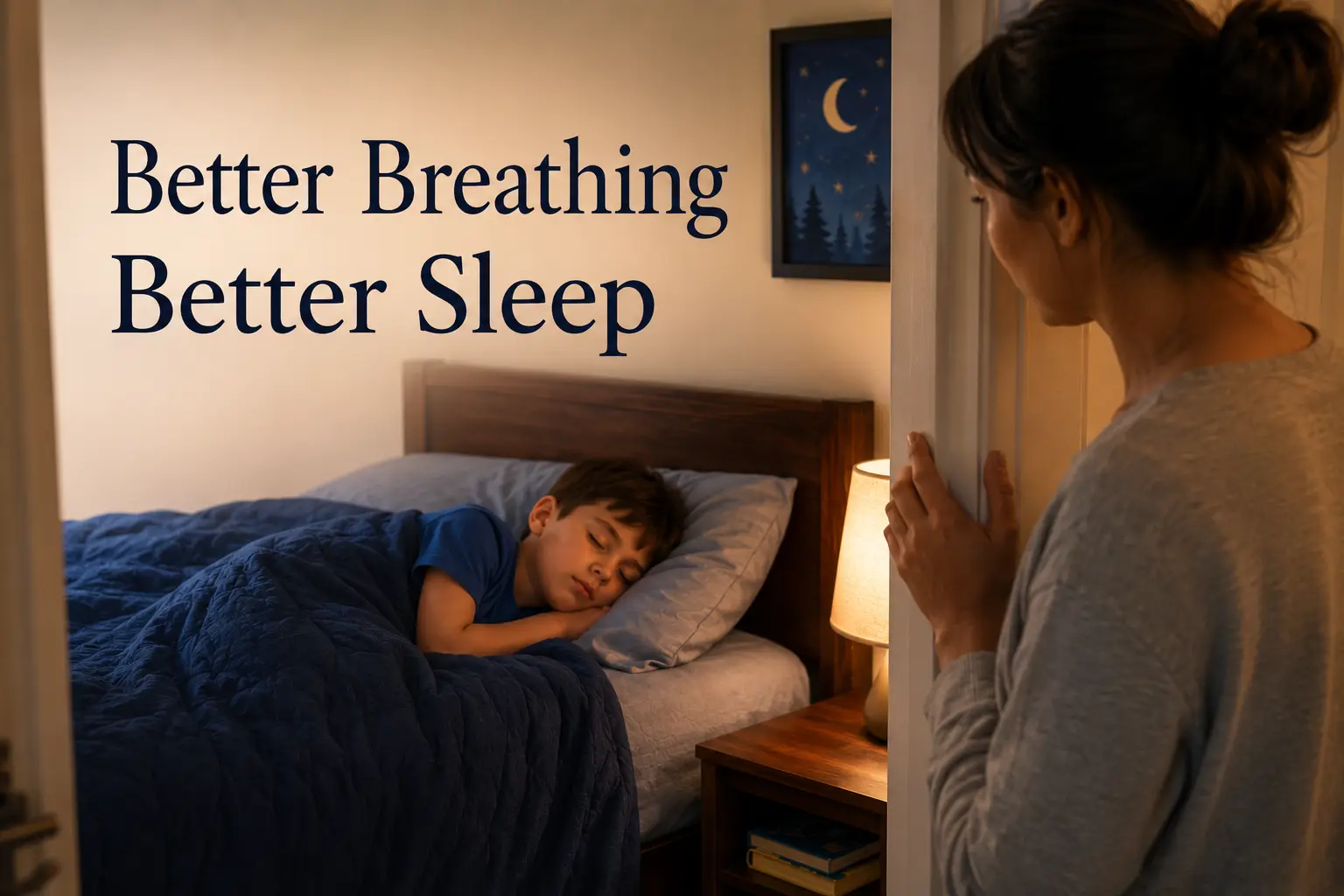
One MyoWay mother recently described how she used to hear her child snoring from all the way down the hall. After he had participated in therapy for several months, his bedroom became so quiet that she found herself tiptoeing inside to make sure he was still breathing.
That experience does not guarantee that every child will have the same result. It does, however, illustrate why parents’ observations matter. Changes in snoring, mouth breathing, sleep position, restlessness, morning energy, and daytime function can provide useful information about how a child is responding to care.
At MyoWay Centers for Kids, stories like these are not viewed as proof that one solution works for every child. They are reminders that breathing and sleep deserve careful attention, and that progress should be evaluated in the context of each child’s anatomy, habits, health history, development, and consistency with therapy.
Why Families Often Notice Sleep Changes First
Parents may not be able to see their child’s tongue posture or understand how the muscles of the lips, cheeks, and jaw are coordinating. They can usually tell when bedtime begins to feel different.
They may notice that their child is quieter. The child may move less, keep the mouth closed more often, wake less frequently, or seem more comfortable in bed. Morning routines may become easier because the child appears more rested.
These observations are meaningful because sleep-related breathing problems are not always obvious during a daytime appointment. A child may appear energetic, social, and healthy while still snoring, mouth breathing, grinding the teeth, sweating, or sleeping restlessly at night.
The American Academy of Pediatric Dentistry recognizes that obstructive sleep apnea occurs in children and encourages healthcare professionals to screen for increased risk and refer for medical evaluation when indicated. Its current policy also notes that pediatric obstructive sleep apnea may be associated with learning, behavioral, growth, and cardiovascular concerns.
Snoring alone does not confirm sleep apnea, and a parent testimonial cannot establish a diagnosis. Persistent snoring or disrupted breathing does warrant a conversation with the child’s pediatrician, dentist, sleep specialist, ear, nose, and throat physician, or another appropriately trained provider.
Parents who want a more detailed explanation of common nighttime warning signs can read why snoring in children should not be ignored.
What a Myofunctional Therapy Success Story Really Means
A success story should be more than a before-and-after statement. In clinical care, meaningful progress is usually a collection of smaller changes observed over time.
For one child, progress may mean that loud snoring becomes occasional or stops being reported. For another, it may mean the child begins falling asleep with the lips together instead of the mouth hanging open. Some parents notice less restless movement, fewer unusual sleep positions, or easier mornings.
These changes do not all mean the same thing, and they should not be interpreted in isolation. A quiet night does not automatically prove that the airway is healthy. Likewise, continued symptoms do not necessarily mean therapy has failed. Nasal obstruction, enlarged tonsils or adenoids, allergies, jaw development, tongue mobility, sleep habits, weight, and other medical factors may influence breathing.
At MyoWay, the clinical question is not simply, “Did the snoring stop?” The larger questions include:
- Is nasal breathing becoming easier and more consistent?
- Can the child maintain a comfortable lip seal?
- Is the tongue developing a healthier resting position?
- Are oral and facial muscles working with better coordination?
- Has sleep become quieter or less restless?
- Are the changes sustainable outside a therapy session?
- Does the child need evaluation or co-treatment from another provider?
This broader approach is important because pediatric myofunctional therapy is not intended to replace medical diagnosis, sleep testing, surgery, orthodontics, allergy care, or other appropriate treatment. It may be used as part of a coordinated plan when oral function, breathing habits, and muscle patterns are contributing concerns.
The MyoWay programs and therapy page explains how programs may include age-appropriate muscle training, breathing support, parent coaching, progress monitoring, and appliance guidance based on the child’s needs.
The Difference Between a Parent Observation and a Medical Outcome
Parents are often the first people to recognize improvement because they see their child every night and every morning. Their reports are valuable, but they are not the same as objective medical findings.
A parent may say:
“My child is no longer snoring from across the house.”
“My child wakes up more easily.”
“I see less open-mouth sleeping.”
“Bedtime no longer feels like a struggle.”
“She seems calmer in the morning.”
These are real and useful observations. They can help a care team decide what to examine next and whether additional assessment is appropriate.
A medical outcome may require other tools, such as a clinical examination, validated questionnaire, nasal airway assessment, medical referral, or overnight sleep study. Which tools are needed depends on the child and the severity of the symptoms.
This distinction protects families from two common mistakes. The first is dismissing a parent’s observations because they are subjective. The second is treating a positive observation as proof that every underlying concern has been resolved.
In Dr. Leslie Pasco’s clinical experience, the most productive approach is to listen carefully to what the parent is noticing, compare it with functional findings, and continue monitoring rather than declaring success too early.
Why Breathing Habits May Continue Even After an Obstruction Is Addressed
Some children develop mouth-breathing habits because nasal breathing has been difficult for a long time. Even when allergies are better controlled or enlarged tonsils and adenoids have been treated, the established pattern may remain.
The lips may continue to rest apart. The tongue may remain low in the mouth. The child may still rely on open-mouth breathing during sleep because that is the neuromuscular pattern the body has practiced.
This is one reason collaboration matters. A medical provider may address tissue or obstruction, while myofunctional therapy focuses on function, coordination, oral posture, and breathing habits when appropriate.
Parents who have seen mouth breathing continue after a medical procedure may find this guide to persistent mouth breathing after surgery helpful. The article explains why removing an obstruction does not always retrain the surrounding muscles or change a long-standing breathing pattern.
Myofunctional therapy should not be presented as a substitute for identifying nasal obstruction or another medical condition. An evaluation can help determine whether the primary issue appears structural, functional, medical, habitual, or a combination.
How Myofunctional Therapy May Support Sleep and Breathing
Pediatric myofunctional therapy uses guided activities to improve awareness, coordination, strength, and resting patterns involving the tongue, lips, cheeks, and jaw.
Depending on the child, therapy may focus on comfortable lip closure, tongue posture, swallowing, chewing, nasal-breathing habits, oral muscle coordination, and consistency at home. Some MyoWay programs also use medical-grade appliances and breathing exercises as part of an individualized plan.
The objective is not to teach a child to force the mouth closed when the nose is obstructed. The objective is to identify what is interfering with healthy function and help the child build a more appropriate pattern when nasal breathing is medically possible.
Research into myofunctional therapy for pediatric sleep-disordered breathing is developing. A 2020 systematic review reported improvements in apnea-hypopnea measures and oxygen saturation among children with mild to moderate obstructive sleep apnea, suggesting that myofunctional therapy may have a role as an adjunctive intervention.
Other reviews have been more cautious. A 2024 systematic review found that evidence in children was limited by adherence challenges and concluded that more research is needed regarding long-term outcomes.
That balance matters. Current evidence supports continued study and careful use in selected patients, but it does not justify promising that therapy will eliminate snoring, cure sleep apnea, or produce the same response for every child.
For a fuller overview of what this type of care includes, read pediatric myofunctional therapy is more than mouth exercises.
What Parents May Notice During the First Several Months
Progress is rarely perfectly linear. Children may improve in one area before another, and new routines often take repetition.
During the early stages, parents may first notice greater awareness. A child may begin recognizing when the mouth is open, when the tongue is resting low, or when breathing becomes noisy.
Later, the parent may see more consistent changes:
Quieter sleep
Snoring or heavy breathing may become less frequent or less intense for some children. Any persistent or concerning breathing disturbance should still be discussed with an appropriate medical provider.
More frequent nasal breathing
A child may begin using the nose more consistently during calm daytime activities and, eventually, during sleep. Nasal breathing should feel comfortable rather than forced.
Improved lip closure
Some children develop better endurance and coordination for keeping the lips together at rest. This may be difficult when nasal obstruction remains present, which is why screening and referral are important.
Less restless sleep
Parents may report fewer position changes, less thrashing, or fewer unusual sleeping postures. These observations can be tracked, but they do not replace medical assessment.
Better mornings
A child may appear easier to wake, less irritable, or more alert. Improved morning behavior can be encouraging, although many factors influence energy and mood.
Greater independence with home practice
The child may need fewer reminders to complete exercises or use an appliance as directed. This is an important form of success because consistency influences whether new patterns become automatic.
Not every child will experience all of these changes. Some children need additional care from an ear, nose, and throat physician, allergist, pediatrician, orthodontist, sleep specialist, speech-language pathologist, or other provider before meaningful progress is possible.
Why Consistency Often Matters More Than Intensity
Myofunctional therapy involves motor learning. The child is practicing patterns that may eventually need to occur without conscious effort, including during sleep.
One long practice session cannot replace regular repetition. Children generally do better when therapy is incorporated into a predictable routine and supported by a parent without making the process punitive.
A successful home routine might involve brief practice at the same time each day, visual reminders, age-appropriate explanations, and positive reinforcement. It should also allow the care team to identify obstacles honestly.
If a child cannot breathe comfortably through the nose, repeatedly reminding the child to close the mouth is unlikely to solve the underlying problem. If an appliance is uncomfortable or exercises are too difficult, that information should be shared with the treating team.
Clinical success is not about perfect compliance. It is about finding a realistic process that helps the child practice correctly and allows the plan to be adjusted when needed.
Why Every Child’s Story Is Different
Two children can have the same symptom and need very different care.
One child may snore because of enlarged tonsils and adenoids. Another may have chronic nasal congestion. Another may have a narrow palate, low tongue posture, or poor oral muscle coordination. Some children have several contributing factors at the same time.
Age also matters. A preschool child, a seven-year-old, and a teenager are at different developmental stages and may respond differently to coaching, appliances, exercises, and growth guidance.
This is why online success stories should be read as examples, not treatment predictions. A testimonial can help a parent recognize a concern or feel less alone, but it cannot determine what another child needs.
The Conditions We Treat page outlines the breathing, sleep, oral-function, and developmental concerns that may lead a family to seek an evaluation.
What to Record Before and During Therapy
Parents often have a strong general impression that sleep is better or worse, but specific observations are more useful during follow-up appointments.
Consider keeping a simple weekly record of:
- How often snoring is heard
- Whether the child sleeps with the mouth open
- How restless the child appears
- Whether teeth grinding is noticed
- How often the child wakes
- Whether the child wakes with a dry mouth
- How difficult the child is to wake in the morning
- Morning mood and energy
- Daytime nasal versus mouth breathing
- Home-practice consistency
Occasional short recordings of snoring or unusual breathing may also help a pediatrician or sleep specialist understand what is happening, provided the recording does not delay urgent care when a child appears to be struggling to breathe.
Parents should seek prompt medical guidance when they observe pauses in breathing, gasping, choking, bluish coloration, significant difficulty breathing, or other alarming symptoms.
The Role of Collaborative Care
A responsible myofunctional program does not assume that every breathing concern can be explained by muscle function.
Children may need care from multiple professionals. A pediatrician may review the child’s overall health and development. An ear, nose, and throat physician may evaluate the nose, tonsils, adenoids, and upper airway. An allergist may investigate chronic congestion. A sleep physician may determine whether a sleep study is appropriate. A dentist or orthodontist may assess jaw growth, dental development, and oral structures.
Myofunctional therapy may then support the functional part of the plan by helping the child develop healthier oral posture, breathing habits, and muscle coordination.
This team approach is especially important when symptoms are severe, persistent, or inconsistent with the findings of a routine examination.
What Success Should Not Be Measured By
A child’s progress should not be judged solely by cosmetic appearance, a single quiet night, or a comparison with another patient.
Success should also not depend on promises such as:
“Your child will never need orthodontic treatment.”
“This will cure sleep apnea.”
“This always stops snoring.”
“This will correct behavior problems.”
Those statements oversimplify complex developmental and medical concerns.
A more appropriate definition of success is that the child shows measurable, sustainable improvement in the functions being addressed, the family understands the care plan, concerning symptoms are referred appropriately, and progress is reviewed over time.
For some children, that may include quieter sleep and more consistent nasal breathing. For others, success may mean identifying a previously unrecognized issue and connecting the family with the correct medical specialist.
When a Parent’s Instinct Deserves a Closer Look
Parents often know when something has changed, even if they cannot name it clinically.
Perhaps the child’s snoring can be heard through a closed door. Perhaps the child sleeps with the neck extended, wakes soaked in sweat, or appears exhausted every morning. Perhaps a child who used to sleep quietly has developed noisy breathing.
These observations should not create panic, but they should not be dismissed.
MyoWay’s parent testimonial about a bedroom becoming unexpectedly quiet is powerful because it captures a real shift in family life. The mother was no longer hearing the loud snoring that had become normal in her home. Her instinct was to step into the room and check.
That story represents one family’s experience, not a guaranteed outcome. It also highlights something clinically important: parents are essential observers. They often notice the first sign that a problem is developing and the first sign that a pattern may be changing. This parent-centered emphasis is consistent with MyoWay’s thought-leadership approach of combining clinical education with authentic family experiences.
Taking the Next Step Without Fear or Pressure
A child who snores or mouth breathes does not automatically need myofunctional therapy. The first step is understanding what is happening and which type of evaluation is appropriate.
Parents can begin by reviewing the MyoWay pediatric breathing risk questions and discussing concerning findings with the child’s healthcare providers. The screener can identify patterns worth exploring, but it does not provide a diagnosis.
Families who want to understand whether oral posture, jaw development, muscle function, or breathing habits may be contributing can also request a free MyoWay evaluation. The purpose of an evaluation is to gather information, explain observations, and determine whether myofunctional care, medical referral, collaborative treatment, or monitoring may be appropriate.
Better sleep and quieter breathing can be meaningful goals. The safest path begins with careful observation, appropriate screening, realistic expectations, and a plan designed for the individual child.
Frequently Asked Questions
Can myofunctional therapy stop a child from snoring?
Myofunctional therapy may help selected children develop healthier oral posture, muscle coordination, and nasal-breathing habits. Some parents report reduced snoring, but results vary. Snoring may also be related to enlarged tonsils, nasal obstruction, allergies, sleep apnea, jaw development, or other factors that require medical evaluation.
How soon do parents notice changes in sleep?
The timeline varies. Some families notice changes in awareness or daytime breathing first, while nighttime changes may take longer. Progress depends on the child’s age, contributing conditions, consistency, treatment plan, and whether medical or structural concerns also need to be addressed.
Does quiet sleep mean my child’s airway problem is resolved?
Not necessarily. Quieter sleep may be encouraging, but it does not confirm that an airway or sleep disorder has resolved. A healthcare professional may recommend additional evaluation or a sleep study based on the child’s symptoms and history.
Is myofunctional therapy a treatment for pediatric sleep apnea?
Myofunctional therapy may be used as an adjunct in selected children, but it should not replace diagnosis or established medical treatment for obstructive sleep apnea. Research is promising in some areas, but pediatric evidence remains limited and results vary.
What does pediatric myofunctional therapy involve?
Therapy may involve exercises and activities that support tongue posture, lip closure, swallowing, chewing, nasal-breathing habits, and oral muscle coordination. Some programs may also use appliances, breathing instruction, home videos, parent coaching, and collaboration with medical or dental providers.
What should I do if my child snores every night?
Discuss frequent snoring with your child’s pediatrician or another appropriately trained healthcare provider. Record related observations such as mouth breathing, gasping, pauses, restlessness, sweating, unusual sleep positions, morning headaches, irritability, or daytime fatigue.
Can myofunctional therapy replace tonsil or adenoid surgery?
No. Myofunctional therapy does not remove enlarged tissue or correct every source of airway obstruction. An ear, nose, and throat physician can determine whether surgery or other medical care is appropriate. Therapy may sometimes be used before or after a procedure to address functional breathing and oral-posture patterns.
Are MyoWay success stories typical for every child?
No. Testimonials describe individual experiences and cannot predict another child’s results. Each child has a different combination of anatomy, health conditions, habits, development, and treatment needs.