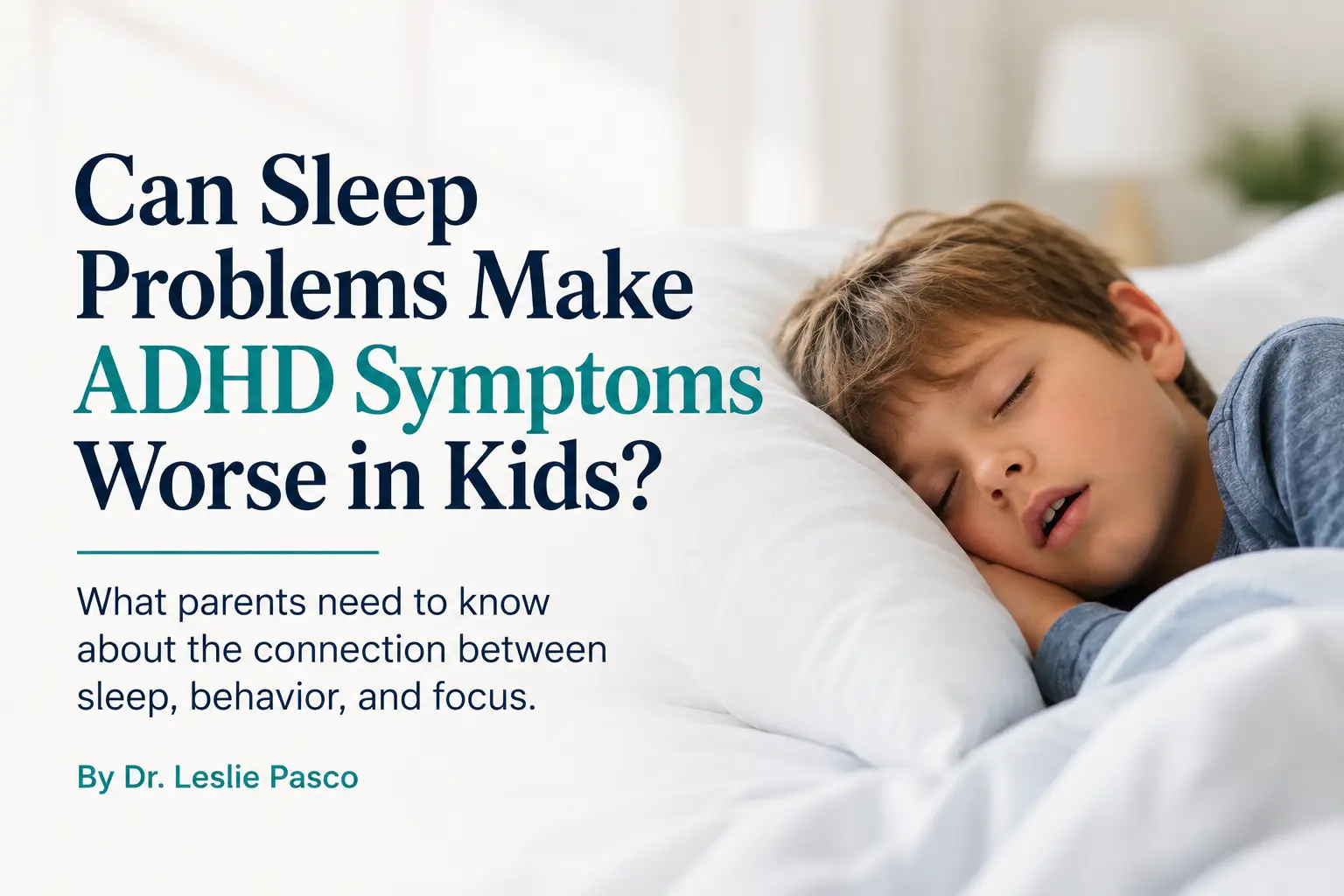
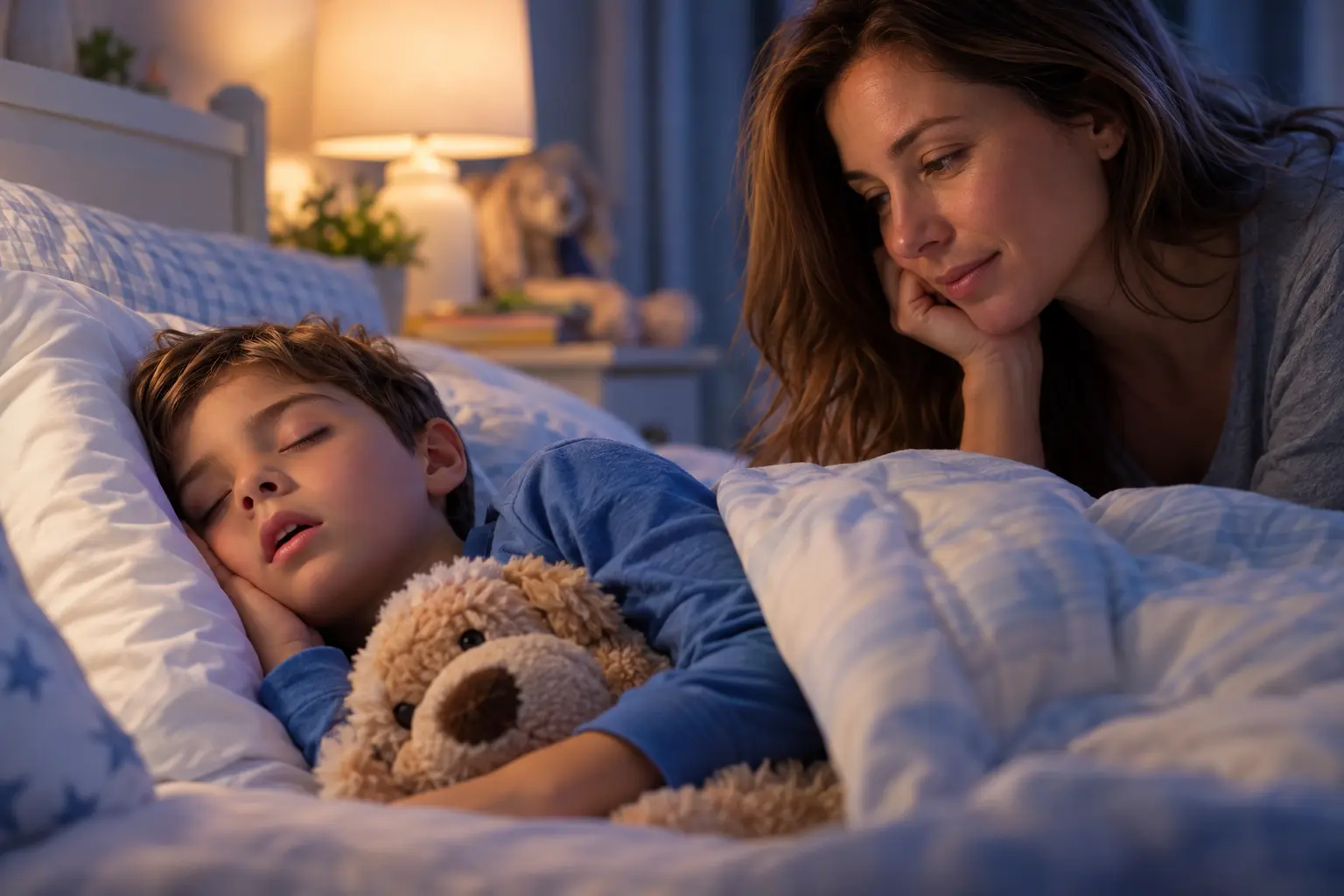

A child can spend nine or ten hours in bed and still wake up tired.
That can be confusing for parents. Bedtime seemed reasonable. The child stayed in bed. Nothing obvious happened overnight. Yet mornings are difficult, energy drops during the day, or teachers begin mentioning focus, mood, or behavior.
Sometimes the missing information is not how long a child slept, but how comfortably they breathed while sleeping.
Snoring, open-mouth breathing, restless sleep, frequent waking, unusual sleeping positions, and difficult mornings can all provide useful clues. None of these signs can diagnose a sleep disorder on their own, and many have causes unrelated to the airway. When they happen regularly or occur together, however, they are worth noticing and discussing with the appropriate healthcare professional.
In my work with children and families, I encourage parents to become careful observers rather than trying to diagnose a problem at home. A few specific observations can make a clinical conversation much more useful.
Why Nighttime Breathing Matters
Sleep is not simply a period when a child is inactive. It is an important part of physical development, learning, memory, emotional regulation, and daytime function.
The American Academy of Sleep Medicine recommends that children ages 3 to 5 generally receive 10 to 13 hours of sleep per 24 hours, children ages 6 to 12 receive 9 to 12 hours, and teenagers ages 13 to 18 receive 8 to 10 hours. Regularly obtaining the recommended amount of sleep is associated with better attention, behavior, learning, memory, and emotional regulation. Read the American Academy of Sleep Medicine consensus recommendations.
Sleep quantity is only one part of the picture.
A child may have enough opportunity to sleep but still experience disrupted sleep. Breathing difficulties are one possible reason, although they are not the only one.
The current American Academy of Pediatric Dentistry policy on obstructive sleep apnea recommends screening children for signs that may suggest increased risk and facilitating medical referral when appropriate.
Parents are often the first people who can provide that nighttime information.
What Does Comfortable Breathing Look Like During Sleep?
Parents sometimes ask what they are supposed to see when they check on a sleeping child.
There is normal variation. Children change positions, make occasional noises, and may temporarily breathe through the mouth during a cold or nasal congestion.
The goal is not perfectly silent, motionless sleep.
Instead, look for a general pattern of comfortable breathing. Breathing should not routinely appear strained or unusually noisy. When nasal breathing is comfortable, the lips are often gently closed. The child should not consistently look as though breathing requires extra effort.
Repeated patterns matter more than one isolated night.
If a child regularly sleeps with an open mouth, MyoWay’s article on what may be behind pediatric mouth breathing explains several reasons why persistent mouth breathing deserves a closer look.
Signs Worth Noticing While Your Child Sleeps
Regular snoring
Snoring during an occasional cold is different from snoring that occurs repeatedly when a child is otherwise healthy.
Frequent or loud snoring is among the signs healthcare professionals may consider when screening children for possible sleep-related breathing concerns.
Snoring does not automatically mean a child has obstructive sleep apnea. It also cannot tell you how severe a breathing issue may be.
It is simply useful information.
If you hear snoring several nights each week, write down how often it occurs and whether you notice other symptoms at the same time.
Sleeping with the mouth open
Look at your child after they have been asleep for a while.
Is the mouth generally closed, or does it remain open through much of the night?
Persistent mouth breathing may occur when comfortable nasal breathing is difficult. Possible contributors can include nasal congestion, allergies, enlarged tonsils or adenoids, structural factors, or established breathing habits.
Oral posture can also remain altered after an earlier obstruction has improved.
That is why mouth breathing should not automatically be treated as a behavioral problem. The more useful question is why nasal breathing is not occurring comfortably and consistently.
Restless sleep
Children naturally move during sleep. Movement itself does not indicate an airway problem.
Parents should instead notice patterns.
Does your child constantly change position? Do the sheets end up tangled every morning? Does your child move from one side of the bed to the other throughout the night?
Restless sleep can have many causes. Breathing difficulty is only one possibility.
When it appears along with snoring, mouth breathing, frequent waking, or morning fatigue, the complete pattern becomes more useful to share with a healthcare professional.
Unusual sleeping positions
Some children repeatedly sleep with the neck extended or the head positioned far backward.
A single sleeping position does not diagnose anything. Children can also have unusual but harmless preferences.
Still, unusual sleep positioning is among the features clinicians may consider when evaluating a child for possible sleep-related breathing concerns.
If you see the same position repeatedly, especially alongside snoring or noisy breathing, make a note of it.
Frequent waking
Some children wake repeatedly but never clearly explain why.
They may ask for water, move into a parent’s bed, wake upset, or struggle to settle again.
Night waking can have many possible causes, including behavioral sleep issues, anxiety, environmental factors, illness, or breathing-related sleep disruption.
Instead of trying to determine the cause yourself, describe what you observe.
For example, saying, “My child wakes two or three times most nights and often snores beforehand,” gives a provider more useful information than simply saying, “My child is a bad sleeper.”
Teeth grinding
Teeth grinding can sound dramatic, especially when parents hear it from another room.
Grinding, also called bruxism, can have several causes. It should not automatically be assumed to indicate an airway problem.
The larger pattern is more important.
If grinding appears alongside snoring, mouth breathing, restless sleep, or difficulty with nasal breathing, mention all of those observations during an evaluation.
Parents can review the wider range of oral-function and breathing concerns MyoWay assesses on the Conditions We Treat page.
What Happens in the Morning Matters Too
Sometimes the strongest clue appears after sleep ends.
Ask yourself how your child usually wakes.
Do they wake fairly easily, or is getting out of bed a daily struggle?
Do they seem refreshed, or exhausted before the day has even started?
Do they regularly complain of dry mouth or morning headaches?
Does their mood seem dramatically different after a poor night?
Morning symptoms alone cannot tell you what happened overnight. They can, however, add context when combined with nighttime observations.
The American Academy of Pediatric Dentistry includes difficulty waking, morning headaches, daytime sleepiness, mouth breathing, restless sleep, and frequent waking among symptoms clinicians may consider during screening.
Can Poor Sleep Affect Focus and Behavior?
Parents often notice the daytime symptoms first.
A teacher says a child seems distracted.
Homework suddenly takes much longer.
A child becomes emotional late in the afternoon.
Morning routines become difficult.
It is important not to assume these concerns are caused by sleep. Attention and behavior have many possible influences, and some children may have more than one condition occurring at the same time.
Research does, however, support an association between pediatric sleep-disordered breathing and neurobehavioral concerns.
A 2024 systematic review and meta-analysis of sleep-disordered breathing and neurobehavioral outcomes in children found an association between sleep-disordered breathing and neurobehavioral difficulties while also noting the need for additional longitudinal research.
That distinction matters.
An association is not proof that disrupted breathing explains a particular child’s behavior.
A better approach is to ask whether sleep has been adequately considered as one part of the overall picture.
Look for Patterns, Not Proof
One of the most useful things parents can do is stop looking for a single symptom that proves something is wrong.
Children are more complicated than that.
A child can snore temporarily because of a cold.
A child can toss and turn because the room is too warm.
A child can wake tired because bedtime was too late.
A child can breathe through the mouth temporarily because of congestion.
Repeated combinations deserve more attention.
For example, imagine a child who routinely snores, sleeps with the mouth open, changes position constantly, and is very difficult to wake.
Those observations do not provide a diagnosis.
They do provide a useful clinical story.
That story may help a pediatrician, dentist, sleep physician, ear, nose, and throat specialist, orthodontic provider, allergist, speech-language pathologist, or myofunctional provider decide what should happen next.
MyoWay’s article on why pediatric airway care often requires a team explains why different professionals may address different parts of the same concern.
Keep a Simple Sleep Record
Parents do not need special equipment to collect useful information.
For one or two weeks, record a few consistent details:
- Whether your child snored
- Whether the mouth remained open during sleep
- Whether breathing sounded quiet or noisy
- Whether sleep appeared unusually restless
- Whether your child woke during the night
- Whether you heard teeth grinding
- Approximately when your child fell asleep
- When your child woke
- How difficult waking was
- Whether your child seemed refreshed in the morning
A short recording of unusual breathing may also help a healthcare professional understand what you are describing, as long as it can be obtained safely without disturbing the child.
A phone video is not a diagnostic sleep study.
Its purpose is simply to communicate what you are seeing and hearing.
When Should Parents Ask for an Evaluation?
Consider discussing sleep and breathing with your child’s healthcare provider when symptoms occur repeatedly rather than occasionally.
Regular snoring, persistent mouth breathing, obvious breathing effort, repeated waking, very restless sleep, or ongoing morning fatigue can all be reasonable reasons to start a conversation.
Witnessed pauses in breathing, gasping, or significant breathing difficulty deserve prompt medical attention.
When obstructive sleep apnea is suspected, the American Academy of Pediatric Dentistry recommends referral for appropriate medical evaluation. Depending on the situation, further assessment may include polysomnography, commonly called an overnight sleep study.
This is an important distinction for parents.
Observation can help identify a concern.
Diagnosis requires the appropriate healthcare professional.
Where Myofunctional Therapy May Fit
Myofunctional therapy focuses on how the tongue, lips, cheeks, jaw, swallowing pattern, oral posture, and breathing work together.
It is not a replacement for medical evaluation when obstruction or a sleep disorder is suspected.
Some children may benefit from a functional assessment when concerns include persistent mouth breathing, difficulty maintaining lip closure, low tongue resting posture, altered swallowing patterns, or other oral muscle concerns.
Other children may first need evaluation for allergies, nasal obstruction, enlarged tonsils or adenoids, or possible obstructive sleep apnea.
The appropriate order depends on the child.
Families who want a clearer explanation can read Pediatric Myofunctional Therapy: More Than Just Mouth Exercises.
Research into myofunctional approaches for pediatric sleep-related breathing concerns continues to develop. Myofunctional therapy should therefore be considered one possible part of individualized care rather than a guaranteed treatment for obstructive sleep apnea.
Start With What You Can Observe
Parents do not need to know the diagnosis before asking a good question.
If your child regularly snores, sleeps with an open mouth, wakes frequently, moves constantly, or never seems rested, start by writing down what you actually see.
Those observations can help your child’s healthcare team decide whether sleep, airway function, nasal breathing, oral function, or another issue deserves closer evaluation.
Families who want to understand how MyoWay evaluates breathing, jaw development, oral function, and sleep-related symptoms can review the Programs and Therapy page.
If you would like to discuss your child’s breathing, sleep, or oral function with the MyoWay team, you can also request a free myofunctional consultation.
The goal is not to assume that every restless night points to an airway problem. It is to recognize recurring patterns, describe them clearly, and determine what kind of evaluation is appropriate for your child.
Frequently Asked Questions
Is snoring normal in children?
Occasional snoring can happen during temporary congestion or illness. Regular snoring is worth discussing with a healthcare professional, especially when it occurs with mouth breathing, restless sleep, frequent waking, or daytime fatigue.
Does mouth breathing at night mean my child has sleep apnea?
No. Mouth breathing can have several causes and does not diagnose obstructive sleep apnea. Persistent mouth breathing may indicate difficulty with comfortable nasal breathing or an established oral breathing pattern. An evaluation can help determine what may be contributing.
Can my child sleep enough hours and still wake up tired?
Yes. Sleep duration and sleep quality are not the same thing. A child may spend an age-appropriate amount of time in bed yet still wake unrefreshed if sleep is repeatedly disrupted. Fatigue can also have causes unrelated to breathing.
Can poor sleep affect a child’s behavior?
Research suggests an association between sleep-disordered breathing and some neurobehavioral concerns in children. That does not mean poor sleep explains every behavioral or attention concern. Sleep should be considered as one part of a broader evaluation.
What should I write down about my child’s sleep?
Record how often your child snores, whether the mouth stays open, whether breathing sounds noisy or difficult, how restless sleep appears, whether your child wakes frequently, and how rested they seem in the morning.
Can a phone video diagnose a breathing problem?
No. A short video may help a healthcare professional understand what you are observing, but it cannot diagnose or rule out obstructive sleep apnea or another sleep disorder.
Who should I talk to if I am worried about my child’s breathing at night?
Your child’s pediatrician can be a good starting point. Depending on the symptoms, additional professionals may include a sleep physician, ear, nose, and throat specialist, dentist, orthodontic provider, allergist, speech-language pathologist, or myofunctional provider.
Does every child who mouth breathes need myofunctional therapy?
No. The next step depends on why the child is mouth breathing. Medical obstruction, allergies, anatomy, oral function, and learned breathing patterns can all play a role. An evaluation can help determine what type of care, if any, is appropriate.