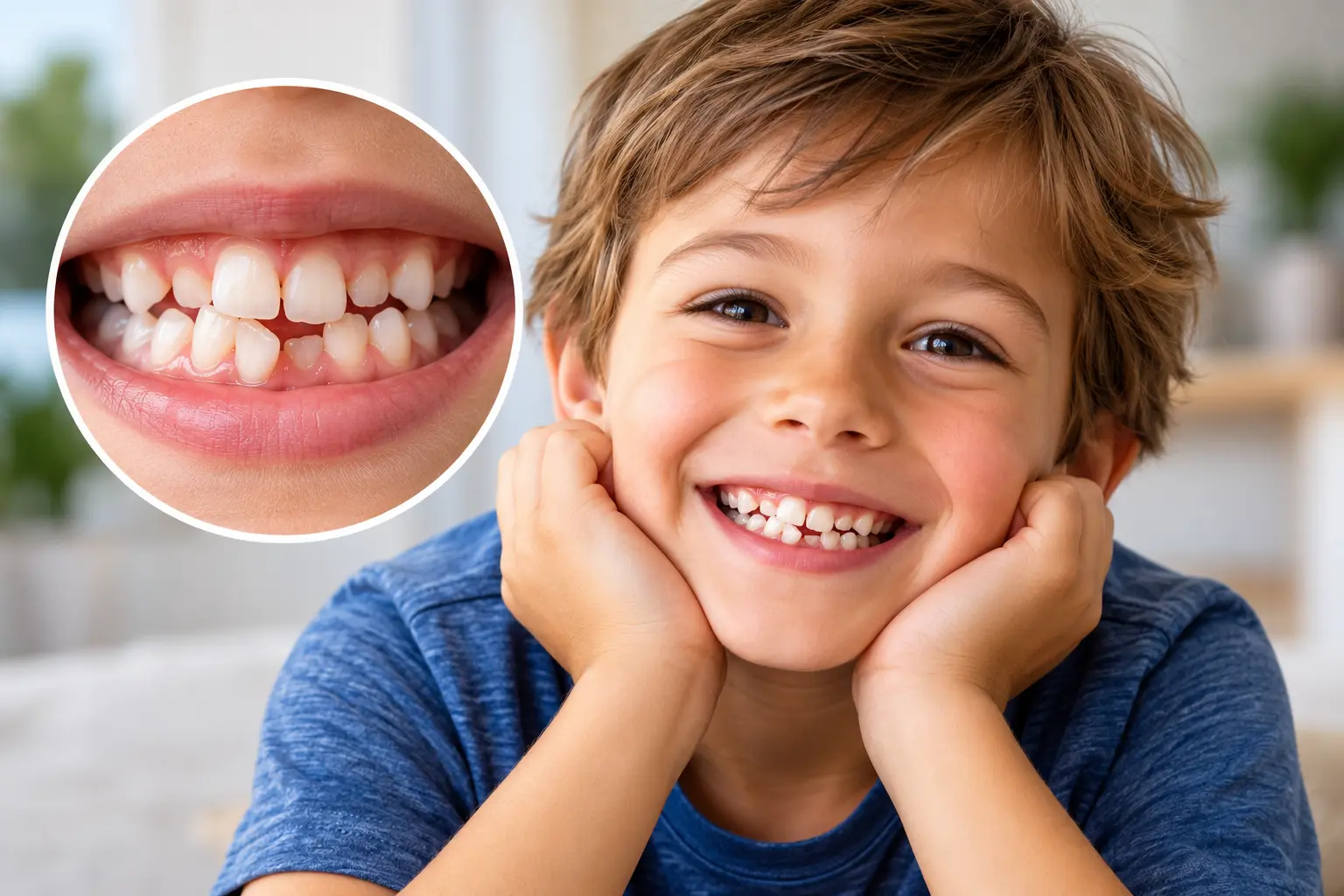


When parents look at their child’s smile, the most visible concerns are usually easy to recognize. A tooth may be coming in crooked. The dental arches may look crowded. The upper and lower teeth may not meet the way a parent expected.
Those observations matter. Dental alignment is an important part of oral health.
In my work with children, however, I also pay attention to something parents cannot always see in a photograph: how the mouth functions throughout the day and night.
Can the child breathe comfortably through the nose while resting? Where does the tongue naturally sit when the child is not speaking or eating? Can the lips stay together without strain? How does the child swallow? What are parents noticing during sleep?
A beautiful smile and healthy oral function are related, but they are not the same thing. Looking at both gives us a more complete picture of a growing child.
What Do We Mean by Oral Function?
Oral function describes how the tongue, lips, cheeks, jaw, and related muscles work together during everyday activities.
These functions include breathing, resting posture, chewing, swallowing, and speaking.
The American Speech-Language-Hearing Association describes orofacial myofunctional disorders as patterns involving the oral and facial muscles that can affect tongue position at rest as well as swallowing, breathing, and speech. The organization also emphasizes that these patterns may involve a combination of structural differences, learned behaviors, environmental influences, and other factors. Parents can review the association’s detailed guidance on orofacial myofunctional disorders and oral resting posture.
This is an important distinction because the position of the teeth tells us only part of what is happening.
Two children can have similar-looking dental crowding but very different functional patterns. One may breathe comfortably through the nose, sleep quietly, maintain a relaxed lip seal, and have no obvious swallowing concerns. Another child with similar crowding may regularly breathe through the mouth, snore, sleep restlessly, or struggle to keep the lips comfortably closed.
The teeth may look similar. The clinical questions are not necessarily the same.
Why Resting Posture Deserves Attention
Children spend far more time resting than they do actively chewing or swallowing.
That makes resting posture particularly interesting when we evaluate oral function.
When a child is relaxed, we may look at whether nasal breathing is comfortable, whether the lips can remain together without visible effort, and where the tongue tends to rest.
These observations do not diagnose a condition. They help us understand patterns.
A child who occasionally sleeps with an open mouth during a cold is different from a child whose mouth is open during quiet daytime activities, car rides, homework, television, and sleep. Persistent patterns provide more information than a single observation.
MyoWay’s article on what may be behind persistent pediatric mouth breathing explains why nasal congestion, tonsils or adenoids, anatomy, oral posture, and established breathing habits may all need to be considered rather than assuming mouth breathing is simply a behavior.
That is also why repeatedly reminding a child to “close your mouth” may not solve the problem. Before expecting consistent nasal breathing, we need to understand whether nasal breathing is actually comfortable and appropriate for that child.
The Tongue Is Part of the Developmental Picture
Parents understandably focus on teeth because teeth are easy to see. The tongue receives far less attention, even though it is active throughout the day.
Tongue position can be considered in relation to swallowing, speech, oral rest posture, and the developing dental arches.
Research has found associations between chronic mouth breathing and differences in craniofacial development. A systematic review and meta-analysis involving children found differences in several skeletal and dental measurements between mouth-breathing and nasal-breathing groups. However, those findings should be interpreted carefully. Association does not prove that mouth breathing alone caused each developmental difference, and individual children may have several contributing factors.
Parents and clinicians can review the systematic review of mouth breathing and facial skeletal development in children.
Genetics, nasal health, airway anatomy, oral habits, tooth size, jaw relationships, and muscle function can all influence development.
This is one reason I prefer to think in terms of a system rather than looking for one universal cause.
Straightening Teeth Does Not Automatically Change a Breathing Pattern
Orthodontic treatment and myofunctional therapy have different purposes.
Orthodontics addresses tooth position, bite relationships, and skeletal concerns when appropriate. Myofunctional therapy focuses on patterns involving the tongue, lips, cheeks, swallowing, oral rest posture, and breathing when nasal breathing is medically appropriate.
One should not be treated as a replacement for the other.
A child may have improved dental alignment while still maintaining an open-mouth resting posture. Another may have more room within the dental arches but continue using a low tongue position. A child may also continue mouth breathing after a previous structural or medical issue has been addressed because the established functional pattern has not automatically changed.
For families trying to understand how these areas can work together, MyoWay’s Programs and Therapy page explains the role of oral function, breathing patterns, developmental support, and coordination with other healthcare providers.
The goal is not to make every child fit the same model. It is to determine which findings actually matter for that individual child.
Sleep Gives Parents Information We Cannot See During a Daytime Visit
Some of the most useful observations come from parents because they are the people who see what happens after the clinic closes.
- Does the child snore regularly?
- Does the child sleep with the mouth open?
- Is sleep very restless?
- Does the child wake frequently?
- Does breathing appear unusually noisy or effortful?
- Does the child wake tired even after having enough opportunity to sleep?
These symptoms can have many causes. They do not prove that a child has obstructive sleep apnea or another sleep disorder.
They are still worth discussing.
The American Academy of Pediatric Dentistry recommends screening children for increased risk of obstructive sleep apnea and facilitating appropriate medical referral when indicated. Its policy on obstructive sleep apnea in children also recognizes possible associations with learning, behavior, growth, and other health concerns.
A dentist or myofunctional provider does not diagnose a sleep disorder simply because a parent reports snoring. Medical assessment and, when appropriate, formal sleep evaluation may be necessary.
This distinction matters. Good airway-focused care is not about assigning every symptom to the airway. It is about knowing when a pattern deserves further investigation.
Sleep Quantity and Sleep Quality Are Different Questions
Parents sometimes tell me, “My child sleeps for nine or ten hours, so I know they are getting enough sleep.”
The amount of time in bed is important, but it does not tell us everything about sleep quality.
The American Academy of Sleep Medicine recommends approximately 10 to 13 hours of sleep per 24 hours for children ages three to five and 9 to 12 hours for children ages six to twelve. Regularly obtaining age-appropriate sleep is associated with better attention, learning, behavior, memory, emotional regulation, and physical health.
Parents can review the academy’s pediatric sleep duration recommendations.
A child can still experience fragmented or poor-quality sleep despite spending an appropriate number of hours in bed.
Breathing problems are one possible contributor, but they are not the only contributor. Anxiety, medical conditions, environmental factors, sleep schedules, medications, and other issues can also affect sleep.
The useful question is not simply, “How many hours does my child sleep?”
It is also, “What does that sleep look like?”
What Myofunctional Therapy Can and Cannot Do
Pediatric myofunctional therapy is designed to address functional patterns involving the oral and facial muscles.
Depending on the child, therapy may include work on tongue awareness, oral rest posture, swallowing coordination, lip function, or establishing nasal breathing patterns after barriers to nasal breathing have been appropriately evaluated.
It should not be presented as a cure for obstructive sleep apnea or as a replacement for medical treatment when a child has an airway obstruction.
That boundary is particularly important because pediatric research is still developing.
Some studies have suggested improvements in sleep-related measures when myofunctional therapy is used as part of care. However, research quality, study size, patient selection, treatment protocols, and outcomes vary.
A recent systematic review concluded that current evidence does not support isolated active myofunctional strategies as a first-line treatment for pediatric obstructive sleep-disordered breathing.
Parents and clinicians can review the systematic review of active strategies for pediatric obstructive sleep-disordered breathing.
That does not make oral function unimportant. It means we should be precise about what the evidence supports.
Myofunctional therapy can be considered within a broader, individualized plan when functional concerns are present. A child with suspected sleep apnea still needs appropriate medical assessment.
Why Function Can Matter for Orthodontic Stability
Parents often assume orthodontic treatment is finished when the teeth are straight.
In reality, the environment around the teeth continues to function every hour of the day.
The tongue, lips, cheeks, swallowing pattern, oral habits, and resting posture all interact with the dentition. That does not mean an oral habit is responsible for every orthodontic problem or relapse. Tooth movement and stability are influenced by many biological and mechanical factors.
It does mean that persistent functional concerns may deserve attention rather than being ignored because the teeth currently look straight.
For example, if a child consistently pushes the tongue forward during swallowing, struggles to maintain comfortable nasal breathing, or cannot keep the lips together without effort, those findings provide useful information for the care team.
That care team may include a dentist, orthodontist, pediatrician, ear, nose and throat specialist, allergist, sleep physician, speech-language pathologist, or myofunctional provider depending on the child’s needs.
This multidisciplinary approach is important because no single clinician sees every part of the problem.
What Should Parents Pay Attention to at Home?
Parents do not need to become diagnosticians.
They are much more helpful when they become good observers.
Notice patterns over time rather than looking for one perfect sign.
Some useful observations may include:
- Whether the mouth is usually open or closed during quiet activities
- Whether nasal breathing appears comfortable
- Whether snoring occurs regularly
- Whether sleep seems unusually restless
- Whether the child wakes refreshed or consistently tired
- Whether lip closure appears relaxed or strained
- Whether chewing and swallowing look comfortable and coordinated
- Whether dental crowding appears alongside other breathing or oral-function concerns
MyoWay’s Conditions We Treat page provides a broader overview of breathing, sleep, dental, oral-function, and developmental signs families may notice.
None of these observations should be interpreted in isolation.
A child can snore for reasons unrelated to myofunctional dysfunction. Crowded teeth do not prove an airway problem. Mouth breathing during a respiratory illness does not mean a child has a chronic disorder.
Patterns, duration, severity, medical history, and the combination of findings matter.
What Does a Useful Evaluation Look Like?
A thoughtful evaluation should do more than look at one crooked tooth or hand a child a generic list of exercises.
It should begin with questions.
- How does the child breathe during the day?
- What happens during sleep?
- Are allergies or chronic congestion present?
- Has the child had tonsil or adenoid concerns?
- What previous dental or orthodontic care has been completed?
- Where does the tongue rest?
- How does the child swallow?
- Can the lips remain together comfortably?
- Are there oral habits such as thumb sucking or prolonged pacifier use?
The provider should also recognize when another professional needs to become involved.
A child who cannot breathe comfortably through the nose may require medical evaluation before exercises encouraging closed-mouth breathing are appropriate. A child with suspected obstructive sleep apnea may require evaluation by a physician or sleep specialist. A child needing tooth movement or correction of a bite relationship needs orthodontic care.
Myofunctional therapy works best when its role is clearly defined.
The Goal Is a Child Who Functions Well, Not Just a Photograph That Looks Good
Parents should absolutely care about their child’s teeth.
A healthy, stable smile matters.
My clinical perspective is simply that we should not stop looking once the teeth appear straighter. A growing child is using the tongue, lips, jaw, nose, and airway every day and every night. Those functions deserve attention too.
When breathing, oral posture, sleep observations, muscle function, dental development, and medical history are considered together, parents receive a more complete picture of what their child may need.
The goal is not to assume that every child requires therapy. It is to recognize when visible dental findings are accompanied by functional patterns that deserve a closer look.
If you are noticing persistent mouth breathing, snoring, restless sleep, difficulty with comfortable nasal breathing, unusual oral posture, or dental concerns alongside these symptoms, a professional evaluation can help determine which findings are meaningful and which type of care, if any, is appropriate.
You can learn more about MyoWay’s developmental programs and therapy options or request a free myofunctional consultation to discuss the patterns you are seeing in your child.
Straight teeth do not necessarily tell the whole story about a child’s oral development. Healthy function also involves comfortable nasal breathing, appropriate oral resting posture, coordinated swallowing, and tongue and lip function. Persistent mouth breathing, snoring, restless sleep, or unusual oral posture may justify a more comprehensive evaluation.
Frequently Asked Questions
Can a child have straight teeth and still have a myofunctional problem?
Yes. Dental alignment and oral function are related but different. A child can have relatively straight teeth while still showing patterns such as mouth breathing, low tongue posture, unusual swallowing, difficulty maintaining relaxed lip closure, or sleep-related breathing concerns. An evaluation can help determine whether those findings are clinically important.
Does mouth breathing cause crooked teeth?
Research has found associations between persistent mouth breathing and certain dentofacial differences in children, but that does not prove mouth breathing is the sole cause of crooked teeth. Genetics, jaw development, tooth size, airway anatomy, oral habits, and other factors also influence dental alignment.
Should my child keep their mouth closed all the time?
Not necessarily. Children naturally open their mouths while speaking, exercising, eating, or when temporarily congested. The more useful question is whether a child can comfortably breathe through the nose and maintain an appropriate resting posture when relaxed. A child who cannot breathe comfortably through the nose should not simply be told to keep the mouth closed.
Can myofunctional therapy treat sleep apnea in children?
Myofunctional therapy should not be described as a stand-alone cure or first-line treatment for pediatric obstructive sleep apnea. Current pediatric research remains limited. Children with suspected sleep apnea require appropriate medical evaluation, and myofunctional therapy may sometimes be considered as part of multidisciplinary care.
Why does tongue posture matter if my child is not speaking or eating?
The tongue spends much of the day at rest. Its resting position is part of overall oral function and interacts with the lips, jaw, swallowing pattern, dental arches, and breathing. An unusual tongue posture is not a diagnosis by itself, but it can be useful information during a comprehensive evaluation.
When should snoring in a child be evaluated?
Regular snoring, particularly when combined with mouth breathing, pauses or gasping during sleep, restless sleep, difficult mornings, or daytime concerns, deserves discussion with a healthcare professional. Professional pediatric dental guidance recommends screening children for increased risk of obstructive sleep apnea and medical referral when indicated.
Does myofunctional therapy replace braces or orthodontic treatment?
No. Myofunctional therapy and orthodontic treatment address different aspects of care. Orthodontics focuses on teeth, bite relationships, and skeletal concerns when appropriate. Myofunctional therapy focuses on functional patterns involving the tongue, lips, swallowing, oral posture, and breathing when appropriate. Some children may benefit from coordinated care.