Sleep is when a child’s body heals, grows, and resets. Yet for many children, sleep is not as restorative as it should be. Disrupted breathing patterns during sleep can impact not only how well a child rests but also how they grow, focus, and thrive throughout the day. At MyoWay Center for Kids, we ask parents a simple set of questions to help determine whether their child may have signs of a sleep-related breathing disorder. If the answer is yes to even one of these, it is time for an evaluation.
Important Questions Every Parent Should Ask
- Does your child wake up frequently during the night after falling asleep?
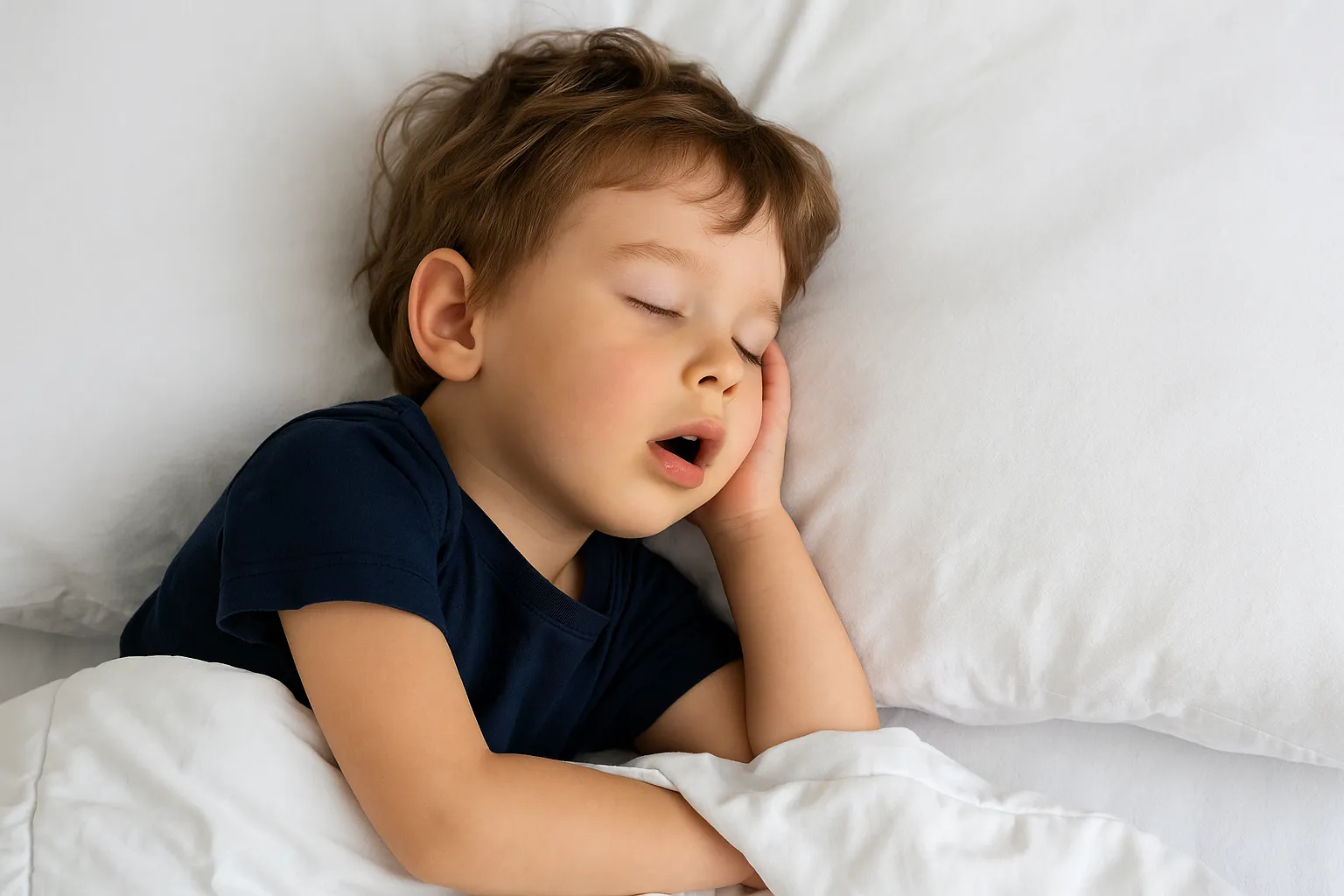
- Does your child sleep with their mouth open?
- Does your child breathe loudly or heavily while sleeping?
- Does your child snore during sleep?
- Is the snoring happening more than three or four nights each week?
- Has your child ever seemed to stop breathing while asleep?
- Does your child experience nightmares, sleepwalking, or other unusual sleep behaviors?
- Does your child still wet the bed occasionally?
These symptoms are not just common childhood phases. They are red flags that your child’s airway may not be developing properly.
Why This Matters
When a child struggles to breathe during sleep, the body stays in a state of stress. That means poor oxygen flow to the brain, poor muscle recovery, and a lack of deep, restful sleep. Over time, this can lead to:
- Behavioral challenges and attention problems
- Difficulty focusing in school
- Delayed growth and development
- Jaw and facial structure issues
- Chronic fatigue and mood swings
In many cases, children with sleep-disordered breathing are misdiagnosed with other conditions like attention deficit disorders or emotional dysregulation.
MyoWay’s Approach to Early Intervention
At MyoWay, we specialize in evaluating and correcting the root causes of poor sleep. Our team uses medical-grade appliances and myofunctional therapy techniques to help children:
- Establish proper nasal breathing
- Strengthen oral muscles and tongue posture
- Develop healthy jaw and airway structures
- Improve overall sleep quality and daytime function
Our program is non-invasive, supportive, and tailored to your child’s unique needs. The earlier these issues are addressed, the better the outcomes for long-term growth and health.
Take the First Step Toward Better Sleep
If you recognized any of these signs in your child, it is time to take action. Sleep-disordered breathing can be treated, and early intervention can lead to life-changing results.
We invite you to schedule a free consultation with our team to learn more about how MyoWay can support your child’s development and well-being. 👉 Click here to book your free consultation Or copy and paste this link into your browser:
https://mychart.myoryx.com/patient/#/auth/onlineschedule?realm=myoway&univers=com