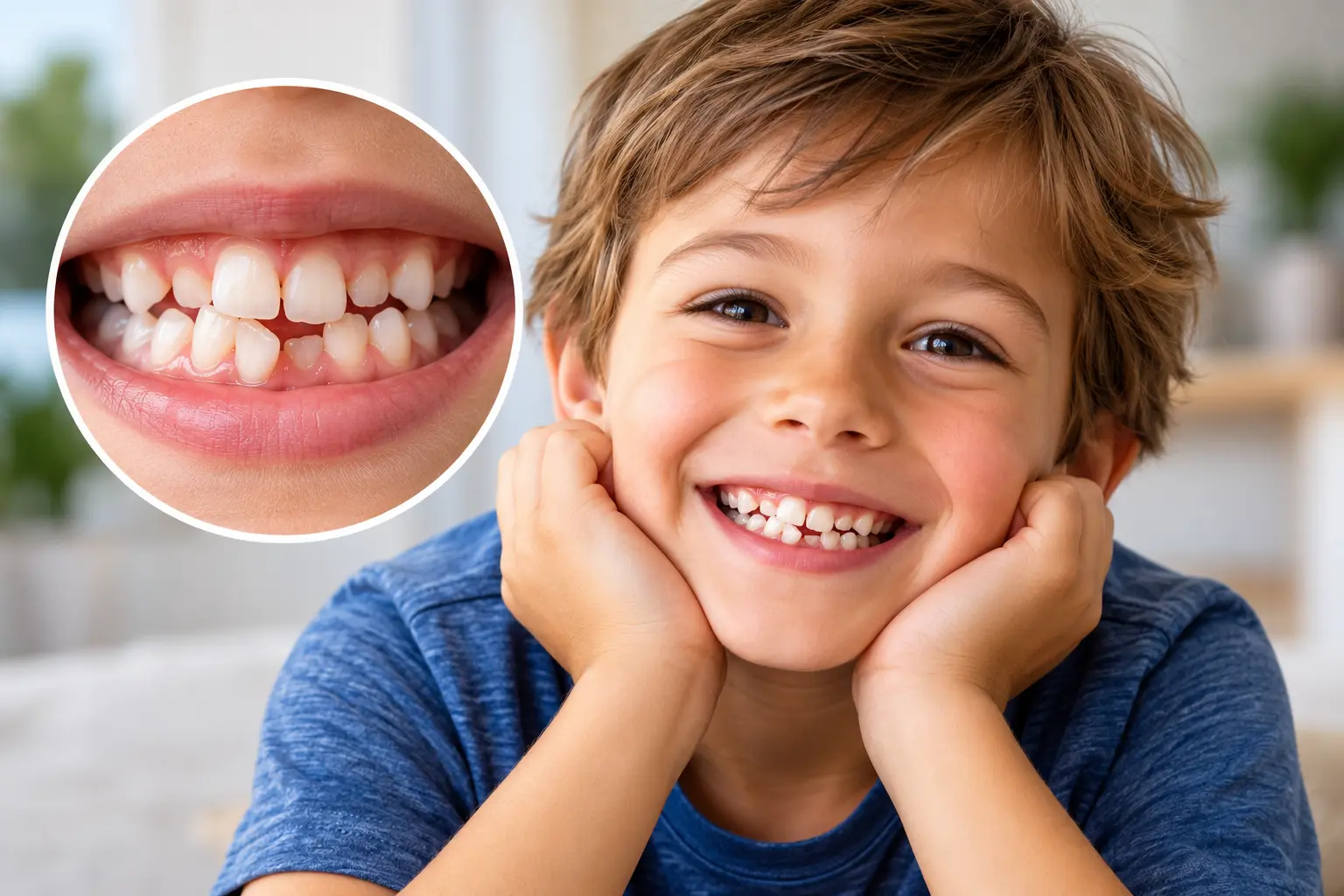
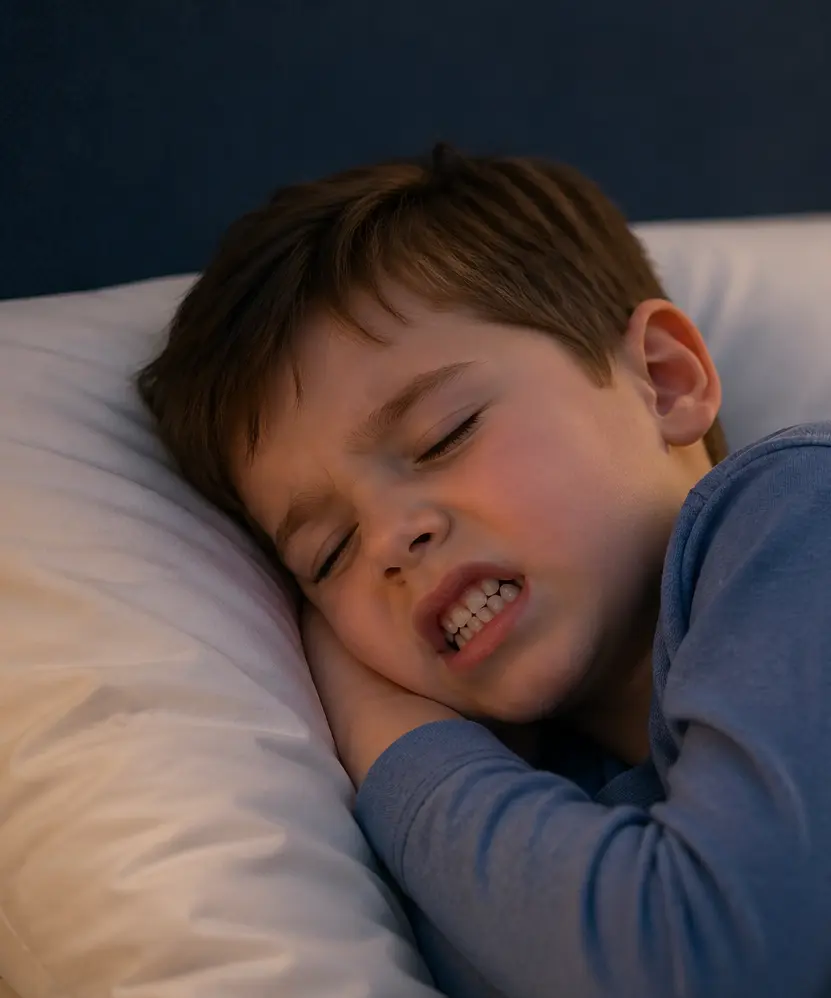
If your child grinds their teeth at night, you may have been told it is stress, a habit, or a normal phase they will eventually outgrow. For some children, stress may play a role. For others, teeth grinding may be connected to something deeper, especially when it happens with restless sleep, mouth breathing, snoring, waking tired, difficulty focusing, or changes in mood and behavior.
Teeth grinding in kids can be more than a sound parents hear at night. It may be a signal that the body is working harder than it should during sleep. At MyoWay Centers for Kids, we help families look beyond the symptom and ask a more important question: why is this happening?
What Is Teeth Grinding in Kids?
Teeth grinding, also known as bruxism, happens when a child clenches, rubs, or grinds the upper and lower teeth together. It often happens during sleep, which means many children do not know they are doing it.
Parents may notice signs such as:
- Grinding sounds during sleep
- Jaw tightness in the morning
- Tooth sensitivity
- Worn tooth surfaces
- Restless sleep
- Frequent waking
- Headaches
- Facial tension
- Tired mornings
- Difficulty focusing during the day
Some children grind quietly. Others grind loudly enough that parents can hear it from another room. Many families are told not to worry unless the teeth show damage. Tooth wear does matter, but it is not the only thing to consider. The bigger question is what the grinding may be telling us about the child’s breathing, sleep quality, and airway function.
Why Teeth Grinding Is Often Misunderstood
Teeth grinding in children is often explained as stress, anxiety, behavior, or a normal part of growing up. Those explanations can sometimes be true. Children may grind their teeth during stressful seasons, big transitions, or periods of emotional change. Some children may grind for a short time and then stop.
The concern is that many parents are never told about another possible explanation. In some cases, nighttime grinding may be connected to airway resistance during sleep. Airway resistance means a child may not be moving air as easily as the body needs during sleep. When breathing becomes harder, the body may respond in different ways. One possible response is jaw movement and muscle activation.
The jaw may shift. The facial muscles may tighten. The body may attempt to create a better position for airflow. To a parent, that can sound like grinding. This does not mean every child who grinds their teeth has an airway concern. It does mean teeth grinding should not always be dismissed without looking at the full picture.
The Connection Between Teeth Grinding, Sleep, and Breathing
Sleep is when children grow, recover, learn, regulate emotions, and recharge their brain and body. During healthy sleep, children should be able to breathe comfortably through the nose. Nasal breathing supports better airflow, helps filter and humidify the air, and encourages healthier oral posture.
Healthy oral posture often includes:
- Lips gently closed
- Tongue resting on the roof of the mouth
- Breathing through the nose
- Jaw resting in a stable and relaxed position
When a child struggles to breathe well during sleep, the body may shift into a more protective state. The child may toss and turn, open the mouth, move the jaw, or activate muscles to help improve airflow.
This may show up as:
- Teeth grinding
- Clenching
- Restless sleep
- Mouth breathing
- Snoring
- Frequent waking
- Sleeping in unusual positions
- Sweating during sleep
- Waking tired
- Daytime irritability
- Trouble focusing
Parents often see these symptoms separately. Grinding may be discussed with a dentist. Focus problems may be discussed with a teacher. Mouth breathing may be mentioned during a pediatric visit. Restless sleep may be seen as normal childhood sleep behavior. Yet these signs may be connected by one common thread: airway function.
Why the Jaw May Move During Sleep
The jaw plays an important role in airway space. Jaw position can influence the position of the tongue and soft tissues in the mouth and throat. When the airway feels challenged during sleep, the body may attempt to create more space by activating the jaw and facial muscles.
This can lead to clenching, shifting, or grinding movements. From the outside, it may look like a dental habit. Underneath, it may be the body trying to support breathing. That is why treating teeth grinding only as a tooth issue can miss the bigger picture.
A dental appliance may help protect the teeth in some cases, but parents should still understand why the grinding is happening. For a growing child, it is especially important to consider whether breathing patterns, oral posture, tongue function, or jaw development may be contributing to the concern.
The Role of Mouth Breathing in Kids
Mouth breathing in kids is common, but common does not always mean harmless. Children are designed to breathe primarily through the nose. When a child regularly breathes through the mouth, especially during sleep, it may affect oral posture, jaw growth, sleep quality, and daytime function.
Signs of mouth breathing may include:
- Open mouth posture
- Dry lips
- Drooling during sleep
- Bad breath
- Restless sleep
- Snoring
- Forward head posture
- Crowded teeth
- A narrow upper jaw
- Frequent waking
- Difficulty breathing through the nose
When the mouth stays open, the tongue often rests low in the mouth instead of resting gently on the roof of the mouth. The tongue is one of the natural guides for upper jaw development. When tongue posture stays low over time, it may influence how the jaw and palate develop. This can contribute to less space for teeth, a narrower dental arch, and possible airway challenges.
That is why mouth breathing, teeth grinding, and jaw development should often be evaluated together.
Teeth Grinding and Restless Sleep
Many parents notice that their child grinds their teeth and also sleeps restlessly. Their child may kick, roll around, wake often, or seem tired even after being in bed all night. This matters because sleep quality is not only about how many hours a child sleeps. It is also about how well the child breathes and recovers during those hours.
A child may be in bed for ten hours and still wake up exhausted if sleep is disrupted throughout the night. Poor sleep quality may affect mood, focus, learning, memory, emotional regulation, growth, immune function, behavior, and school performance.
Parents may notice daytime struggles and think their child is emotional, distracted, defiant, or overly energetic. In some cases, the child may actually be tired. This is why nighttime symptoms are so important. Grinding may be one clue that the child is not getting the deep, restorative sleep they need.
When Should Parents Pay Closer Attention?
Teeth grinding alone is worth mentioning to a qualified provider. Teeth grinding combined with other signs deserves a closer look.
Parents should pay attention if grinding happens with:
- Mouth breathing
- Snoring
- Restless sleep
- Waking tired
- Dark circles under the eyes
- Bedwetting beyond the expected age
- Difficulty focusing
- Hyperactivity
- Irritability
- Frequent meltdowns
- Crowded teeth
- Delayed jaw growth
- Open mouth posture
- Tongue thrust
- Picky eating related to oral function
- Speech concerns
These signs do not automatically mean something serious is happening. They do suggest that breathing, sleep, oral function, and jaw development may need to be evaluated together.
A Better Question for Parents to Ask
When a child grinds their teeth at night, many parents ask, “How do we stop the grinding?” That is understandable. Parents want their child to sleep better, protect their teeth, and feel well.
A better first question may be: why is my child grinding?
This shifts the focus from symptom management to root cause awareness. Parents can also ask whether their child breathes through the mouth at night, sleeps restlessly, wakes up tired, snores, has crowded teeth, or has a narrow palate. They can also ask whether the tongue is resting in the right position and whether jaw development is supporting healthy airway space.
At MyoWay Centers for Kids, we believe symptoms are signals. Teeth grinding may be one of those signals.
Why Early Evaluation Matters
Childhood is a critical window for growth and development. The jaw, airway, oral muscles, and breathing patterns are all developing during the early years. When concerns are noticed early, families may have more options to support healthy function and growth.
An early airway focused evaluation may help parents better understand how their child breathes at rest, whether mouth breathing is present, how the tongue functions and rests, whether jaw development appears narrow or restricted, and whether sleep symptoms may be connected to airway concerns.
Early evaluation does not mean every child needs the same care. It means parents get more clarity before symptoms become more disruptive.
What Is Pediatric Myofunctional Therapy?
Pediatric myofunctional therapy focuses on the muscles and functions of the mouth, tongue, lips, cheeks, jaw, and airway related habits. At MyoWay Centers for Kids, myofunctional therapy is used to support better oral function, encourage nasal breathing, and promote healthier patterns during growth and development.
Pediatric myofunctional therapy may focus on:
- Tongue posture
- Lip seal
- Nasal breathing habits
- Swallowing patterns
- Chewing function
- Jaw development support
- Oral muscle coordination
- Airway focused growth patterns
The goal is not only to address a single symptom. The goal is to support the function underneath the symptom. When the mouth, tongue, jaw, and breathing patterns work better together, children may be better supported in sleep, development, and daily function.
How MyoWay Centers for Kids Looks at Teeth Grinding
At MyoWay Centers for Kids, teeth grinding is not viewed in isolation. We look at the whole child, including breathing patterns, sleep quality, mouth posture, tongue function, jaw development, dental crowding, parent concerns, daytime behavior, focus, energy levels, rest, and recovery.
This approach helps parents understand whether grinding may be part of a larger pattern. Instead of only asking how to protect the teeth, we ask what the child’s body may be trying to communicate. For some children, teeth grinding may be one piece of a bigger airway and sleep picture.
Why This Matters for Focus, Behavior, and Learning
Children need quality sleep for healthy brain function. When sleep is disrupted, a child may not always look sleepy. Some children become more emotional, more impulsive, more distracted, or more active.
Parents may notice:
- Trouble sitting still
- Difficulty listening
- Emotional outbursts
- Morning fatigue
- Resistance to waking up
- Problems with attention
- Struggles at school
- Frequent frustration
- Mood swings
These challenges can be confusing for families. Many parents try behavior plans, classroom changes, reward charts, or bedtime routines without realizing that sleep quality and breathing may be part of the picture.
If a child is grinding their teeth, breathing through the mouth, and waking tired, it may be time to look at sleep and airway function more closely.
Early Orthodontics and Airway Development
Teeth grinding in kids may also appear alongside crowded teeth, a narrow palate, or delayed jaw development. Traditional orthodontics often focuses on straightening teeth later. Airway focused early orthodontics looks at how the jaws are growing and whether there is enough room for the tongue, teeth, and airway.
At MyoWay Centers for Kids, we believe form and function are connected. When oral function is not working well, growth patterns may be affected. When the jaw does not develop with enough space, breathing and sleep may also be affected.
This is why early evaluation can be so valuable. Parents do not have to wait until all adult teeth come in to start asking questions about jaw growth, breathing, and oral function.
What Parents Can Do Next
If your child grinds their teeth at night, start by observing the bigger pattern. Notice whether your child breathes through the mouth during sleep, snores, tosses and turns, wakes tired, struggles with focus during the day, has crowded teeth, sleeps with an open mouth, or seems restless even after a full night in bed.
Writing down what you notice can help during an evaluation. You do not need to have all the answers before asking for help. You only need to recognize that grinding may deserve a closer look.
Frequently Asked Questions
Can teeth grinding in kids be normal?
Some children grind their teeth for a short period and stop. However, frequent nighttime grinding should not automatically be dismissed, especially when it happens with mouth breathing, snoring, restless sleep, tired mornings, or focus challenges.
Is teeth grinding in kids always caused by stress?
No. Stress can be one possible factor, but it is not the only explanation. In some children, teeth grinding may be connected to airway resistance during sleep, oral posture, jaw development, or breathing patterns.
Can mouth breathing be connected to teeth grinding?
Yes, mouth breathing and teeth grinding may appear together in some children. Mouth breathing can affect oral posture, tongue position, sleep quality, and jaw development. These factors may all be important when looking at nighttime grinding.
Should I be concerned if my child grinds their teeth at night?
Parents should pay attention if grinding is frequent or happens with other signs such as restless sleep, snoring, mouth breathing, waking tired, crowded teeth, or daytime focus struggles. These signs may suggest that a more complete airway focused evaluation would be helpful.
Can pediatric myofunctional therapy help with teeth grinding?
Pediatric myofunctional therapy may support the underlying oral function and breathing patterns that can be associated with teeth grinding. The right approach depends on the child’s full evaluation, including tongue posture, nasal breathing, jaw development, and sleep related symptoms.
What is the connection between teeth grinding and airway development?
The jaw, tongue, and airway are closely connected. If a child has airway resistance during sleep, the jaw may move as the body attempts to support airflow. This movement can sometimes show up as clenching or grinding.
When should my child be evaluated for teeth grinding?
A child should be evaluated when teeth grinding is frequent, loud, ongoing, or paired with symptoms such as mouth breathing, snoring, restless sleep, tired mornings, behavior changes, or crowded teeth. Early evaluation can help families understand what may be contributing to the grinding.
Final Thoughts
Teeth grinding in kids is often treated as a simple dental habit, stress response, or phase. Sometimes that may be true. Other times, grinding may be a clue that the child’s body is working harder during sleep than parents realize.
When grinding happens with mouth breathing, restless sleep, snoring, tired mornings, or focus challenges, it is worth looking deeper. At MyoWay Centers for Kids, we help families understand the connection between breathing, sleep, oral function, jaw development, and pediatric myofunctional therapy.
Your child’s symptoms may be telling a story. We help you understand what that story means.
Book your free consultation in under 5 minutes.
https://mychart.myoryx.com/patient/#/auth/onlineschedule?realm=myoway&univers=com