
When I explain a myofunctional appliance program to parents, one of the first practical questions is often about the wear schedule. Why does a child need to use an appliance while awake and then wear it again while sleeping? If nighttime use provides support for several hours, why is daytime practice necessary? Likewise, if exercises work the tongue, lips, and jaw muscles, what role does the appliance play?
These are important questions because pediatric myofunctional therapy involves more than simply placing an appliance in a child’s mouth. The goal is to support healthier oral function during a period when the jaws, facial structures, breathing patterns, and oral habits are still developing. At MyoWay Centers for Kids, a structured program may combine appliance wear, active exercises, breathing work, oral posture training, parent coaching, and ongoing progress monitoring. The exact approach depends on the individual child. Families can learn more about this process on our Programs and Therapy page.
Understanding what happens during daytime practice, nighttime wear, and active exercise helps parents see why these parts of the program are designed to work together.
A Myofunctional Appliance Is One Part of a Larger Program
Parents sometimes assume that an oral appliance functions independently. It may seem logical that wearing a device for a certain number of hours should produce a predictable result. In reality, pediatric oral and facial development is influenced by many factors, including skeletal anatomy, dental development, nasal health, tongue position, lip posture, swallowing, chewing, breathing patterns, oral habits, genetics, and muscle coordination.
No single appliance controls all of these variables. For this reason, I view a myofunctional appliance as one tool within a broader functional program rather than as the entire treatment.
Depending on the child’s needs, an appliance may provide guidance, resistance, or support for a particular oral posture. Active exercises serve a different purpose by asking the child to intentionally recruit specific muscles and practice coordinated movements. Parents who want a broader explanation of this approach may find Pediatric Myofunctional Therapy: More Than Just Mouth Exercises helpful.
Research also supports taking a thoughtful approach to appliance selection. A randomized clinical trial involving growing children with Class II malocclusion compared a conventional functional appliance with a myofunctional trainer. Both groups experienced changes, although the conventional activator produced greater skeletal and dentofacial changes in several measurements. Those findings do not mean that a trainer has no value. Instead, they illustrate why diagnosis, appliance selection, treatment goals, age, growth pattern, and clinical supervision all matter. The findings are available in this randomized controlled trial comparing a myofunctional trainer and functional appliance.
What Is the Purpose of Daytime Appliance Wear?
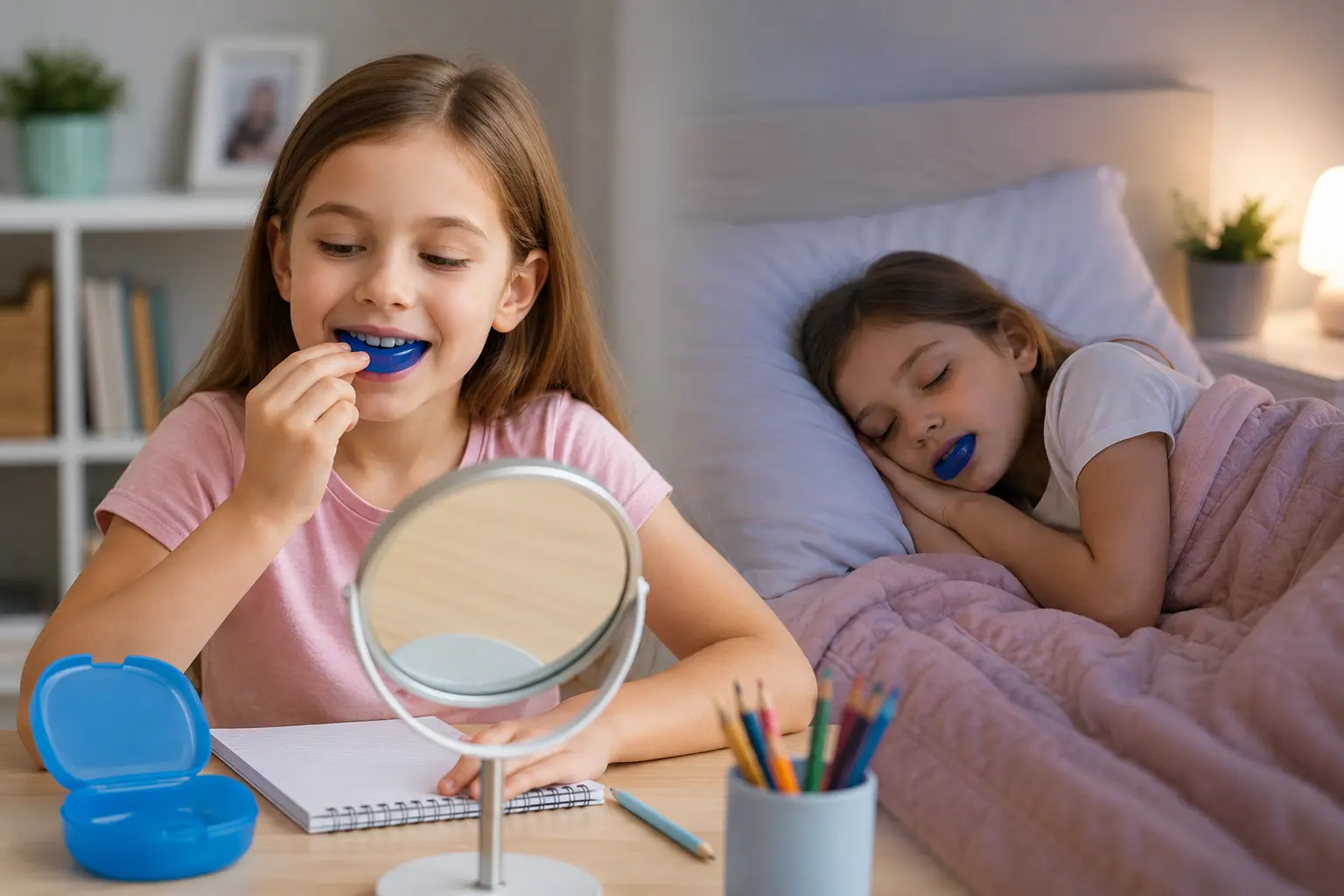
Daytime use provides something that nighttime wear cannot: conscious participation. While awake, a child can become aware of what the tongue, lips, jaw, and breathing are doing. The provider can teach correct appliance use, and parents can observe how comfortably and consistently the child follows the recommended routine.
This conscious practice is important when a child has spent years using a particular oral pattern. Some children habitually breathe with their lips apart. Others may rest the tongue low in the mouth or use an inefficient swallowing pattern. These behaviors often become familiar through repetition, so changing them involves more than simply giving a verbal instruction. The child must first recognize what a different position or movement feels like and then practice it consistently enough for the new pattern to become easier to reproduce.
Depending on the appliance and treatment plan, daytime wear can help a child become comfortable with the device while also practicing oral muscle coordination. It gives the family and provider an opportunity to identify difficulties before relying on nighttime use. A child who repeatedly pushes the appliance out, struggles to tolerate it, reports discomfort, or finds nasal breathing difficult may need further assessment or an adjustment to the program.
The objective is not merely to accumulate a certain number of minutes. Effective daytime practice should support the functional goals identified during the child’s evaluation.
Why Does Nighttime Wear Serve a Different Purpose?
Sleep presents a different challenge because conscious control disappears. A child may be able to close the lips or position the tongue appropriately when reminded during the day, yet that does not necessarily mean the same pattern continues after falling asleep.
Nighttime behavior can reveal concerns that are less obvious when a child is awake. Some children snore, sleep with their mouths open, grind their teeth, move frequently, or adopt unusual sleeping positions. These signs do not automatically indicate obstructive sleep apnea, but they may suggest that nighttime breathing deserves closer attention.
The American Academy of Pediatric Dentistry recognizes pediatric obstructive sleep apnea as an important health concern and encourages appropriate screening and referral when children appear to be at increased risk. Parents who want to learn more can review the American Academy of Pediatric Dentistry policy on obstructive sleep apnea. Families who regularly notice an open-mouth sleeping posture may also find our article on open-mouth posture in children useful.
A provider may include nighttime appliance wear to provide continued positional or functional support while the child is no longer consciously practicing. The exact purpose varies according to the appliance and the child’s treatment goals. It is important, however, not to overstate what an appliance can accomplish. Nighttime appliance use should not be described as automatically opening the airway or correcting a sleep disorder. Children with suspected sleep-disordered breathing may also need evaluation by a pediatrician, ear, nose, and throat physician, sleep specialist, or another appropriate healthcare professional.
Why Are Active Exercises Necessary if a Child Already Wears an Appliance?
Appliances and exercises do not perform the same job. Active exercises require a child to intentionally recruit and coordinate specific muscles, while an appliance may provide guidance, resistance, or support.
Depending on the child’s needs, exercises may involve the tongue, lips, cheeks, jaw, breathing, or swallowing. Strength can be part of the process, but strength alone is rarely the entire goal. Coordination, endurance, awareness, timing, and resting posture can be equally important.
For example, a child may be able to lift the tongue correctly during an exercise but still rest it low in the mouth throughout much of the day. Another child may close the lips immediately when reminded, only to return to an open-mouth posture a few minutes later. In situations like these, the clinical question is not simply whether the child can perform a movement once. We also want to know whether a healthier pattern is becoming more comfortable, consistent, and automatic over time.
Research into pediatric orofacial myofunctional therapy continues to develop. A 2024 systematic review and meta-analysis found stronger evidence for obstructive sleep apnea outcomes in adults than in children. The pediatric randomized trial included in that review had poor adherence and did not demonstrate significant improvements in several sleep measures. The authors specifically called for additional research involving pediatric compliance and long-term outcomes. Parents interested in the evidence can review the 2024 systematic review of orofacial myofunctional therapy for obstructive sleep apnea.
These limitations are important. Myofunctional therapy may form one part of a child’s care, but it should not be presented as a guaranteed treatment for pediatric obstructive sleep apnea.
Why Consistent Practice Matters
Children develop physical skills through repetition. A piano student does not master a movement after playing a scale correctly once, and a child learning to throw a ball needs repeated opportunities to develop coordination. Oral motor learning follows a similar principle.
Repeated practice gives the nervous system more opportunities to reproduce a particular movement or posture. Over time, that pattern may become easier and more consistent. This is one reason structured home practice is important. One long exercise session each week may not provide the same learning opportunity as shorter periods of correct practice completed regularly.
Consistency also matters with appliance wear. Occasional periods of perfect compliance followed by several missed days can make it harder for a child and family to establish a predictable routine. A prospective pediatric study comparing active myofunctional therapy with a functional device used during sleep reflects the continued interest in both active and appliance-supported approaches. It also illustrates how important adherence is when researchers evaluate outcomes. The study can be reviewed in this research on active and passive myofunctional approaches in children.
Families should always follow the schedule recommended for their own child. A routine that works for another patient may not be appropriate for a different diagnosis, age, appliance, or treatment objective.
Can Myofunctional Appliances Influence Jaw Development?
Parents often ask whether an appliance can make a child’s jaw grow. The answer requires more nuance than a simple yes or no.
Functional appliances have been studied in growing orthodontic patients for many years, and certain devices may influence dental relationships, jaw position, and aspects of dentofacial development. The amount and type of change can vary substantially according to the appliance, diagnosis, age, growth pattern, individual anatomy, and adherence.
For that reason, I would not describe an appliance as something that simply “makes the jaw grow correctly.” A more accurate explanation is that selected appliances may help influence certain dental relationships, oral functions, or aspects of jaw positioning during growth.
A more recent retrospective study examined children with Class II Division I malocclusion and compared directed muscle training with a Myobrace appliance combined with muscle training. Researchers reported differences in several maxillomandibular measurements following treatment. Since the study was retrospective, the findings cannot establish that the appliance alone caused every observed change. Parents can review the study of a muscle-function appliance and jaw development in children for additional detail.
At MyoWay, we also consider function alongside structure. Parents interested in that relationship can read more about how mouth muscles may support jaw growth in children.
What If My Child Cannot Keep the Appliance In at Night?
An appliance repeatedly falling out does not necessarily mean a child is failing the program. Several factors can contribute.
Some children need more time to adapt to the appliance. In other cases, the fit may need to be evaluated. Oral posture, muscle coordination, or difficulty with comfortable nasal breathing may also affect retention. A child may simply need additional supervised daytime practice before nighttime wear becomes manageable.
These observations provide useful information for the care team and should be discussed with the treating provider. Parents should also mention persistent discomfort or difficulty breathing through the nose rather than assuming the child needs to try harder.
Persistent nasal obstruction may have several possible causes, including allergies, inflammation, enlarged tonsils or adenoids, or nasal anatomy. Some children therefore need evaluation from another healthcare professional before or during a myofunctional program. The MyoWay Conditions We Treat page explains several breathing, sleep, oral posture, and developmental concerns that may prompt families to seek an evaluation.
How Parents Can Support a Successful Wear Routine
The most useful home routine is usually one that a family can repeat consistently without turning appliance wear into a daily struggle. For younger children, predictable timing often helps. Depending on the provider’s recommendations, the child may wear the appliance while reading, completing homework, or participating in another quiet activity.
Parents should pay attention to more than whether the child completes the prescribed time. Notice whether nasal breathing appears comfortable, whether the appliance causes discomfort, whether it repeatedly comes out during sleep, and whether the exercises become easier with practice. These details can help the provider determine whether the current program remains appropriate or needs modification.
Some children adapt quickly, while others require more coaching and repetition. The expectation should not be perfect performance from the beginning. The goal is useful, repeatable practice combined with appropriate clinical monitoring.
When a Child May Need More Than Myofunctional Therapy
Myofunctional therapy exists within a broader healthcare system, and some children benefit from collaborative care. Persistent nasal obstruction may require an ear, nose, and throat or allergy evaluation. Significant snoring or suspected sleep apnea may warrant medical or sleep assessment. Dental crowding or skeletal discrepancies may involve orthodontic care, while certain speech, feeding, or swallowing concerns may require a speech-language pathologist or another specialist.
This collaborative approach is important because the same visible sign can arise for different reasons. Two children may both sleep with their mouths open, yet the underlying factors may not be the same. One may have significant nasal obstruction. Another may continue an established oral posture pattern after a previous obstruction has improved. A third child may have several contributing factors.
A thorough evaluation helps determine which findings are most relevant before deciding what type of intervention makes sense.
The Goal Is Better Function, Not Simply More Hours of Wear
When parents receive instructions for daytime wear, nighttime wear, and daily exercises, it is easy to focus entirely on the clock. Consistency matters, but the number of minutes is only one part of the picture.
More meaningful questions include whether oral posture is becoming more stable, whether the child can coordinate the tongue, lips, and jaw more effectively, and whether nasal breathing is comfortable. The provider should also consider whether another healthcare professional needs to become involved and whether the child is progressing toward the goals established during the original evaluation.
At MyoWay Centers for Kids, structured pediatric programs combine guidance, practice, monitoring, and adjustments as children grow. Appliance-supported care and active exercises may complement one another, but neither should be viewed as a universal solution.
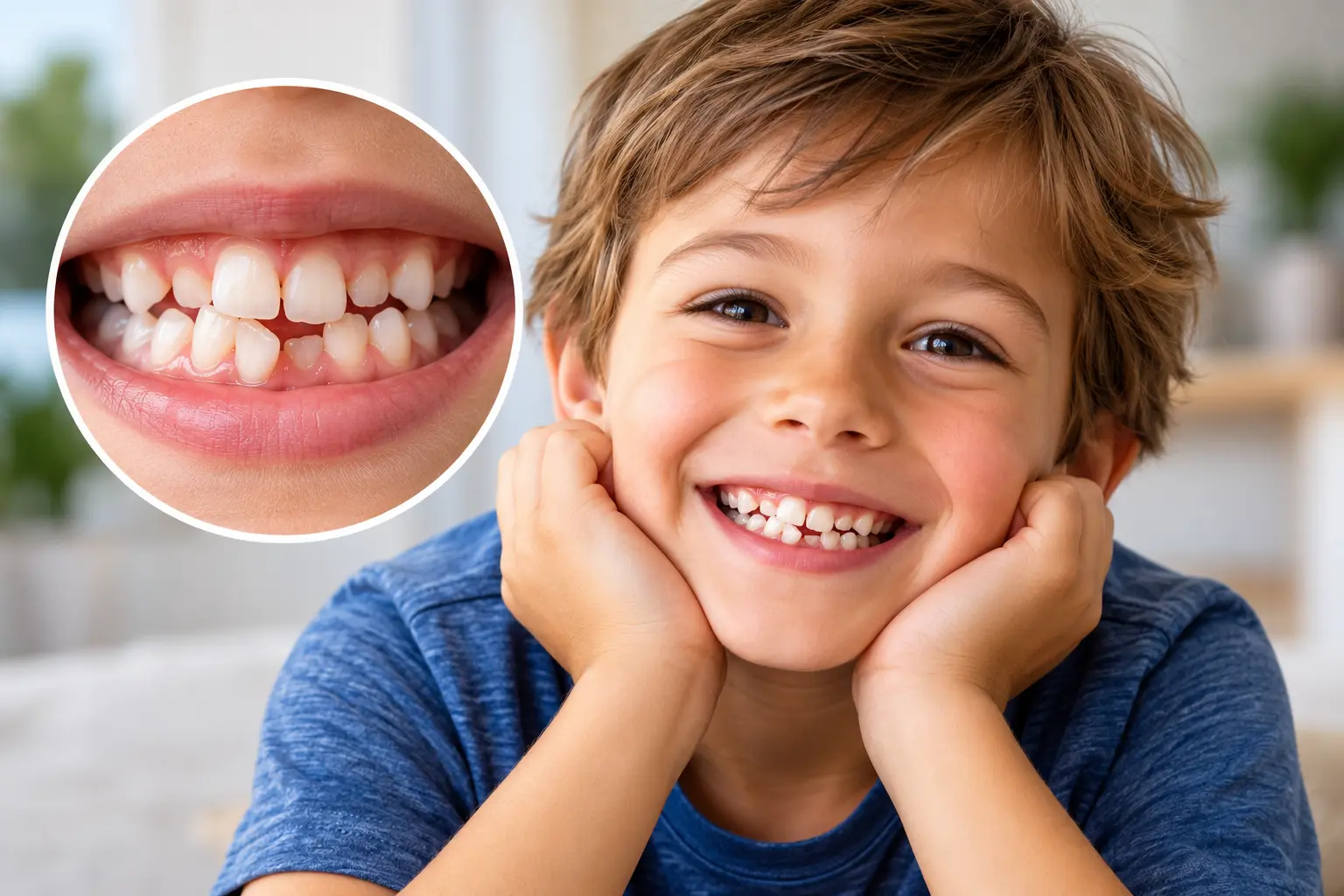
If you notice persistent mouth breathing, open-mouth sleep, snoring, restless sleep, unusual oral posture, crowded teeth, or concerns about your child’s jaw development, an evaluation can help clarify what may be contributing. Families can learn more about MyoWay programs and therapy options or request a free consultation.
Book your free consultation in under 5 minutes.
Frequently Asked Questions
Why does my child wear a myofunctional appliance during the day?
Daytime wear allows a child to become familiar with the appliance while consciously practicing the oral patterns connected with the treatment plan. It also gives parents and providers an opportunity to identify concerns involving comfort, breathing, coordination, or appliance tolerance.
Why do some children wear a myofunctional appliance while sleeping?
Nighttime wear may provide continued appliance-supported guidance while the child is asleep and no longer consciously controlling oral posture. The specific purpose depends on the appliance and the child’s treatment goals. Nighttime appliance use should not be assumed to diagnose or independently treat a pediatric sleep disorder.
Is one hour of daytime wear enough?
Wear schedules vary according to the child and the appliance. Some MyoWay programs may include approximately one hour of awake wear along with nighttime use. Parents should follow the specific schedule prescribed for their child rather than viewing one hour as a universal recommendation.
Why are exercises needed if my child already wears an appliance?
Exercises require conscious muscle recruitment, coordination, and practice. An appliance may instead provide guidance, resistance, or support. A clinician may combine both approaches when they serve different parts of the child’s functional goals.
Can a myofunctional appliance make my child’s jaw grow?
Certain functional appliances may influence dental relationships and aspects of jaw position or development in selected growing patients. Outcomes vary according to diagnosis, appliance type, age, growth pattern, anatomy, and adherence. It is more accurate to say that these appliances may support aspects of development rather than guarantee a specific growth result.
What should I do if my child keeps taking the appliance out at night?
Discuss it with the treating provider. The child may need additional adaptation time, an evaluation of appliance fit, or closer assessment of nasal breathing and oral function. Repeated removal provides useful clinical information and should not simply be treated as a behavior problem.
Can myofunctional therapy treat pediatric sleep apnea?
Myofunctional therapy may form one component of care for some children, but pediatric evidence remains limited. It should not be presented as a stand-alone cure for obstructive sleep apnea. Children with suspected sleep apnea should receive appropriate medical evaluation.
How do I know whether my child needs an evaluation?
Persistent mouth breathing, snoring, open-mouth posture, restless sleep, difficulty with nasal breathing, oral muscle concerns, or developing jaw and dental issues may justify further evaluation. None of these findings alone provides a diagnosis.