

Taking your child to a new healthcare appointment can bring up plenty of questions.Will they feel comfortable? What will the therapist ask them to do? What if they become nervous, shy, or unwilling to participate?
These concerns are especially understandable when you are exploring a type of care that may be unfamiliar to your family, such as pediatric myofunctional therapy.
At MyoWay Centers for Kids, the first visit is intended to be a welcoming opportunity to learn about your child’s breathing habits, sleep patterns, and oral development. Just as importantly, it is a chance for your child to become familiar with the environment and for you to have a conversation with a therapist.
A little preparation at home can help make that experience easier. You do not need to teach your child medical terminology or convince them that something is wrong. The goal is simply to help them understand where they are going, what they might experience, and why their questions and feelings matter.
Start With a Simple Conversation About the Appointment
Children often feel more comfortable in unfamiliar situations when they have a basic idea of what will happen.
A young child does not need a detailed explanation of jaw development or how the muscles of the mouth function. They need clear, age-appropriate information that helps the appointment feel predictable.
You might explain that you are visiting a place where friendly people help children learn about how their mouths work, how they breathe, and how they sleep.
For an older child, you can be more specific. Explain that the therapist may ask about nighttime breathing, sleep habits, and how the tongue and other muscles work during everyday activities.
Give your child an opportunity to ask questions, even if the questions seem unrelated to the appointment.
Some children want to know whether they will see toys. Others want to know whether a parent will stay nearby or whether someone will look inside their mouth.
If you are uncertain about part of the visit, it is perfectly reasonable to say that you will ask the team together.
The American Academy of Pediatrics offers practical advice on preparing children for healthcare appointments, including using simple explanations, listening to concerns, and bringing familiar activities.
The purpose of preparation is not to eliminate every nervous feeling. It is to give your child a sense of familiarity and help them understand that they can communicate how they feel.
Avoid Making the Visit Sound Like a Test
One of the most helpful things parents can do is remove the expectation that their child must perform perfectly.
A myofunctional evaluation may involve observing how the lips, tongue, jaw, and facial muscles function. Depending on the child’s needs, the therapist may ask them to demonstrate simple movements or describe everyday habits.
Children can interpret unfamiliar requests as tests, particularly if they have already experienced challenges with speech, feeding, dental visits, or other healthcare appointments.
Instead of telling your child that they need to do everything correctly, explain that the therapist simply wants to learn about them.
There are no grades for how a child naturally rests their tongue or uses their mouth.
An observation that is useful to a therapist does not necessarily mean something is wrong.
This distinction matters because children are often more willing to participate when they understand that the purpose is learning rather than judging.
It is also helpful to avoid practicing tongue movements or breathing exercises before the visit unless a qualified clinician has specifically recommended them. The therapist may want to observe your child’s natural habits without unnecessary coaching.
Help Your Child Feel Familiar With the Environment
The physical surroundings of a healthcare office can influence a child’s experience.
A new waiting room, unfamiliar voices, and the possibility of being examined may feel exciting to one child and overwhelming to another.
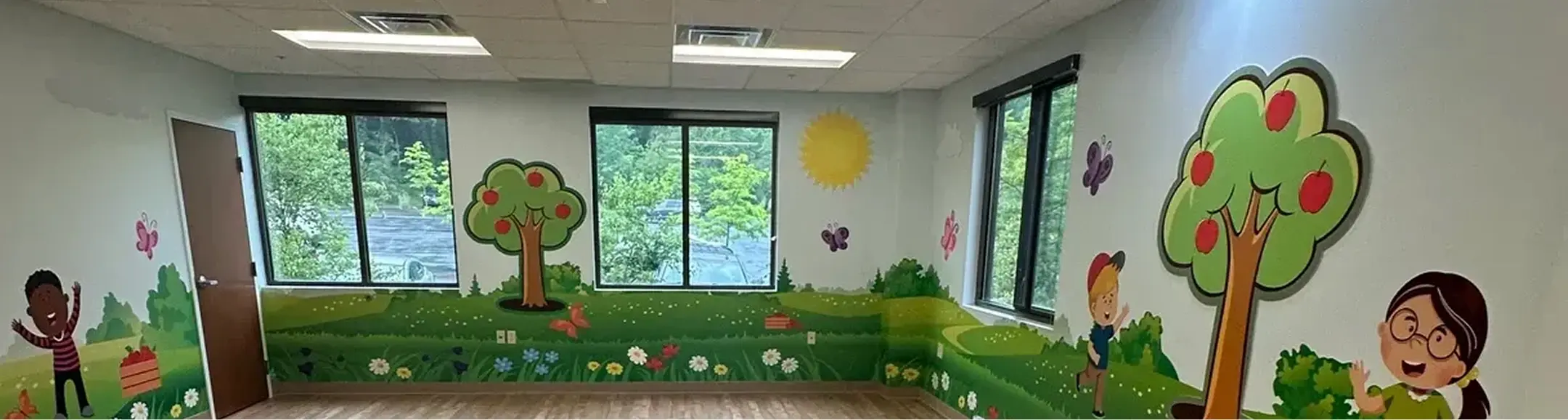
At MyoWay Centers for Kids, the first visit begins with a personal welcome. Toys and books are available to help younger children feel at home while the team gets to know the family.
Parents can support this experience by choosing a familiar comfort item to bring along.
A favorite small toy, book, or quiet activity may help a child settle into the environment, particularly during periods when adults are completing a questionnaire or discussing concerns.
Children who are sensitive to noise, unfamiliar spaces, or changes in routine may benefit from additional preparation.
For example, you might tell your child that there will be new people to meet, but that they can take a moment to become familiar with the room.
If your child has sensory sensitivities, communication differences, developmental needs, or a history of difficult healthcare experiences, let the office know before the appointment.
The team can then discuss what accommodations may be available.
The American Academy of Pediatric Dentistry’s guidance on pediatric patient behavior emphasizes individualized communication, familiarity, and consideration of a child’s temperament and previous experiences.
Although this guidance addresses pediatric dental care, its principles are useful when preparing children for other oral healthcare evaluations.
A comfortable appointment does not mean every child will immediately feel relaxed. It means their individual needs should be acknowledged and respected.
Pay Attention to Sleep Habits Before Your Visit
While helping your child prepare emotionally, you can also gather information that may make your conversation with the therapist more productive.
At MyoWay, the first appointment includes a questionnaire designed to help the team understand your child’s sleep habits and related concerns.
Parents often notice patterns at home that may not be obvious during a daytime appointment.
For example, a child may sleep with their mouth open, move frequently during the night, or wake up feeling tired despite spending enough time in bed.
Other families may have questions about snoring, nighttime teeth grinding, or difficulty breathing comfortably through the nose.
You do not need to interpret these observations or determine what is causing them.
Simply pay attention to what occurs, how frequently it happens, and whether the pattern has changed over time.
If you are concerned about nighttime breathing, a brief observation record covering several nights may help. You might note when your child falls asleep, whether they snore, whether they wake frequently, and how they seem to feel the following morning.
The National Heart, Lung, and Blood Institute’s information about sleep apnea in children identifies snoring, mouth breathing, interrupted breathing, frequent waking, and daytime attention difficulties among possible symptoms.
These signs do not automatically mean a child has sleep apnea. They can have different explanations, and some may occur in children without a sleep disorder.
However, persistent snoring or witnessed pauses in breathing should be discussed with your child’s pediatrician. Suspected sleep apnea may require a medical sleep evaluation rather than an oral-function assessment alone.
For additional background, MyoWay explains the different concerns families may encounter on its Conditions We Treat page.
Your observations are useful because they provide context. They are not a substitute for a diagnosis.
Let Your Child Know That Photographs May Be Part of the Visit
Photographs can be a simple but unfamiliar part of an appointment.
During the initial MyoWay visit, the team may take a few quick pictures to help document observations and better understand your child’s individual needs.
Some children enjoy having their picture taken. Others become uncomfortable when someone asks them to sit in a particular position or look toward a camera.
Mentioning this possibility beforehand can reduce surprises.
You might explain that someone may take a few pictures to help remember how their mouth and face look during the visit.
Avoid presenting photographs as something your child must do without questions. If your child is uncomfortable, communicate that to the therapist and ask how the team can approach the process.
Parents should also feel comfortable asking what the photographs are intended to document, how they will be used, and whether any additional images are recommended.
A photograph can help record an observation, but it cannot independently establish whether a child has a sleep-related breathing disorder.
That distinction is especially important when discussing concerns involving airway development or sleep.
Give Your Child a Voice During the Appointment
Parents naturally do much of the talking during pediatric healthcare visits.
You know your child’s medical history, nighttime habits, and daily challenges. That information is essential.
However, children may also have something useful to share about their own experiences.
An older child might describe difficulty keeping their lips closed comfortably or explain that their nose often feels stuffy.
A younger child may communicate through facial expressions, body language, or a simple comment about something that feels uncomfortable.
Allowing children to participate at an age-appropriate level can help them feel included rather than simply examined.
Before the appointment, invite your child to think of one question they might like to ask.
It does not need to be a medical question. They may want to know how long the visit will last or what the therapist is looking for.
During the appointment, give your child time to respond when a question is directed toward them.
If they are quiet, that is fine too.
Some children need more time to become familiar with someone new. Their willingness to participate may change as the appointment progresses.
The goal is to make space for communication without requiring a particular response.
Come Prepared With Your Own Questions
Parents often arrive at a consultation after spending time researching breathing patterns, oral development, or sleep concerns.
That research can be helpful, but it can also leave families with conflicting information.
You may have read that mouth breathing is a habit, that it is related to nasal obstruction, or that it can influence the way the jaw develops.
You may also have encountered treatment claims that sound more certain than the available evidence supports.
The first visit is an opportunity to discuss these questions in the context of your individual child.
Consider asking what the therapist observed, which findings are considered clinically significant, and whether any concerns require evaluation by another healthcare professional.
If therapy is suggested, ask about the specific goals, what participation would involve, and how progress would be assessed.
For families unfamiliar with the process, MyoWay’s Frequently Asked Questions page provides additional information about appointments, program considerations, and financial arrangements.
A useful consultation should help you distinguish between observations, possible concerns, and decisions that require further information.
It should also leave room for uncertainty when an answer cannot be established during one visit.
Understand That Every Child’s Next Step May Be Different
At the end of the initial visit, a MyoWay therapist will discuss the findings, answer questions, and explain available options.
For some families, this conversation may help clarify concerns they have noticed for months.
Others may learn that additional information is needed before any program decision would be appropriate.
Myofunctional therapy generally focuses on the function and coordination of the muscles of the tongue, lips, cheeks, and surrounding oral structures.
Depending on individual needs, a structured program may include exercises, home guidance, and selected appliances intended to support oral function and breathing habits.
The MyoWay Programs and Therapy page provides a closer look at the approaches available and how programs are individualized.
It is important to understand that myofunctional therapy is not appropriate for every breathing or sleep concern.
A child with persistent nasal obstruction may need assessment by a pediatrician or an ear, nose, and throat specialist. A child with suspected obstructive sleep apnea may require medical evaluation and a sleep study.
Myofunctional therapy may be considered as part of an individualized care plan in selected circumstances, but evidence for particular sleep-related outcomes in children remains limited and varies by intervention.
No exercise or appliance should be presented as a guaranteed solution to sleep apnea, jaw growth concerns, or behavioral difficulties.
The purpose of an evaluation is to help determine what, if anything, may be appropriate for your child.
What if Your Child Is Not Ready to Participate?
A child who refuses to answer questions, becomes tearful, or needs extra reassurance is not necessarily having an unsuccessful visit.
Young children may need time to adjust to an unfamiliar healthcare environment.
Children with previous negative medical experiences may also be more sensitive to new appointments.
A supportive response begins with recognizing the child’s feelings rather than treating reluctance as misbehavior.
You can acknowledge that meeting new people sometimes feels uncomfortable, remind your child that you are there, and give them an opportunity to communicate what they need.
For some children, observing what happens before participating may be helpful.
Others may respond better when an activity is explained in small steps.
The therapist and parent can discuss what is reasonable based on the child’s comfort and the purpose of the evaluation.
The most important consideration is that the interaction remains respectful.
A child’s comfort and trust matter beyond a single appointment.
Should You Start a Program on the Same Day?
MyoWay offers families the possibility of beginning a recommended program on the same day as the initial consultation.
This may be convenient for parents who have already researched their options, discussed the decision as a family, and feel prepared to proceed.
However, starting immediately is not the only reasonable outcome of a first visit.
Before agreeing to a program, parents should understand why it is being recommended, what the expected benefits and limitations are, and what their child will be asked to do.
You may also want to discuss appointment frequency, home responsibilities, total costs, payment arrangements, and circumstances that could change the recommended plan.
If another healthcare provider should evaluate your child first, that consideration deserves attention before committing to treatment.
For families who share medical or financial decisions, it may help to discuss expectations with the other caregiver in advance or arrange for them to participate in the consultation.
The decision should fit your child’s clinical needs and your family’s circumstances.
Feeling informed is more important than making an immediate commitment.
After the Appointment, Keep the Conversation Open
Children sometimes process an unfamiliar experience after they leave the office.
You may find that your child has questions on the way home or later that evening.
Rather than asking only whether they liked the appointment, invite them to share what they remember.
What surprised them? Was anything confusing? Did they have a question they forgot to ask?
If your child enjoyed a particular part of the visit, acknowledge that experience. If something felt uncomfortable, listen without dismissing the concern.
This feedback may be useful if your child returns for additional visits.
For parents, it is also helpful to review the recommendations while the conversation is still fresh.
Make a note of anything you want clarified and any instructions involving another healthcare professional.
If therapy is recommended, make sure you understand what follow-up will look like before beginning.
A thoughtful first appointment is not measured by how quickly a child begins a program. It is measured in part by whether the family understands what was observed, what remains uncertain, and what choices are available.
A Comfortable First Step Toward Understanding Your Child’s Needs
Preparing your child for their first myofunctional therapy visit does not require a complicated routine.
A calm conversation, a familiar activity, a few observations about sleep, and the freedom to ask questions can make a meaningful difference in how prepared your family feels.
At MyoWay Centers for Kids, Dr. Leslie Pasco and the team emphasize parent education, individualized evaluation, and a welcoming environment for children.
If you have questions about your child’s breathing habits, sleep, or oral development, a consultation can help you learn more about the available options.
You can request a free myofunctional evaluation through MyoWay Centers for Kids when your family feels ready.
The most useful first step is one that leaves both you and your child feeling heard, informed, and comfortable asking what comes next.