

Pacifiers can be a wonderful source of comfort during infancy. They help babies settle, satisfy their natural sucking reflex, and sometimes make difficult nights a little easier for the entire family. Yet as children grow, many parents begin asking an important question: When should we take the pacifier away?
The answer involves more than choosing a particular birthday. How frequently a child uses a pacifier, how intensely they suck, and how long the habit continues can all influence developing teeth and oral structures.
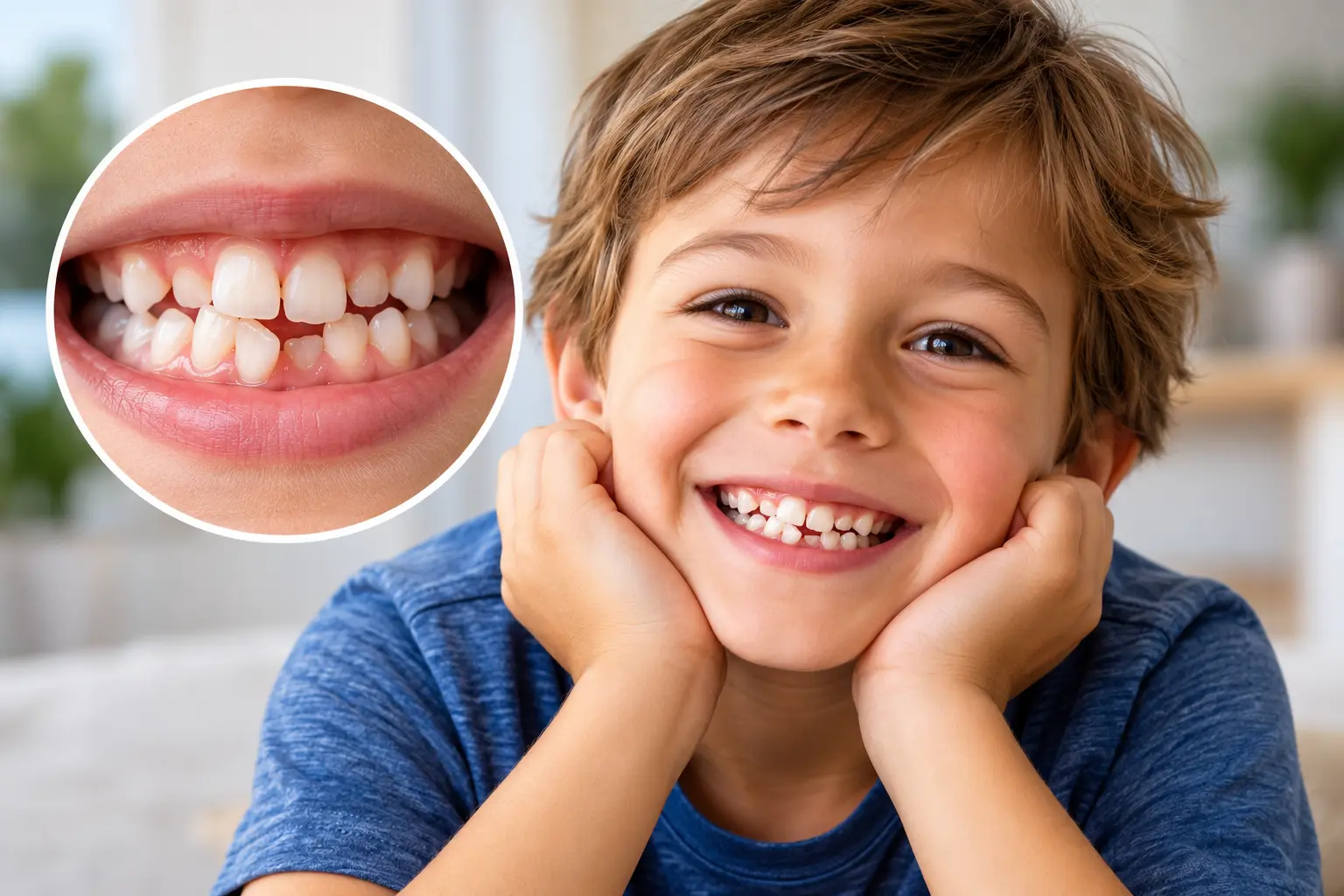
Prolonged pacifier use may contribute to changes in the way the upper and lower teeth meet. In some children, these changes become noticeable before the permanent teeth begin to appear.
At MyoWay Centers for Kids, our approach to oral development, guided by Dr. Leslie Pasco, considers both the developing structures of the mouth and how children use their oral muscles during everyday activities.
Understanding when pacifier use deserves attention can help parents support healthy development without unnecessary worry or pressure.
Why Pacifiers Are Helpful During Infancy
Babies are born with a natural sucking reflex. Beyond helping them feed, sucking provides comfort and can help regulate their responses to unfamiliar or stressful situations.
A pacifier offers a way to satisfy this need without feeding. For many infants, it becomes part of an established routine for settling down or falling asleep.
Pacifiers also have an important place in infant sleep safety.
According to the American Academy of Pediatrics’ safe sleep recommendations, offering a pacifier when placing an infant down for naps or nighttime sleep is associated with a reduced risk of sudden infant death syndrome.
For breastfed infants, the Academy recommends waiting until breastfeeding is well established before introducing a pacifier. Parents should also avoid forcing a pacifier on a baby who does not want one.
These recommendations are important because they demonstrate that pacifiers are not inherently harmful.
The concern develops when an early soothing habit continues during later stages of dental and oral development.
A baby using a pacifier at three months and a preschooler relying on one throughout the day are at different developmental stages. The benefits and potential risks should be considered accordingly.
At What Age Should Parents Begin Pacifier Weaning?
There is no single age at which every child must immediately stop using a pacifier. However, professional dental recommendations provide helpful milestones.
The American Academy of Pediatric Dentistry’s Policy on Pacifiers explains that pacifier use beyond twelve months may increase the risk of middle ear infections, while continued use beyond eighteen months can influence developing oral and facial structures.
Source: https://www.aapd.org/globalassets/media/policies_guidelines/p_pacifiers.pdf
The organization encourages the discontinuation of non-nutritive sucking habits by thirty-six months of age.
These recommendations provide a practical framework for parents deciding when and how to begin the transition.
Birth to Six Months
During early infancy, sucking serves an important soothing function. Pacifier use may be appropriate when families follow established infant safety and feeding guidance.
Parents do not generally need to remove a pacifier solely because a baby reaches four or six months of age.
At this stage, attention should remain on safe pacifier use, feeding, healthy development, and guidance from the child’s pediatrician.
Six to Twelve Months
As infants become more interactive and begin developing additional ways to settle themselves, parents can gradually explore soothing routines that do not always involve a pacifier.
This may include consistent bedtime routines, holding and comforting the child, singing, and age-appropriate play.
The purpose is not to create an abrupt separation from something comforting. Instead, parents can begin reducing unnecessary daytime dependence while considering the infant’s individual needs and safe sleep recommendations.
Twelve to Eighteen Months
This is a useful period to discuss a weaning plan with the child’s pediatrician or pediatric dentist.
A toddler who only uses a pacifier occasionally may have a different risk profile from a child who keeps one in their mouth for much of the day.
Reducing extended daytime use and gradually introducing other comfort strategies may help make eventual discontinuation easier.
Eighteen to Thirty-Six Months
As children move further into toddlerhood, the potential influence of prolonged sucking habits on developing teeth and bite relationships becomes more relevant.
Parents should work toward eliminating the habit rather than assuming it will disappear without guidance.
A pediatric dentist can evaluate whether any dental changes are developing and help families determine an appropriate timeline.
The goal is to discontinue the habit before prolonged pressure contributes to more persistent dental changes.
What Happens to Developing Teeth When Pacifier Use Continues?
Children’s mouths are constantly changing.
Baby teeth erupt, the jaws grow, and the relationship between the upper and lower dental arches develops over time.
A pacifier rests between the teeth and is held in place by the lips, tongue, and surrounding muscles. Repeated sucking creates forces that may influence the position of developing teeth.
The degree of influence depends partly on how often the pacifier is used, how forcefully the child sucks, and how long the habit continues.
Anterior Open Bite
An anterior open bite occurs when the front upper and lower teeth do not meet properly when the back teeth are together.
In children with prolonged pacifier habits, the pacifier may contribute to a gap between the front teeth.
Parents may notice that their child cannot bring the front teeth together even when the mouth appears fully closed.
Some pacifier-associated open bites improve naturally after the sucking habit ends, particularly when the child stops at a younger age.
However, improvement is not guaranteed, and the amount of correction depends on the child’s age, dental development, and individual anatomy.
Posterior Crossbite
A posterior crossbite occurs when some upper back teeth bite inside the lower teeth rather than fitting outside them in the usual relationship.
Prolonged pacifier habits have been associated with an increased likelihood of this dental condition.
Unlike some anterior open bites, posterior crossbites may be less likely to resolve spontaneously.
A pediatric dentist or orthodontist can assess whether the bite requires monitoring or intervention.
Changes in Dental Arch Development
The dental arches provide space for developing teeth and contribute to the relationship between the upper and lower jaws.
Prolonged sucking habits may influence dental arch shape and tooth alignment in some children.
However, pacifier use is only one possible factor. Genetics, growth patterns, oral muscle function, and other habits also play roles.
Parents who notice limited space between teeth, changes in bite relationships, or unusual dental alignment may find additional guidance in MyoWay’s article, “Crowded Teeth in Kids: What Parents Should Know.”
https://myowaycenters.com/blog/crowded-teeth-kids-jaw-development/
An evaluation can help distinguish normal developmental variation from a concern that requires attention.
Does Pacifier Use Affect Breathing or Airway Development?
This question deserves a careful distinction between what research has established and what remains uncertain.
The connection between prolonged pacifier use and certain dental changes is supported by clinical research. The evidence is less conclusive regarding whether pacifier use directly causes airway restriction or sleep-disordered breathing.
A child’s airway function depends on multiple factors, including nasal anatomy, allergies, tonsil and adenoid size, jaw structure, and breathing patterns.
Oral habits may be one part of the developmental picture, but they cannot independently explain every breathing concern.
For example, a child who has stopped using a pacifier may continue breathing through their mouth because of chronic nasal congestion or another underlying condition.
Another child may have a dental bite change associated with pacifier use while breathing comfortably through the nose.
These situations require different assessments.
At MyoWay Centers for Kids, we consider the relationship between oral structure and everyday function without assuming that one habit explains every symptom.
Parents who notice persistent open-mouth breathing can learn more about possible contributing factors in MyoWay’s article, “What Is Really Behind Pediatric Mouth Breathing?”
https://myowaycenters.com/blog/what-is-really-behind-pediatric-mouth-breathing/
If a child snores frequently, struggles to breathe through the nose, gasps during sleep, or appears to have pauses in breathing, the appropriate next step is a medical evaluation rather than simply removing the pacifier.
How to Help Your Child Stop Using a Pacifier
For many families, the hardest part of pacifier weaning is not understanding why it matters. It is figuring out how to make the transition without upsetting a child who relies on it for comfort.
A practical approach considers the child’s age, temperament, daily routine, and level of attachment.
The following strategies can help parents approach the process consistently.
Start by Understanding When Your Child Uses It
Before making changes, observe when your child reaches for the pacifier.
Does your toddler request it when tired? During car rides? While watching television? After becoming upset?
Some children use a pacifier primarily to fall asleep. Others keep it in their mouths throughout much of the day.
Identifying the pattern makes it easier to choose realistic starting points.
For example, if the pacifier is frequently used during playtime, parents might begin by keeping it out of sight during activities when the child is comfortable without it.
A predictable routine can be easier for a young child to understand than inconsistent rules.
Introduce Different Ways to Find Comfort
Pacifier use often continues because it is familiar and soothing.
Removing that source of comfort without introducing alternatives can make the transition more difficult.
Parents can encourage other forms of reassurance, such as a familiar bedtime story, gentle physical comfort, calming music, or a consistent wind-down routine.
For older toddlers, a favorite toy or comfort object may be helpful during supervised waking activities. Soft toys and loose bedding should not be placed in an infant’s sleep space.
The objective is not to eliminate a child’s need for comfort. It is to help the child discover other ways to feel secure.
Reduce Daytime Use Before Addressing More Difficult Routines
For some children, gradually limiting daytime use is more manageable than removing the pacifier completely.
Parents might begin with periods when the child is engaged in activities and does not appear to need it.
Once those periods become comfortable, the family can work toward longer intervals without the pacifier.
Bedtime may require a separate plan because the pacifier can be more strongly associated with falling asleep.
When addressing nighttime use in infants, parents should continue following age-appropriate safe sleep guidance.
There is no requirement that every family use the same weaning method. A gradual approach works well for some children, while a clear, consistent stopping date may be more practical for others.
Use Encouragement Instead of Punishment
Toddlers do not always understand why something familiar is suddenly being taken away.
Resistance, frustration, and requests for the pacifier are common during habit changes.
Positive reinforcement may help children feel encouraged rather than criticized.
The American Academy of Pediatric Dentistry favors positive rewards for stopping sucking habits over negative reinforcement that can create power struggles.
Parents can acknowledge small accomplishments, celebrate pacifier-free routines, and keep expectations appropriate for the child’s age.
Avoid shaming, teasing, or punishing a child for wanting the pacifier.
Consistency matters, but so does responding sensitively to the child’s emotional needs.
Avoid Unsafe Weaning Techniques
Some commonly suggested pacifier-weaning tricks may create unnecessary safety risks.
Parents should not cut the pacifier tip, puncture the nipple, or deliberately damage the pacifier to make it less appealing. A damaged pacifier can break apart and become a choking hazard.
Pacifiers should also be inspected regularly and replaced when they show signs of wear.
The American Academy of Pediatrics provides additional guidance on safe pacifier use and thumb sucking, including pacifier construction, hygiene, and important safety precautions.
The safest transition uses consistent routines and age-appropriate behavioral strategies rather than altering the pacifier itself.
What If Your Child Refuses to Give Up the Pacifier?
Some children adjust quickly. Others need more time, particularly when the pacifier has become closely associated with falling asleep or managing difficult emotions.
A child who strongly resists weaning is not necessarily experiencing a developmental problem.
Parents may need to adjust the pace, simplify the routine, or focus on one part of the day before attempting a complete transition.
If repeated efforts become stressful, guidance from a pediatrician or pediatric dentist can help.
It is also worth considering whether the child is using the pacifier in response to an underlying source of discomfort.
For example, persistent congestion, feeding difficulties, or sleep disruption may require attention independently of the pacifier habit.
A professional evaluation can help identify which concerns are related to oral habits and which may need a different approach.
What Should Parents Look for After Pacifier Weaning?
Stopping a prolonged sucking habit is an important step, but it does not automatically mean every associated dental or functional change will resolve.
Some children experience noticeable improvements in tooth positioning after the habit ends. Others may continue to show changes in their bite.
Parents should pay attention to how the front teeth meet, whether the upper and lower back teeth appear aligned, and whether the child can close the lips comfortably at rest.
There is no need to repeatedly check or photograph a child’s teeth every day. Normal dental development happens over time, and small variations are common.
Regular pediatric dental appointments provide a more reliable way to monitor changes.
Parents may also notice that their child’s tongue position or lip posture looks different after the pacifier is removed. This does not automatically indicate a problem.
The tongue, lips, cheeks, and jaw work together during swallowing, chewing, speaking, and resting. Their function may warrant evaluation if a child has persistent difficulties.
For families interested in learning how oral muscle coordination is assessed, MyoWay explains its approach through its Programs and Therapy page.
https://myowaycenters.com/programs-and-therapy/
Pediatric myofunctional therapy may be considered when an appropriate assessment identifies oral functional concerns. It is not routinely necessary for every child who has used a pacifier.
When Should You Seek a Professional Evaluation?
Parents do not need to wait until a child has an obvious dental problem to ask questions.
The American Academy of Pediatric Dentistry recommends establishing a dental home by twelve months of age. This allows a pediatric dentist to monitor tooth eruption, discuss oral habits, and provide preventive guidance as development progresses.
An evaluation becomes particularly useful when a child continues using a pacifier well into toddlerhood, has difficulty stopping, or begins showing changes in dental alignment.
Other reasons to seek professional advice include persistent mouth breathing, difficulty chewing, concerns about swallowing, or frequent snoring.
Importantly, these signs do not all have the same cause.
A pediatric dentist may be best positioned to assess dental bite changes. An orthodontist may evaluate jaw and tooth relationships. A pediatrician or ear, nose, and throat specialist may investigate breathing concerns.
A myofunctional provider may assess oral muscle patterns and determine whether additional functional support could be appropriate.
An individualized approach helps avoid unnecessary treatment while identifying concerns that benefit from early attention.
Does Every Child Who Used a Pacifier Need Myofunctional Therapy?
No. Many children discontinue pacifier use and continue developing without any need for specialized therapy.
For others, the pacifier habit may be one of several concerns identified during an assessment.
Pediatric myofunctional therapy focuses on how the tongue, lips, cheeks, and jaw muscles function during activities such as swallowing, chewing, and resting.
When clinically appropriate, therapy may involve age-appropriate exercises, oral posture awareness, breathing pattern guidance, and parent education.
However, the evidence supporting specific myofunctional interventions varies by condition, and therapy should not be presented as a guaranteed way to correct pacifier-associated dental changes.
An open bite or crossbite may require dental or orthodontic assessment regardless of whether an oral habit has ended.
Similarly, a child with nasal obstruction may need medical evaluation before breathing-related exercises are considered.
At MyoWay Centers for Kids, the objective is to understand the child’s individual needs and support coordinated care when appropriate.
For some families, education and monitoring may be all that is necessary. Other children may benefit from additional assessment or professional support.
Supporting Your Child’s Development Beyond the Pacifier
Pacifier weaning is one small part of a much larger developmental process.
During early childhood, children learn to chew a wider variety of foods, coordinate speech sounds, manage oral sensations, and develop increasingly complex muscle movements.
Their jaws and teeth also continue changing as they grow.
Parents can support this process by maintaining regular dental visits, offering developmentally appropriate foods, encouraging healthy daily routines, and paying attention to persistent oral or breathing concerns.
There is no need to treat every difference in oral posture or tooth alignment as an emergency.
The more useful approach is to notice patterns, understand developmental milestones, and seek professional guidance when something appears unusual or persistent.
This perspective allows families to make thoughtful decisions without assuming that a pacifier habit will necessarily lead to a long-term problem.
Frequently Asked Questions About Pacifier Weaning
Is six months too early to stop using a pacifier?
Not necessarily. Some babies naturally lose interest in pacifiers during infancy. However, six months is not a universal deadline for stopping. Pacifier use may still play a role in safe sleep recommendations during the first year. Parents should consider their child’s feeding, sleep, and developmental needs when deciding on a timeline.
Can a pacifier permanently change my child’s teeth?
Prolonged pacifier use can contribute to changes in dental alignment, including open bites and crossbites. Some changes improve after the habit ends, especially in younger children. Others may persist and require dental or orthodontic evaluation.
Will my child’s teeth straighten after stopping the pacifier?
Some pacifier-associated anterior open bites improve naturally after the habit is discontinued. However, not all bite changes resolve without intervention. A pediatric dentist can monitor the child’s dental development and determine whether further assessment is needed.
Are orthodontic pacifiers better for jaw development?
Some pacifier designs are marketed as orthodontic or developmentally supportive. However, research does not establish that any particular pacifier design eliminates the dental risks associated with prolonged sucking. Duration, frequency, intensity, and the child’s individual development remain important considerations.
Can prolonged pacifier use cause mouth breathing?
The evidence does not establish that prolonged pacifier use directly causes chronic mouth breathing. Mouth breathing may be associated with nasal obstruction, allergies, enlarged tonsils or adenoids, oral functional patterns, or other factors. Persistent mouth breathing deserves evaluation rather than an assumption that pacifier use is responsible.
Is thumb sucking better or worse than using a pacifier?
Both thumb sucking and pacifier use can influence dental development when habits are frequent, intense, or prolonged. Thumb sucking may be more difficult to discontinue because the thumb remains readily available. The effect of either habit depends on the individual child and how the habit is practiced.
What should I do if my three-year-old still uses a pacifier?
A child who continues using a pacifier at three years old should receive guidance from a pediatric dentist. The dentist can assess dental development, identify any bite changes, and help establish a realistic plan for discontinuing the habit.
Can myofunctional therapy help after pacifier weaning?
Some children with persistent oral muscle coordination or resting posture concerns may benefit from a myofunctional evaluation. Therapy is not necessary for every child and does not replace dental, orthodontic, or medical treatment when those services are indicated.
Helping Your Child Move Forward With Confidence
Giving up a pacifier is an ordinary childhood transition, but it can also create an opportunity to pay closer attention to oral development.
Parents do not have to make the transition perfectly, and a history of pacifier use does not mean a child will develop lasting dental or breathing concerns.
What matters is understanding when habits deserve attention, choosing safe and supportive strategies, and knowing when professional guidance could be helpful.
If your child continues to rely on a pacifier, has difficulty with the transition, or shows concerns about their teeth, jaw development, or oral function, MyoWay Centers for Kids can help you explore appropriate next steps.
Learn more about our approach or schedule a free consultation with MyoWay Centers for Kids to discuss your child’s development.
https://myowaycenters.com/contact-myoway/
Book your free consultation in under five minutes.