Parents rarely come into an appointment saying, “I think my child has an airway problem.” More often, they mention things that seem unrelated. Their child snores, sleeps with their mouth open, grinds their teeth, moves constantly at night, wakes up tired, wets the bed, or has difficulty focusing during the day.
Any one of these signs can have several possible explanations. Snoring does not automatically mean sleep apnea. Mouth breathing does not prove there is an airway obstruction. Teeth grinding can have multiple causes, and trouble concentrating can be related to many different factors. What matters clinically is the overall pattern. When several of these signs appear together, especially over time, it may be appropriate to look more closely at breathing, sleep quality, oral function, and airway development.
Why These Signs Are Easy to Miss
Children do not always show poor sleep the way adults do. An adult may say they feel exhausted after a bad night of sleep. A child may become irritable, emotional, restless, unusually active, or unable to focus in school.
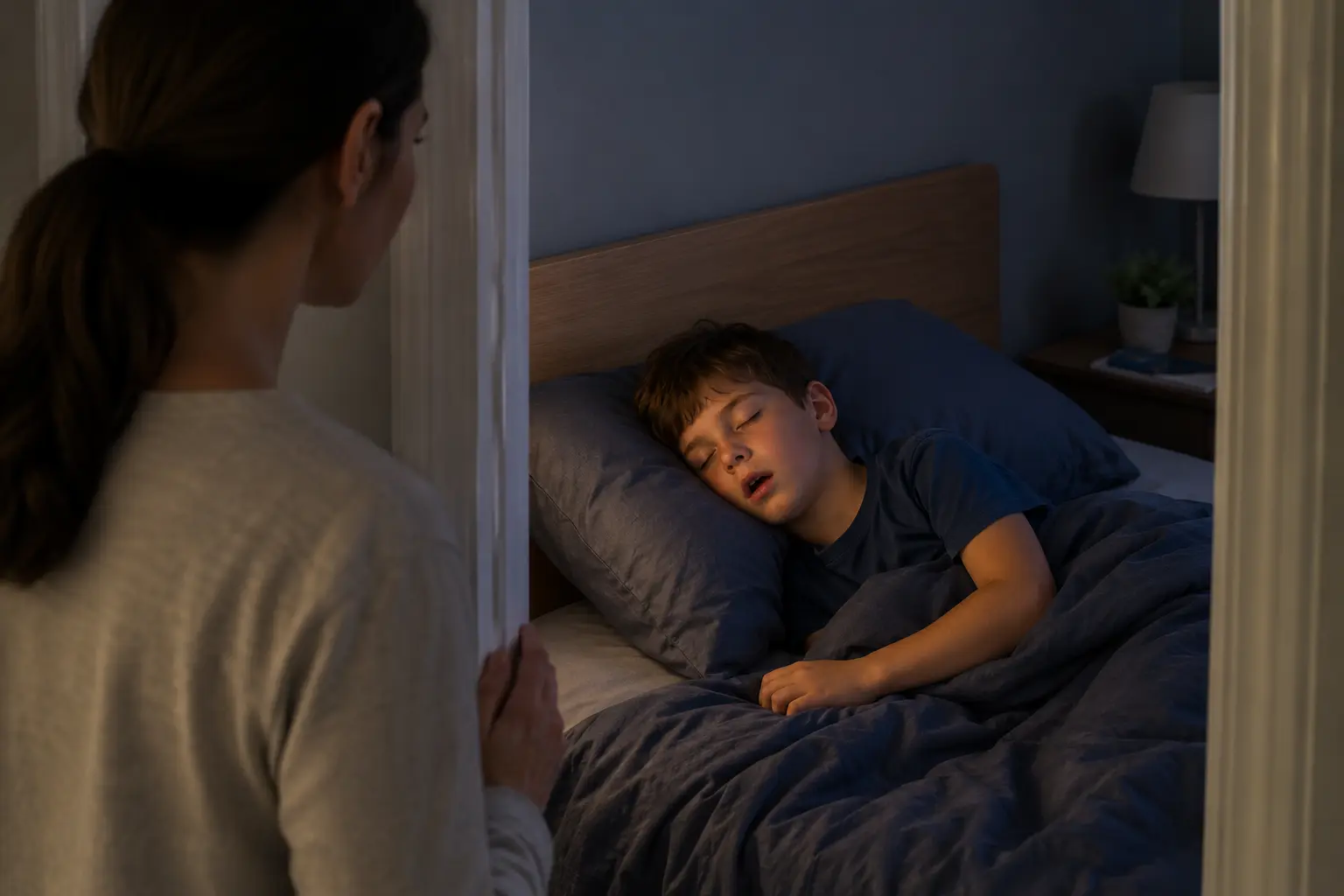
Nighttime signs can also be subtle. A parent may hear snoring from another room, notice an open mouth during sleep, see a child changing positions repeatedly, or find that the child wakes up despite spending enough hours in bed.
The American Academy of Pediatric Dentistry policy on pediatric obstructive sleep apnea identifies symptoms such as frequent snoring, mouth breathing, restless sleep, daytime sleepiness, attention problems, and bedwetting as possible reasons to consider further evaluation. These findings do not diagnose a sleep-related breathing disorder, but they can help identify children who may benefit from additional assessment.
That distinction is important. The goal is not to turn parents into diagnosticians. The goal is to help families recognize when a group of symptoms deserves a closer look.
Regular Snoring
Occasional snoring during a cold is common. Regular snoring when a child is otherwise healthy deserves more attention.
The American Academy of Pediatrics recommends that children be screened for snoring because habitual snoring can occur in children with obstructive sleep apnea. At the same time, snoring by itself cannot determine whether sleep apnea is present. A child who snores regularly and also has restless sleep, mouth breathing, breathing pauses, daytime fatigue, or behavioral changes may need further evaluation.
Parents who want to understand this symptom more fully can read MyoWay’s article on snoring and mouth breathing in children.
Persistent Mouth Breathing
Mouth breathing is another sign parents often notice without realizing it may be worth discussing.
Temporary mouth breathing can happen with a cold, allergies, exercise, or nasal congestion. Persistent mouth breathing while a child is awake, resting, or sleeping is different. It may be associated with nasal obstruction, enlarged tonsils or adenoids, allergies, anatomy, oral posture, or an established breathing habit.
Simply reminding a child to close their mouth usually does not answer the most important question: why is comfortable nasal breathing not happening consistently?
MyoWay explains this in greater detail in What Is Really Behind Pediatric Mouth Breathing?.
Restless Sleep
A child can spend enough hours in bed and still have poor-quality sleep. Parents may notice frequent position changes, sweating, repeated waking, unusual sleeping positions, or difficulty staying settled through the night.
Restless sleep has many possible causes, so it should not automatically be attributed to the airway. However, when it occurs alongside regular snoring, mouth breathing, gasping, open-mouth sleep, or significant daytime fatigue, breathing and sleep quality become reasonable areas to investigate.
From a clinical perspective, I am interested not only in how long a child sleeps, but in how restorative that sleep appears to be.
Teeth Grinding
Teeth grinding during sleep can be surprisingly loud, and many parents first mention it to a dentist.
Grinding, also called bruxism, is not specific to airway problems. It can have several potential causes and should never be used on its own to diagnose a sleep-related breathing disorder.
What becomes more meaningful is the context. If a child grinds while also snoring, breathing through the mouth, sleeping restlessly, or waking tired, that broader pattern may warrant further discussion. This is one of the reasons communication between parents, dentists, pediatricians, and other healthcare professionals can be so valuable.
Bedwetting
Bedwetting is another symptom that families may not think to connect with sleep.
There are many possible causes of persistent bedwetting, and sleep-disordered breathing is only one consideration. However, research has reported an association between sleep-disordered breathing and nighttime bedwetting in some children.
A recent systematic review and meta-analysis on sleep-disordered breathing and nocturnal enuresis found an association between the two. That does not mean one causes the other in every child. It does mean that persistent bedwetting can be useful information to share when a child also has snoring, mouth breathing, restless sleep, or daytime fatigue.
Daytime Fatigue and Behavior
One of the reasons sleep concerns can be missed in children is that fatigue does not always look like sleepiness.
Some children become irritable. Others become emotional, hyperactive, impulsive, or less able to focus. These behaviors can have many causes, and poor sleep should never be used to dismiss a legitimate behavioral, developmental, or attention diagnosis.
Research does suggest a relationship between sleep-disordered breathing and neurobehavioral difficulties in children. A 2024 systematic review and meta-analysis on pediatric sleep-disordered breathing and neurobehavioral outcomes found an association between sleep-disordered breathing and neurobehavioral deficits, while also noting that more research is needed.
For parents, the practical message is simple. If a child is struggling during the day and also has concerning nighttime breathing or sleep patterns, sleep and breathing may deserve a place in the conversation.
MyoWay discusses this relationship further in Could Poor Sleep Be Affecting Your Child’s Behavior?.
Difficulty Focusing at School
Parents, teachers, dentists, and pediatricians often see different pieces of the same child.
A teacher may report difficulty focusing. A parent may hear snoring. A dentist may notice significant crowding or oral posture concerns. Each observation can seem separate when it is viewed in isolation.
The American Academy of Pediatrics includes learning difficulties and attention-related symptoms among the findings that may be seen in children with obstructive sleep apnea. This does not mean that airway concerns explain every case of poor school performance or difficulty concentrating.
It does mean that a complete history matters. If a child has trouble focusing and also snores regularly, breathes through the mouth, sleeps restlessly, or wakes tired, those details should be shared with the healthcare professionals involved in that child’s care.
Recognition Is Not Diagnosis
There is an important difference between noticing warning signs and diagnosing a child.
Parents can observe patterns. Healthcare professionals can screen for concerns. A diagnosis requires the appropriate clinical evaluation.
When obstructive sleep apnea is suspected, the American Academy of Pediatrics recommends further assessment, which may include an overnight sleep study and referral to an appropriate specialist. The clinical guideline on childhood obstructive sleep apnea emphasizes that symptoms and physical examination findings alone are not always enough to make the diagnosis.
This is why a checklist, social media post, dental examination, or parent observation should never replace appropriate medical evaluation.
The purpose of recognizing warning signs is to know when more information may be needed.
Dental and Facial Development
Dentists and orthodontic professionals have a unique opportunity to observe children repeatedly during important years of growth.
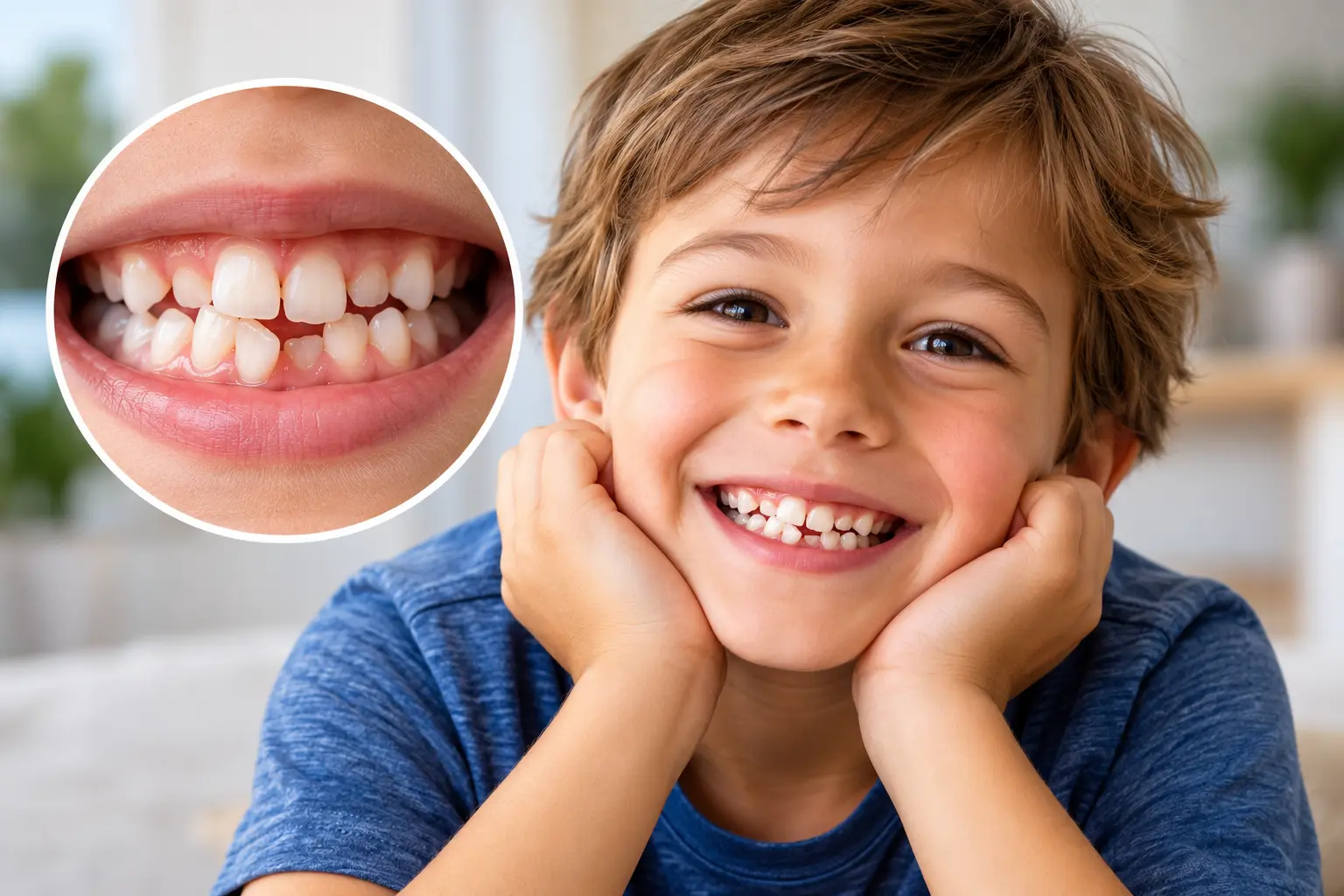
Dental crowding, a narrow palate, difficulty keeping the lips comfortably closed, tongue posture, jaw relationships, and other craniofacial findings may add useful information to the overall clinical picture. None of these findings can diagnose an airway disorder by itself.
The American Academy of Pediatric Dentistry recommends that dental professionals screen for possible sleep-related breathing concerns and refer to an appropriate medical provider when obstructive sleep apnea is suspected.
Parents can learn more about the types of breathing, sleep, oral function, and development concerns evaluated at MyoWay on the Conditions We Treat page.
Why Early Recognition Matters
Early recognition does not mean rushing a child into treatment.
It means asking better questions while a child is still growing. It means noticing whether symptoms have become consistent rather than assuming they are unrelated. It also means involving the right professionals when the pattern warrants further evaluation.
For one child, the next step may be a medical evaluation for enlarged tonsils, adenoids, allergies, or nasal obstruction. Another child may need a dental or orthodontic assessment. Some children may benefit from an evaluation of tongue posture, swallowing, lip function, or breathing habits.
In many cases, several professionals need to communicate with one another. MyoWay explains this approach in Why Pediatric Airway Care Often Requires a Team.
No single provider or therapy is appropriate for every child. Good care starts with understanding what is actually contributing to the child’s symptoms.
Where Myofunctional Therapy May Fit
Pediatric myofunctional therapy focuses on patterns involving the tongue, lips, cheeks, jaw, swallowing, oral resting posture, and breathing habits.
It is not a substitute for medical evaluation when obstruction or a sleep disorder is suspected. If a child cannot breathe comfortably through the nose because of enlarged adenoids, significant allergies, structural obstruction, or another medical issue, that problem may need to be addressed by the appropriate healthcare professional.
When oral function and breathing habits are part of the concern, myofunctional therapy may be one component of a broader plan.
At MyoWay, we look closely at how a child breathes, rests, swallows, and uses the muscles of the mouth and face. We also consider when referral to another provider may be appropriate. Parents can learn more about our approach on the Programs and Therapy page.
What Parents Can Observe at Home
Parents often provide some of the most useful information because they see what happens outside the clinical setting.
For a week or two, pay attention to patterns rather than isolated moments. Notice whether your child snores regularly when healthy, sleeps with the mouth open, moves constantly during sleep, wakes frequently, grinds the teeth, sweats excessively, or seems unusually tired in the morning. It can also be helpful to note whether teachers have mentioned changes in attention, behavior, or school performance.
Writing down what you observe can make conversations with healthcare professionals more productive.
The most important step is to share the complete picture. Your pediatrician may not know what the dentist has noticed. Your dentist may not know that your child snores every night. The healthcare professional evaluating daytime behavior may not know that sleep has been restless for years.
Those connections matter.
When to Seek Medical Attention
Most conversations about airway screening are not emergencies. However, significant difficulty breathing, blue or gray discoloration, repeated choking or gasping with obvious distress, or any situation in which a child appears unable to get enough air requires prompt medical attention.
Parents who observe repeated pauses in breathing during sleep should also bring this to their child’s medical provider.
Myofunctional therapy can contribute important information about oral function and breathing habits, but potentially serious breathing symptoms require medical evaluation.
When Several Signs Appear Together
One symptom rarely tells the entire story.
A child may snore for reasons unrelated to obstructive sleep apnea. A child may mouth breathe because of temporary congestion. A child may grind their teeth without having a sleep-related breathing disorder.
The reason these signs matter is not because one of them proves something is wrong. They matter because several persistent signs occurring together can give parents and healthcare professionals a reason to investigate further.
Regular snoring, persistent mouth breathing, restless sleep, grinding, bedwetting, daytime fatigue, and difficulty focusing are all pieces of information. The value comes from understanding how those pieces fit together for the individual child.
If you are noticing several of these patterns, a professional evaluation can help determine whether additional medical, dental, sleep, or myofunctional assessment may be appropriate. Families can request a free pediatric myofunctional evaluation with MyoWay to learn more about their child’s oral function, breathing patterns, and possible next steps.
Frequently Asked Questions
What are common pediatric airway warning signs?
Possible signs include regular snoring, persistent mouth breathing, restless sleep, frequent waking, daytime fatigue, attention difficulties, teeth grinding, and certain oral or facial development patterns. No single symptom diagnoses an airway disorder. When several occur consistently, further evaluation may be appropriate.
Does snoring mean my child has sleep apnea?
No. Snoring does not automatically mean a child has obstructive sleep apnea. Regular snoring combined with other symptoms may be a reason to speak with a healthcare professional about whether further evaluation is needed.
Is mouth breathing always an airway problem?
No. Children may temporarily breathe through the mouth because of a cold, allergies, exercise, or nasal congestion. Persistent mouth breathing can have several possible causes and may be worth evaluating, particularly when it occurs with other sleep or breathing concerns.
Can poor sleep affect a child’s behavior or attention?
Research suggests an association between sleep-disordered breathing and neurobehavioral difficulties in some children. However, behavior and attention problems have many possible causes. Sleep should be considered as one part of a complete evaluation rather than assumed to be the explanation.
Can teeth grinding be related to breathing problems?
Teeth grinding can have several causes and does not diagnose an airway problem. When it occurs with regular snoring, mouth breathing, restless sleep, or daytime fatigue, it may be useful to discuss the broader pattern with a healthcare professional.
Is bedwetting connected to sleep-disordered breathing?
Research has found an association between sleep-disordered breathing and nighttime bedwetting in some children. Bedwetting also has many other possible causes, so it should not be assumed to be airway-related.
Who should evaluate a child with possible airway concerns?
The appropriate provider depends on the symptoms. Evaluation may involve a pediatrician, sleep physician, ear, nose, and throat specialist, dentist, orthodontist, allergist, speech-language pathologist, or myofunctional therapist. Children with suspected obstructive sleep apnea need appropriate medical evaluation.