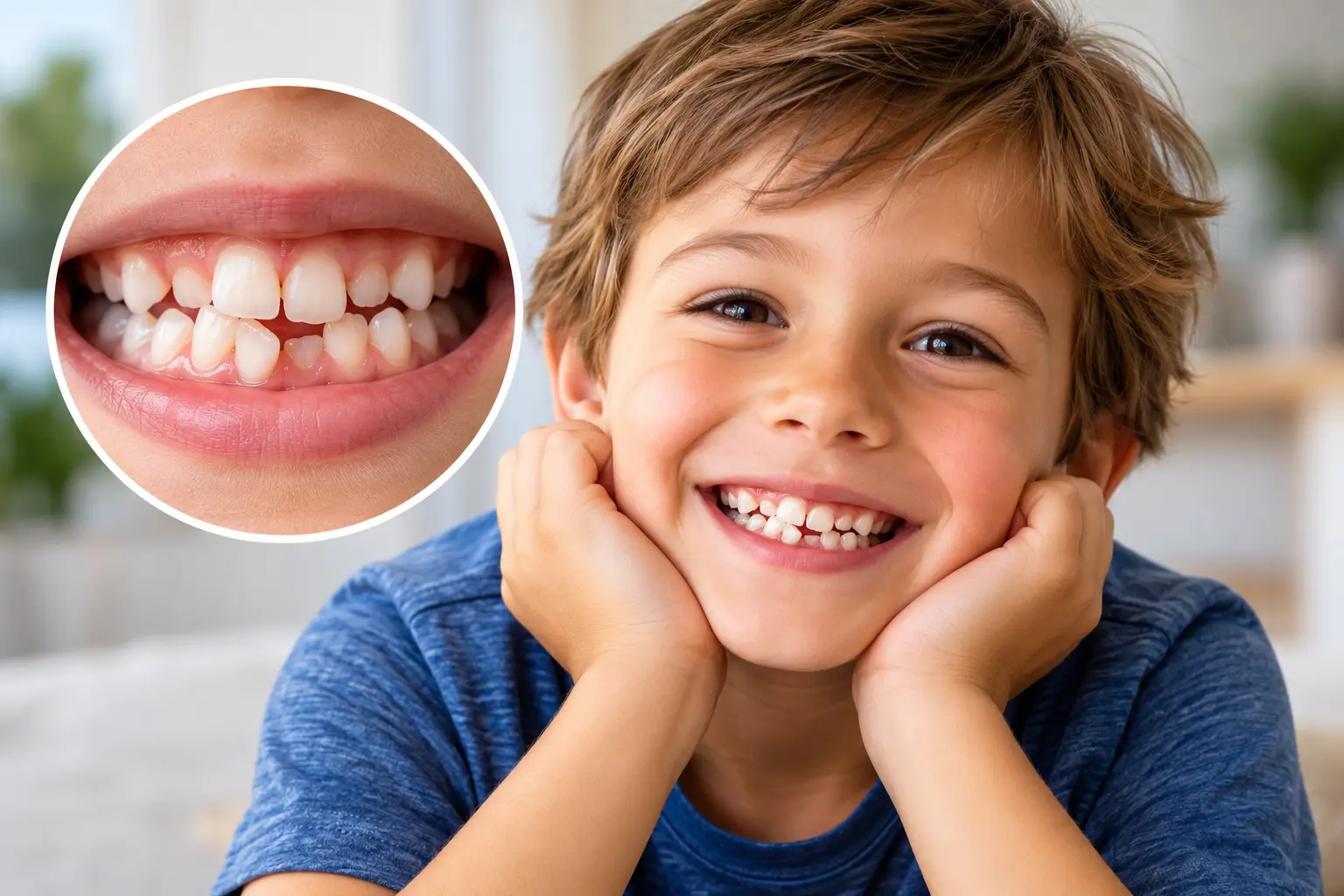


One of the questions I hear most often from parents at MyoWay Centers for Kids is, “Should I have my child’s tonsils and adenoids removed? Should we consider a palatal expander? Or should we start with myofunctional therapy?”
My answer is not always what parents expect.
The truth is that all three approaches can be important. The real question is whether we are addressing everything that may be contributing to a child’s breathing difficulties.
I want parents to understand something I consider fundamental to healthy airway development: Changing the structure of the airway and improving how the muscles function are two different things. Ideally, we want both working together.
A recent study published in October 2026 reinforces why this conversation deserves more attention. The researchers examined children who had already undergone tonsil and adenoid removal and palatal expansion but continued to experience obstructive sleep apnea.
What they found about the potential role of orofacial myofunctional therapy is something I believe parents and healthcare professionals should understand.
Why Tonsil and Adenoid Removal May Not Be the Entire Answer
Let’s begin with tonsils and adenoids.
Enlarged tonsils and adenoids are among the most common anatomical contributors to obstructive sleep apnea in children.
When these tissues become enlarged, they can narrow the upper airway, making it more difficult for a child to breathe comfortably during sleep.
For many children with obstructive sleep apnea and enlarged tonsils or adenoids, surgery is an appropriate and effective treatment.
I want to be clear about that. I am not suggesting that parents should avoid a medically recommended procedure.
What I want families to recognize is that removing an obstruction does not necessarily address every factor contributing to the breathing problem.
The American Thoracic Society’s clinical practice guideline reports that persistent obstructive sleep apnea can occur in up to 40 percent of children after tonsil and adenoid removal. The likelihood depends on several factors, including the severity of the original condition and the child’s overall health.
Think about what that means.
A child can undergo surgery, recover successfully, and still experience sleep-related breathing difficulties.
Does that mean the surgery failed? Not necessarily.
It may mean that removing enlarged tissue addressed one important part of the problem while other contributing factors remained.
This is why I encourage parents to look beyond a single procedure when they are trying to understand their child’s airway health.
What About Palatal Expansion?
Another recommendation parents frequently ask me about is palatal expansion.
The palate is the roof of the mouth, but it also forms part of the floor of the nasal cavity. The width and development of the upper jaw influence the available space for the teeth and tongue.
When the upper jaw is too narrow, an orthodontist may recommend an appliance that gradually expands the palate.
Palatal expansion can be valuable for correcting certain orthodontic problems, including a narrow upper dental arch or crossbite.
Researchers have also studied whether expanding the upper jaw can improve breathing in children with obstructive sleep apnea.
Some studies have reported improvements in breathing measurements after expansion. However, the evidence is not yet strong enough to conclude that palatal expansion reliably resolves pediatric obstructive sleep apnea.
Here is where I believe parents need to understand the distinction between form and function.
Palatal expansion focuses on changing the form of the upper jaw.
Myofunctional therapy focuses on how the muscles of the mouth and face function.
Those are different treatment goals.
If a child has a narrow palate, correcting that structural concern may be appropriate. However, it does not automatically mean that the child’s tongue posture, swallowing pattern, or breathing habits will change as a result.
That is why I believe we need to look at the complete picture.
The Piece I Don’t Want Parents to Overlook: Muscle Function
When I talk about airway development, I often return to one principle: form and function work together.
The shape of the jaw matters. The space available for the tongue matters. The size of the tonsils and adenoids matters.
However, I also want to know how the muscles are functioning within those structures.
Where does the tongue naturally rest?
Are the lips comfortably closed when the child is at rest?
Does the child primarily breathe through the nose or mouth?
Are there patterns of muscle activity that may need further evaluation?
These are important questions because the tongue and surrounding muscles participate in breathing, swallowing, speaking, and oral rest posture.
Consider a child who has spent years breathing through the mouth because nasal breathing was difficult.
Over time, that child may develop an open-mouth resting posture or different patterns of tongue and lip activity.
Even if the original physical obstruction is addressed, those functional patterns may continue.
That does not mean every child who mouth breathes has sleep apnea. It also does not mean that correcting tongue posture alone will resolve a breathing disorder.
What it means is that oral muscle function deserves appropriate evaluation, particularly when symptoms continue after other interventions.
At MyoWay Centers for Kids, we focus on identifying these functional concerns and determining whether structured myofunctional therapy may be appropriate.
If you are unfamiliar with this approach, our article on pediatric myofunctional therapy beyond mouth exercises explains how therapy addresses oral muscle coordination, tongue posture, and other functional patterns.
An October 2026 Study That Parents Should Know About
A study published on October 4, 2026, in the Journal of Clinical Medicine caught my attention because it examined the relationship between anatomical intervention and oral muscle function.
The study was titled Orofacial Myofunctional Therapy to Treat Residual Obstructive Sleep Apnea in Children Treated with Adenotonsillectomy and Maxillary Expansion.
Researchers studied 80 children between seven and nine years old who continued to experience obstructive sleep apnea after having their tonsils and adenoids removed and undergoing palatal expansion.
These children had already received two interventions intended to address anatomical contributors to airway obstruction, yet their sleep studies continued to show breathing disturbances.
The researchers then examined whether adding myofunctional therapy was associated with different respiratory outcomes.
What Happened During the Study?
Forty-one children completed a structured 12-month orofacial myofunctional therapy program.
The other 39 children did not participate in myofunctional therapy because of factors such as family preference, access, cost, or concerns about completing the program.
The therapy group attended regular clinical sessions and performed prescribed exercises at home.
After 12 months, researchers compared the children’s sleep-study results.
The findings were significant.
The children who completed myofunctional therapy had an average respiratory disturbance index of 0.49 breathing-related events per hour.
The children who did not receive therapy had an average respiratory disturbance index of 5.26 events per hour.
The respiratory disturbance index is one measurement used during sleep studies to describe breathing-related disturbances.
In the group that completed myofunctional therapy, the average measurement had returned to a near-normal range.
In the group that did not participate, the children continued to demonstrate residual obstructive sleep apnea, with a modest average worsening over time.
I find these results encouraging because they suggest that addressing oral muscle function may provide additional benefits for certain children whose breathing difficulties persist after structural interventions.
However, it is equally important to understand what the study can and cannot tell us.
What We Still Need to Learn
This was a retrospective study, and the children were not randomly assigned to treatment groups.
Families chose whether to participate in therapy, which means other differences between the groups could have influenced the results.
The findings demonstrate a strong association between participation in myofunctional therapy and improved respiratory measurements. They do not conclusively establish that the therapy caused those improvements.
We need larger, randomized clinical trials to understand which children benefit most, how consistently results can be reproduced, and how long improvements may last.
Even with those limitations, I believe the study raises a worthwhile clinical question.
If we have addressed the physical structures of the airway, but a child is still struggling, have we sufficiently evaluated the functional component?
Why I Believe Form and Function Must Be Considered Together
When parents ask which intervention is most important, I explain that each one addresses something different.
Tonsil and adenoid removal can reduce obstruction caused by enlarged tissue.
Palatal expansion can correct certain skeletal and dental problems involving a narrow upper jaw.
Myofunctional therapy is designed to improve identified patterns of oral muscle function.
These approaches are not interchangeable.
A child with a significant anatomical obstruction may need medical or surgical treatment. A child with a narrow upper jaw and crossbite may need orthodontic care. A child with altered tongue posture or swallowing patterns may benefit from functional therapy.
Some children may have more than one of these concerns.
That is why I do not believe the conversation should always be about choosing one approach instead of another.
I believe it should be about understanding what each intervention accomplishes and determining whether other factors also need attention.
This does not mean every child needs surgery, expansion, and myofunctional therapy.
It means we should make decisions based on the child’s individual findings rather than assuming one treatment addresses every possible contributor to a breathing problem.
For parents noticing concerns such as mouth breathing, restless sleep, or changes in oral development, our Conditions We Treat page provides more information about the signs we evaluate.
What I Want Parents to Ask Before Choosing a Treatment
If your child has been recommended for tonsil removal, palatal expansion, or myofunctional therapy, I encourage you to ask a few questions before making a decision.
First, ask what specific problem the recommended treatment is intended to address.
Is there a confirmed obstruction caused by enlarged tonsils? Is there a skeletal concern involving the upper jaw? Has an oral muscle dysfunction been identified?
Next, ask how the problem was diagnosed.
A recommendation should be based on an appropriate evaluation, and the findings should be explained in language you can understand.
I also want parents to ask what the treatment is expected to improve.
For example, palatal expansion may be recommended for orthodontic reasons, while tonsil surgery may be recommended to address a documented airway obstruction. Myofunctional therapy may be considered when an assessment identifies concerns involving oral muscle function.
Finally, ask how your child’s progress will be evaluated.
Will another sleep study be needed? Should breathing symptoms be monitored? Is there a reason to follow up with an orthodontist or myofunctional professional?
These questions help clarify whether the care plan addresses the child’s documented needs.
The American Academy of Pediatric Dentistry’s policy on obstructive sleep apnea emphasizes the importance of screening children for possible sleep-related breathing disorders and referring them for medical evaluation when indicated.
I believe parents benefit when the different professionals involved in their child’s care communicate and understand one another’s treatment goals.
What If Your Child Has Already Had Surgery or Palatal Expansion?
I particularly want to speak to parents whose children have already undergone treatment.
Perhaps your child had their tonsils and adenoids removed. Maybe they completed palatal expansion. You expected breathing and sleep to improve, but you are still noticing concerning symptoms.
You may wonder whether something was missed.
Before assuming that another treatment is necessary, the first step is to determine whether your child continues to experience a medical breathing problem.
Persistent snoring, pauses in breathing, gasping during sleep, or other concerning symptoms should be discussed with your child’s pediatrician or sleep specialist.
Some children require follow-up sleep testing to determine whether obstructive sleep apnea remains present.
Once those concerns have been evaluated, it may also be useful to consider whether oral muscle function warrants further assessment.
Does your child continue to rest with their mouth open?
Is nasal breathing comfortable and consistent while awake?
Does the tongue rest in an appropriate position?
Are there concerns involving swallowing or oral muscle coordination?
These observations do not diagnose sleep apnea, but they can help determine whether additional functional evaluation may be worthwhile.
At MyoWay, our pediatric myofunctional therapy programs are designed to support oral muscle coordination, functional patterns, and jaw development when appropriate.
My goal is not to suggest that every child who has undergone surgery or expansion needs myofunctional therapy.
It is to make sure parents understand that there may be another aspect of their child’s development worth discussing with the care team.
Why Follow-Up Matters More Than Parents May Realize
One concern I have is that families sometimes consider treatment complete once the immediate procedure or appliance phase has ended.
The tonsils have been removed. The orthodontic expander has done its job. The child appears to be breathing better.
Those are meaningful milestones.
However, when treatment was intended to improve a sleep-related breathing disorder, the outcome needs to be evaluated appropriately.
A child may snore less and still experience some degree of obstructive sleep apnea.
Another child may have improved dental alignment but continue to demonstrate functional patterns that need attention.
This is why I encourage parents to look at both the changes they can observe and any objective findings their healthcare professionals recommend monitoring.
Healthy development is an ongoing process.
As children grow, their jaw relationships, oral structures, and breathing needs can change. Follow-up appointments provide an opportunity to evaluate whether the original treatment goals have been met and whether any new concerns have emerged.
Parents who want to understand why snoring deserves attention can read our article on snoring, children’s airway health, and jaw development.
The Importance of Working Together
One of the most valuable changes I would like to see in pediatric airway care is greater collaboration among healthcare professionals.
Pediatricians, ear, nose, and throat specialists, sleep physicians, orthodontists, dentists, and myofunctional professionals each bring different expertise.
A sleep physician may identify and monitor obstructive sleep apnea.
An ear, nose, and throat specialist may evaluate whether enlarged tissues are contributing to airway obstruction.
An orthodontist may identify skeletal or dental concerns that warrant treatment.
A qualified myofunctional professional may assess oral muscle patterns and determine whether functional therapy is appropriate.
The goal should not be for one discipline to replace another.
It should be to understand the child as a whole.
When parents receive different recommendations, I want them to feel comfortable asking how those recommendations fit together.
In some cases, the answer may be straightforward. In others, a coordinated plan may involve several professionals and different interventions over time.
The sequence should always reflect the child’s individual medical needs and the evidence supporting each treatment.
Frequently Asked Questions
Should my child have their tonsils removed before starting myofunctional therapy?
That depends on the child’s diagnosis. If enlarged tonsils are contributing to a medically significant obstruction, an ear, nose, and throat specialist should determine whether surgery is appropriate. Myofunctional therapy should not delay necessary medical treatment.
Can myofunctional therapy help after tonsil and adenoid removal?
It may be worth evaluating, particularly when a child has identified oral muscle dysfunction or continues to experience breathing-related concerns. Emerging research suggests potential benefits for certain children with residual obstructive sleep apnea, but the evidence is still developing.
Does every child with a narrow palate need an expander?
No. An orthodontist should determine whether expansion is appropriate based on the child’s dental relationships, skeletal development, and clinical findings. A narrow palate alone does not establish that a child has sleep apnea.
Can myofunctional therapy replace palatal expansion?
No. Myofunctional therapy and palatal expansion address different concerns. Therapy focuses on oral muscle function, while expansion changes upper jaw dimensions. One should not be assumed to replace the other.
How do I know whether my child needs myofunctional therapy?
A functional assessment can help identify concerns involving tongue posture, lip closure, swallowing, and other oral muscle patterns. Whether treatment is appropriate depends on the child’s individual needs and any related medical findings.
What if my child continues snoring after surgery?
Persistent snoring should be discussed with your child’s medical provider. Additional evaluation, including a sleep study when indicated, may be needed to determine whether obstructive sleep apnea remains present.
My Advice to Parents Considering Their Child’s Next Step
If there is one thing I hope parents take away from this discussion, it is that improving airway structure and addressing oral muscle function are not necessarily competing approaches.
They address different aspects of a child’s health and development.
The October 2026 research is encouraging because it adds to our understanding of the possible role of myofunctional therapy in children who continue experiencing obstructive sleep apnea after previous interventions.
It does not mean that every child needs the same combination of treatments.
What it means to me is that we should remain curious, continue evaluating the evidence, and consider whether we have addressed all the relevant factors.
At MyoWay Centers for Kids, I want families to understand the relationship between jaw development, breathing patterns, and oral muscle function so they can make informed decisions alongside their child’s healthcare professionals.
If you are considering tonsil removal, palatal expansion, or myofunctional therapy, or if your child continues experiencing concerns after previous treatment, I encourage you to seek a comprehensive evaluation.
Sometimes the most helpful next step is not another procedure. It is gaining a clearer understanding of what your child actually needs.
Schedule a free consultation with MyoWay Centers for Kids to explore whether a myofunctional assessment may be appropriate for your child.
Book your free consultation in under 5 minutes.