Parents who search for pediatric myofunctional therapy near me are usually looking for a program they can trust. Parents should judge a pediatric myofunctional therapy program by what it teaches a child. Location or a single appliance name should not be the only test.

Families often ask me what matters most in this kind of care. My answer is the structure of the program. The program should teach a child how to use the muscles of the tongue, lips, and jaw, and it should include breathing exercises as well. An appliance can be a helpful tool during growth. In my experience, it is not a complete program on its own.
At MyoWay Centers for Kids in Wexford, Pennsylvania, we pair appliances with muscle exercises and breathing exercises. We may use more than one appliance as a child grows. The aim is to support healthy function while the face, jaws, and airway are still developing.
The Most Important Part of a Pediatric Myofunctional Therapy Program
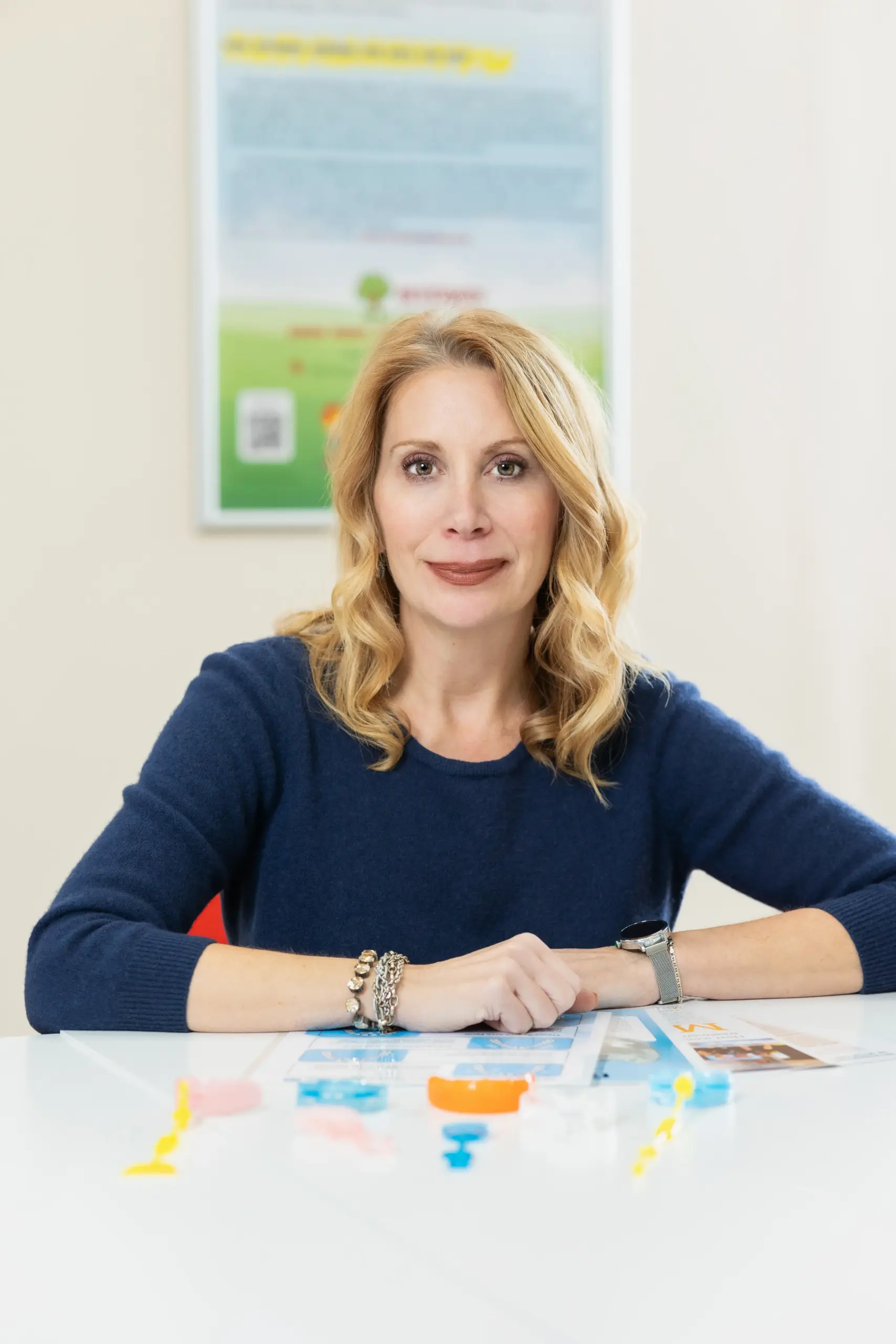
I am a licensed dentist with more than 28 years of clinical practice, a Certified Orofacial Myologist, and a Buteyko Breathing Method Instructor. I founded MyoWay Centers for Kids to focus on early screening, functional assessment, and collaborative care for children.
Parents sometimes hope that one device will take care of a complicated pattern. That hope is understandable. An appliance is visible, it has a clear routine, and it can feel like the treatment itself.
The muscles of the tongue, lips, and jaw are active all day. They help a child chew, swallow, speak, and rest the mouth in a comfortable position. They also influence how a child uses the lower jaw during growth. A pediatric myofunctional therapy program should treat those skills as the center of care.
An appliance may still belong in that plan. Some children benefit from one. Some need a different appliance at a later stage. The appliance is there to support muscle training, not to replace it. Families who want a clearer picture of this structure can review the myofunctional therapy programs at MyoWay Centers for Kids. Those programs follow a child’s age, clinical findings, and daily function, rather than a single product.
Why a Pediatric Myofunctional Therapy Program Should Not Rely on One Appliance
An appliance has a real role. Depending on the child, it may help guide the teeth, support a stage of jaw development, or give the muscles a consistent shape to work against. A program may use different appliances at different times, since a growing child does not have the same needs at every stage.
What an appliance cannot do by itself is teach a child how to move and rest the muscles correctly. Children chew, swallow, and breathe throughout the day, including the many hours when an appliance is not in the mouth. If those patterns stay unchanged, the appliance is working against a habit rather than with a new skill.
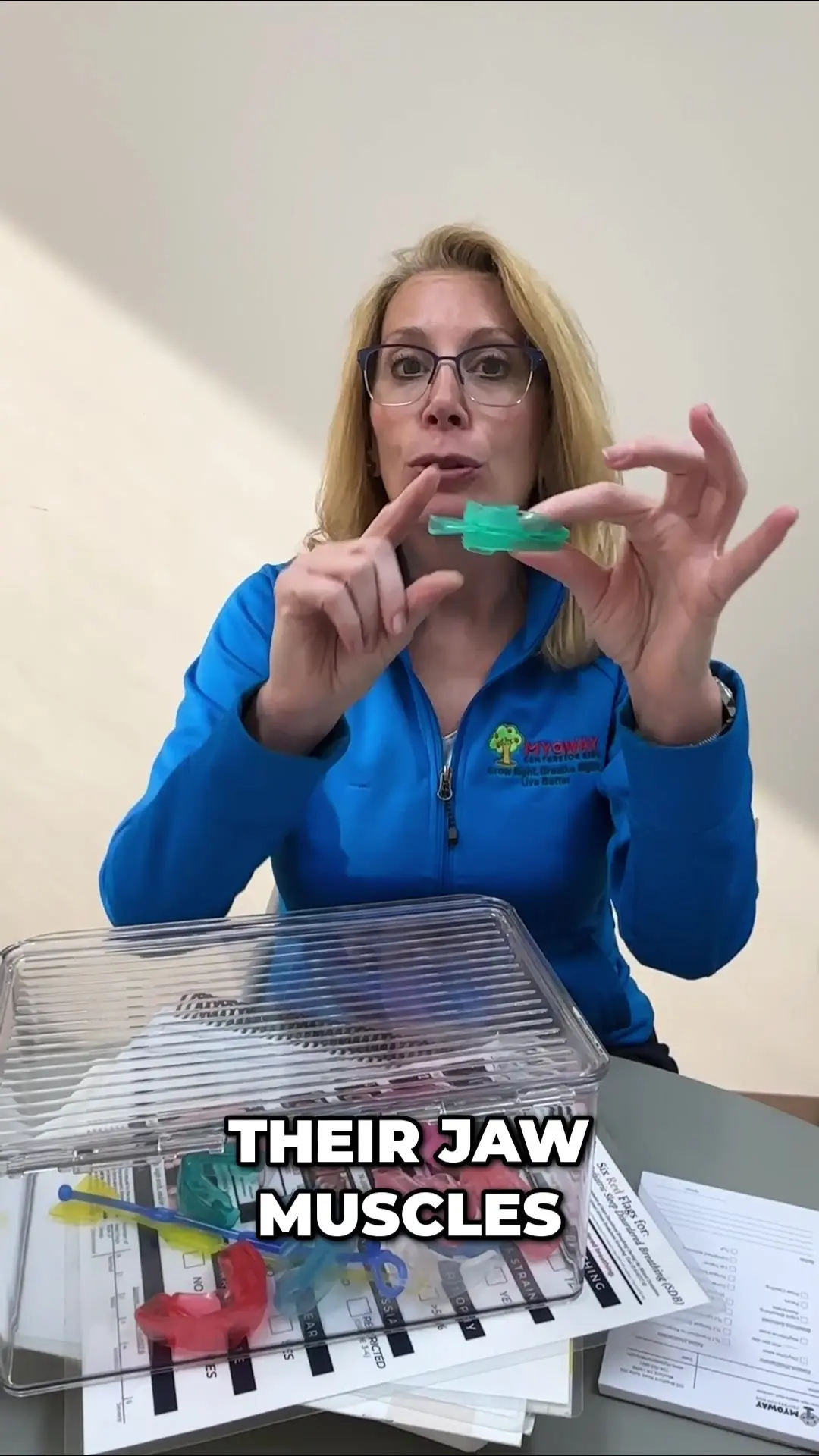
That is why I look for programs that use muscle exercises and breathing exercises alongside appliances. A small oral exerciser, for example, may help a child practice the tongue, lips, and jaw muscles. The value is not the object. The value is the guided practice it makes possible.
The American Academy of Pediatric Dentistry policy on obstructive sleep apnea takes a similarly careful view of intraoral appliances for children who may have sleep-related breathing concerns. The 2026 policy advises clinicians to consider nonsurgical intraoral appliances only after a complete orthodontic and craniofacial assessment of the child’s growth and development. It also advises this only as part of a multidisciplinary approach. The policy notes limits in much of the published work on dental interventions, and it encourages more research.
A related article explains why children may wear myofunctional appliances during the day and at night. It also discusses why exercises still matter when a child already wears an appliance.
Tongue, Lip, and Jaw Exercises in a Pediatric Myofunctional Therapy Program
The lower jaw is one of the structures I watch most closely. In my clinical work, I want muscle activity that can support forward and outward growth of that jaw. When the lower jaw grows in a more downward direction, there can be less room in front of the airway.
The tongue attaches to the lower jaw. If the jaw is smaller, set farther back, or growing in a steeper downward pattern, the tongue may sit lower and farther back as well. That position may have an association with a more crowded airway space. This is a pattern I discuss with families as a reason to pay attention. It is not a diagnosis, and it is not a prediction of what will happen to any one child.
Tongue, lip, and jaw exercises are how a program teaches those muscles to work in a more coordinated way. Chewing belongs in that picture too. I notice when a child avoids firmer foods or does not use the jaw muscles much during meals. Limited chewing is not the sole cause of a jaw growth concern, and it is never a diagnosis on its own. It is one of the daily functions a program can strengthen when that program teaches the muscles, rather than relying on an appliance alone.
A trained clinician should choose these exercises after an evaluation and guide consistent practice at home. They are not a generic routine that every child should copy from a video or from another family’s plan.
Why Breathing Work Belongs in a Pediatric Myofunctional Therapy Program
Breathing is a muscle skill as well. A child may rest with the mouth open, struggle to breathe comfortably through the nose, or use the mouth during sleep. That child is asking the jaws and tongue to adapt around that pattern.
That is why our programs include breathing exercises along with muscle training and appliances. As a Buteyko Breathing Method Instructor, I use guided breathing practice to help some children notice nasal breathing and practice a calmer breathing pattern. Breathing exercises are not a cure for a blocked nose, enlarged tonsils, or a sleep-related breathing disorder. Those concerns may need medical evaluation.
When a program uses breathing work, muscle exercises, and appliances together, each part has a job. The appliance can support a stage of development. The muscle exercises teach function. The breathing exercises help the child use the nose and airway more comfortably. The combination is what I mean when I talk about a complete pediatric myofunctional therapy program.
Jaw Growth, the Airway, and What Research Can and Cannot Say
Parents often ask a difficult question after they hear this explanation. If the lower jaw and the tongue sit farther back, will a child grow up with obstructive sleep apnea (OSA)?
The honest answer is that no one can say that about an individual child. Obstructive sleep apnea has many possible contributors. These include enlargement of the tonsils and adenoids, obesity, muscle tone, nasal obstruction, and the shape of the face and jaws. A growth pattern is one factor to understand. It is not destiny.
What Research Shows About Jaw Structure and Sleep Apnea
Research does show an association between jaw and facial structure and obstructive sleep apnea, in both children and adults. A 2023 systematic review in the European Journal of Orthodontics compared facial and jaw measurements in children with and without obstructive sleep apnea. Children with the condition tended to have a lower jaw that sat farther back, a steeper jaw angle, and a larger overjet.
The authors cautioned that these differences were modest and may not be clinically significant in every child. That caution matters. An association is not proof that jaw shape caused the sleep problem, or that changing growth will prevent one.
In adults, a systematic review of facial and jaw measurement studies found a similar association. The findings included a smaller airway space behind the tongue and, in several analyses, a shorter or more retruded lower jaw. The authors described craniofacial disharmony as an important risk factor. They did not present it as the only cause.
How I Weigh This Evidence in Clinical Practice
I have seen this association from another direction. During my years of treating adult dental patients, I often reviewed long health histories that included sleep and breathing concerns. I could not know how each of those adults had grown as children, and I could not claim that childhood jaw development caused their later difficulties. Those observations are one reason I shifted my work toward children’s airway and jaw development. I wanted to work with children during growth.
The same policy noted above encourages dental professionals to recognize craniofacial features and tongue position as possible anatomic contributors to obstructive sleep apnea. It also advises them to refer a child with suspected sleep apnea to an appropriate medical provider for diagnosis. That provider may be an otolaryngologist, a sleep medicine physician, or a pulmonologist. Myofunctional therapy is not a substitute for that medical evaluation.
A systematic review of myofunctional therapy for obstructive sleep apnea reported improvement in some sleep study measures, mainly in adults, and suggested it may serve as an adjunct to other care. The pediatric evidence in that review covered only a small number of children. Clinicians should not present myofunctional therapy as a stand-alone treatment for obstructive sleep apnea.
How Therapy Fits With Other Forms of Care
Some adults with obstructive sleep apnea receive continuous positive airway pressure (CPAP) or a mandibular advancement appliance. Those are options for a diagnosed condition. They are not a forecast of what a child will need. Early attention to muscle function, breathing, and jaw development may support healthier growth. It cannot promise that a child will never face a sleep or breathing problem later in life.
Families who are noticing sleep, breathing, or jaw concerns can also review the conditions we evaluate at MyoWay Centers for Kids. Surgery or orthodontic expansion may already be part of the conversation. In that case, it may help to read about how tonsil removal, palatal expansion, and myofunctional therapy can work together. Muscle function still matters in those situations, and care is often strongest when providers collaborate.
What Parents Should Ask About a Pediatric Myofunctional Therapy Program
If you are comparing programs, the questions below can help you look past a product name and toward the structure of care.
- Does this pediatric myofunctional therapy program teach tongue, lip, and jaw muscle function, or does it rely mainly on an appliance?
- Might a program use more than one appliance, and if so, why would the appliance change over time?
- Are breathing exercises part of the plan, and how does the program teach them?
- How does the program look at lower jaw growth, tongue posture, chewing, and nasal breathing?
- How will the program monitor progress, and what does it expect of the family at home?
- When would the program collaborate with a pediatrician, an otolaryngologist, a sleep specialist, an orthodontist, or a speech-language pathologist?
- What can this program reasonably support, and what outcomes will it not promise?
A thoughtful answer to that last question is a good sign. A program that guarantees a result asks you to trust more than the evidence and the child’s individual needs can support. The same concern applies when a program presents one appliance as a complete solution.
The right plan should come from an evaluation of the actual child, not from a standard package. An appliance may help some children. Other children may need more attention to muscle function or breathing. Another child may need medical care first. An evaluation is how those distinctions become clear.
Frequently Asked Questions About a Pediatric Myofunctional Therapy Program
What should parents look for in a pediatric myofunctional therapy program?
Look for a structured program that teaches muscle function and breathing. That program should use appliances as tools rather than as the entire plan, evaluate the individual child, and collaborate with other providers when needed. Ask how the program will monitor progress and what the program will not promise.
Is one appliance enough for myofunctional therapy?
In my view, an appliance alone is rarely enough. An appliance may support a stage of development, but it does not by itself teach the tongue, lips, and jaw muscles how to work. A complete program pairs appliances with muscle and breathing exercises.
Why would a program use more than one appliance?
A child’s needs can change with growth and with the skills the program is training. Different appliances may serve different purposes at different stages. The specific choice should follow an evaluation, not a one-size approach.
Do muscle and breathing exercises replace an appliance?
Not necessarily. Exercises and appliances can serve different roles, and some children may need more emphasis on one or the other. The evaluation should guide that decision.
Can the way a child’s jaw grows cause obstructive sleep apnea later in life?
Research has found associations between certain jaw and facial patterns and obstructive sleep apnea in children and in adults. Those findings do not prove that a particular growth pattern will cause obstructive sleep apnea. They also do not mean every child with a smaller or more retruded jaw will develop the condition. Many other factors can play a part. An evaluation, and medical referral when a clinician suspects sleep apnea, is the appropriate next step.
If I search for pediatric myofunctional therapy near me, is a nearby office enough to go on?
Location can matter for consistent visits. The structure of the program matters as well. Proximity does not tell you whether the program teaches muscle function or depends on a single appliance.
Can a myofunctional therapy program treat obstructive sleep apnea on its own?
No. Clinicians should not present myofunctional therapy as a stand-alone treatment or a cure for obstructive sleep apnea. A child with suspected sleep apnea needs appropriate medical evaluation. A clinician may consider therapy as one part of a broader plan when that clinician recommends it.
When should a program involve another specialist?
Collaboration is appropriate when there are signs of a sleep-related breathing disorder, nasal obstruction, tonsil or adenoid concerns, significant orthodontic needs, speech concerns, or medical conditions that affect the airway. A myofunctional evaluation can help identify when another provider should be part of the child’s care.
Medical Disclaimer
This article is intended for educational and informational purposes only and does not constitute medical advice, diagnosis, or treatment. Every child’s development and healthcare needs are unique. Myofunctional therapy may support oral muscle function, breathing habits, and jaw development, but individual results vary. It is not a substitute for medical evaluation or treatment of sleep-related breathing disorders. Parents should consult a qualified healthcare professional regarding concerns about their child’s breathing, sleep, or development.
If you would like to talk about your child’s breathing, sleep, or jaw development, you are welcome to schedule a free evaluation with MyoWay Centers for Kids. We can review your concerns, explain the structure of our programs, and help you understand whether an evaluation is a reasonable next step.