
Over the past few weeks, many parents have asked us the same question. If a child might not be sleeping well, should the family start with an at-home sleep screening, or wait for an in-lab sleep study? Both options look at sleep, yet they are built for different jobs. Knowing what each one involves can help you have a clearer conversation with your child’s care team.
This article explains what happens during an in-lab sleep study, what our at-home screening involves, what a screening can and cannot tell you, and when a full study through a physician or sleep specialist is the right step.
Why Parents Are Asking About Sleep Testing
Sleep is not simply rest for a growing child. The National Heart, Lung, and Blood Institute notes that in children and teens, sleep helps support growth and development. When sleep is regularly cut short or disrupted, a child may struggle with focus, mood, and learning.
Poor sleep does not always look the way parents expect, either. The American Academy of Pediatrics explains that daytime sleepiness is uncommon in young children with obstructive sleep apnea. Instead, a tired child may seem restless, distracted, or hyperactive. For that reason, some families first notice a sleep concern through behavior at home or at school. Our article on whether a child’s struggles may be ADHD or poor sleep explores that overlap in more detail.
Once a parent suspects a sleep problem, the next question is usually practical. How do we find out what is actually happening at night?
What an In-Lab Sleep Study Involves
An in-lab sleep study, also called polysomnography, takes place overnight at a sleep center. A trained technologist places small sensors on the child before bed. According to the National Heart, Lung, and Blood Institute overview of sleep studies and how they work, these sensors sit on the scalp, face, eyelids, chest, limbs, and a finger. The test is painless, and the sensors come off in the morning.
What the Study Measures
A full sleep study records a wide picture of the night. It tracks brain waves, heart rate, breathing effort, airflow, oxygen levels, and muscle movement. For children, the study typically measures carbon dioxide as well, and it usually includes a video recording. A technologist also stays on site all night, so someone can fix a sensor that slips while the child sleeps.
Why It Remains the Standard for Diagnosis
The American Academy of Pediatrics clinical practice guideline on childhood obstructive sleep apnea describes overnight, attended, in-laboratory polysomnography as the gold standard test. The guideline recommends a sleep study for children who snore regularly and also show other signs of obstructive sleep apnea. A study can show whether the condition is present, and it can also show how severe it is. That information helps physicians plan treatment.
In other words, an in-lab sleep study is the test that answers the diagnostic question. A home screening is not meant to replace it or to talk families out of it.
What Our At-Home Sleep Screening Involves
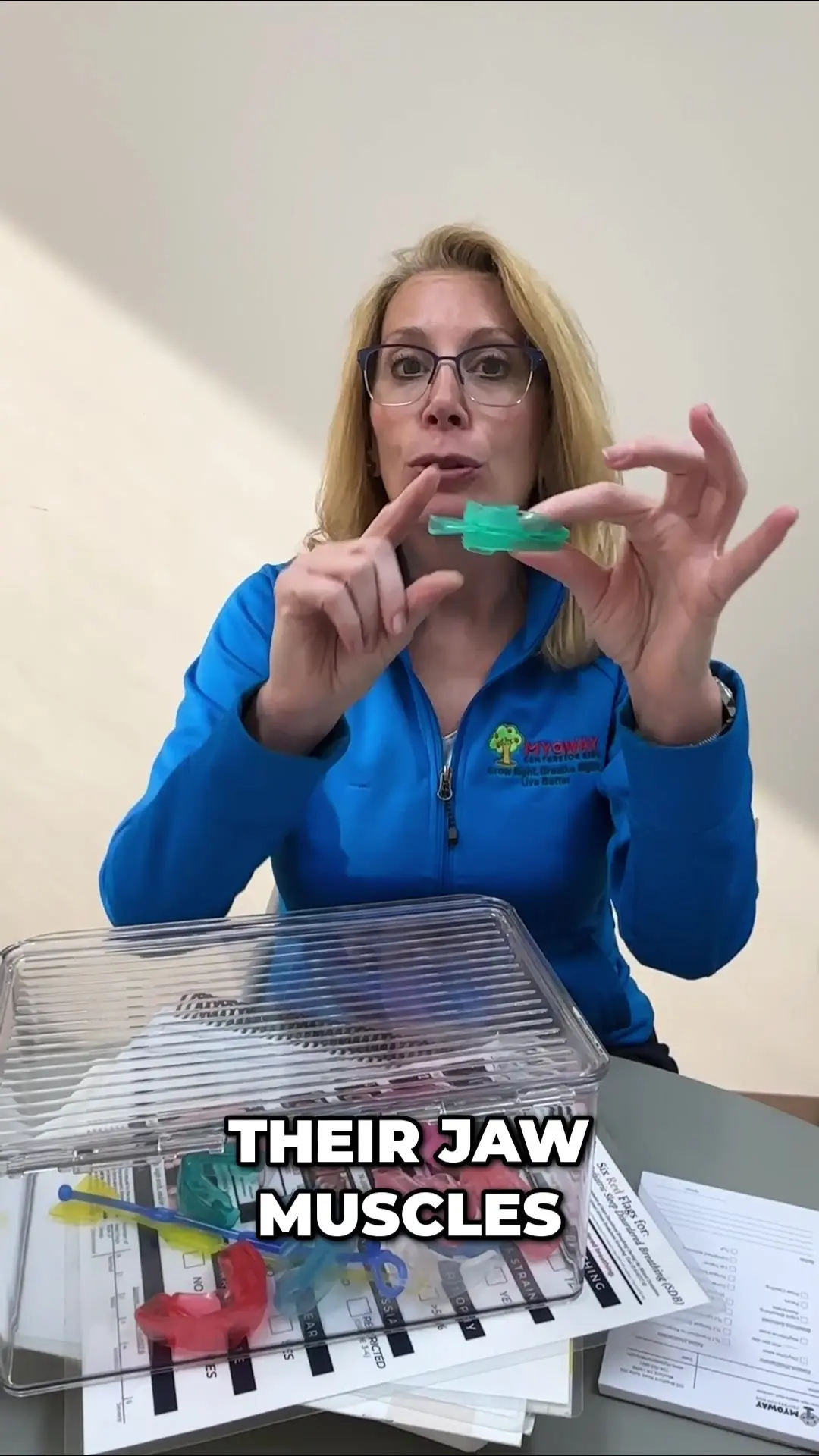
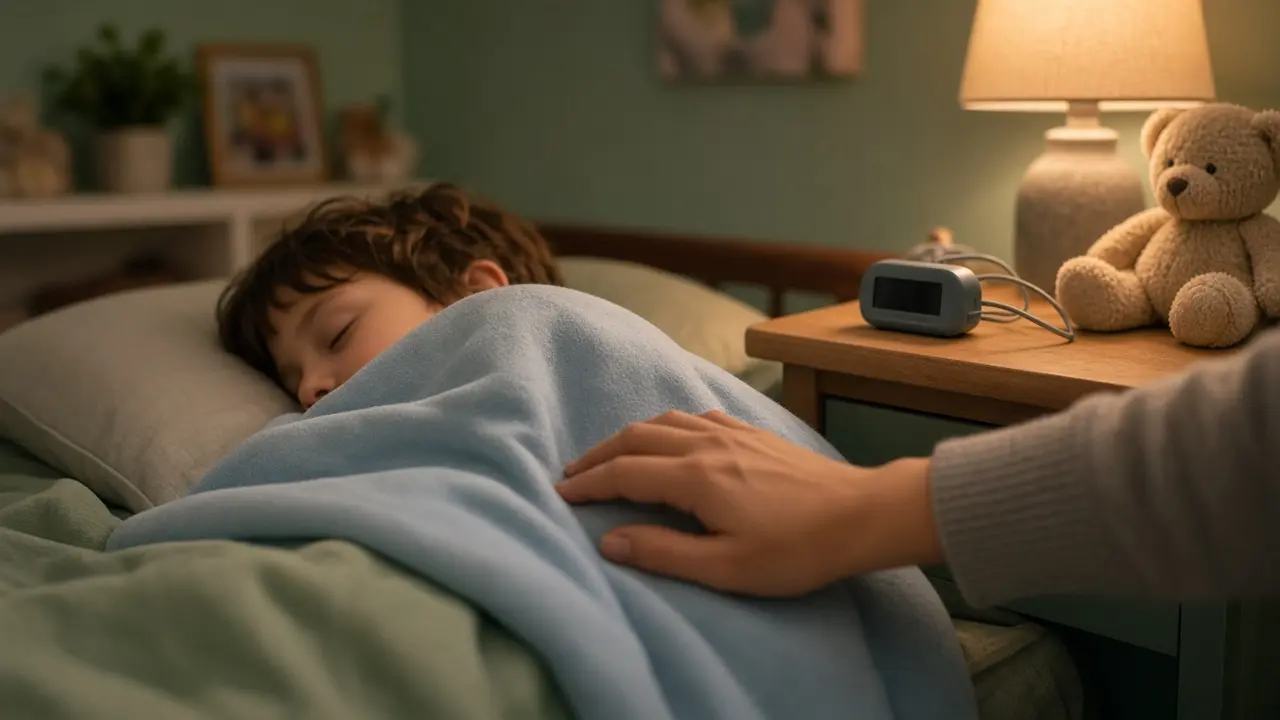
MyoWay Centers for Kids now offers an at-home sleep screening as a comfortable first step. Your child wears a small finger piece at night while sleeping in their own bed. If your child tends to wiggle, you can even tape the piece in place. This screening is not a diagnosis, and it does not replace an in-lab sleep study.
How the Finger Sensor and Phone Application Work
The finger piece connects with an application on your phone. Over a couple of nights, it records information about how your child is sleeping. There are no wires on the head or face, and no one has to stay overnight in an unfamiliar room. For many families, a familiar setting can make the experience feel easier.
How Our Team Reviews the Report
After the screening nights, our team interprets the report. Then we sit down with you, review the findings together, and talk through a plan to help your child sleep better. The plan depends on your child’s needs, and it may include a referral to a physician for further testing. The goal is to give you useful information and a clear direction, not a label.
What a Screening Can and Cannot Tell You
A screening and a diagnostic study answer different questions. A screening can offer insight into how your child is breathing and resting during a typical night at home. It can also help our team understand whether a closer look is needed and what the next step should be.
However, a screening is not a diagnosis. The at-home screening is not an attended polysomnogram, and it does not diagnose obstructive sleep apnea. The American Academy of Sleep Medicine position paper on home sleep apnea testing in children states that home sleep apnea testing is not recommended for diagnosing obstructive sleep apnea in children. The task force noted that most home devices do not record brain waves or carbon dioxide. Without those signals, a home test may underestimate how much a child’s breathing is affected during sleep.
The American Academy of Sleep Medicine is also working on an updated guideline on home sleep apnea testing in children, which is still in development. Until newer guidance is published, the safest way to think about home screening is as a helpful first look. It is not a final answer.
A normal screening result also does not rule out a sleep problem. If your child still snores, gasps, or wakes up exhausted, those signs deserve attention. Our article on what to do when a child’s sleep test is unclear covers that situation in more depth.
When an In-Lab Sleep Study Is the Right Next Step
Some situations call for a full diagnostic study rather than a screening alone. These include the following:
- Your pediatrician, a sleep specialist, or an ear, nose, and throat physician has already recommended a sleep study.
- Your child snores most nights and also has pauses in breathing, gasping, or labored breathing.
- Your child has a medical condition that affects breathing, muscle tone, or facial structure.
- A screening suggests a possible breathing concern during sleep.
- Symptoms continue even after a screening comes back reassuring.
If any of these apply, the best step is to follow the guidance of the physician who is caring for your child. If a study has already been ordered, please keep that appointment. A home screening is not a reason to cancel or delay it.
Why Wait Times Matter to Families
Many families in the Pittsburgh area tell Dr. Leslie Pasco that the wait for an in-lab sleep study can be six to twelve months. Wait times can vary, so your experience may be different.
Long waits are not unique to one region. The American Academy of Pediatrics guideline notes a shortage of sleep laboratories with pediatric expertise. Similarly, the American Academy of Sleep Medicine lists long waits and travel distance among the barriers families face.
For parents, a long wait can feel discouraging. After all, a child keeps growing and learning every night of that wait. A comfortable screening can give families something useful to discuss with their care team in the meantime. It does not replace the study, though. Instead, it can help everyone decide what to do while the family waits.
How a Screening and an In-Lab Sleep Study Can Work Together
It helps to think of these two options as partners rather than rivals. A screening is a comfortable first look at your child’s sleep. A full study is the medical test that diagnoses whether a sleep disorder is present and how serious it is.
In practice, a screening may support a family’s next conversation with a pediatrician or sleep specialist. It may also give our team a starting point for understanding how your child’s breathing and oral habits fit together. For many children, looking at the full picture matters. We often consider nighttime signs like the ones described in our guide to common signs of poor sleep in children, along with how a child breathes, chews, and rests their tongue during the day.
Each child is different, so the right path depends on their history, symptoms, and the advice of their physicians.
Frequently Asked Questions
Does an at-home sleep screening diagnose sleep apnea?
No. A screening can help our team understand your child’s sleep and decide on next steps. Only a physician or other qualified medical provider can diagnose obstructive sleep apnea, usually with an in-lab sleep study.
How long does the at-home screening take?
The screening takes place over a couple of nights. Your child wears the finger piece while sleeping at home, and the application on your phone records the information.
Is the finger sensor uncomfortable for children?
The finger piece is small and does not require wires on the head or face. Your child simply wears it to bed. If it slips, you can gently tape it in place.
What happens after the screening?
Our team interprets the report and reviews it with you. Together, we talk through a plan to help your child sleep better, which may include a referral for further testing when needed.
Can a screening replace a sleep study my child’s doctor ordered?
No. If a physician has recommended an in-lab sleep study, please follow that recommendation. A screening is a first step, not a substitute for a diagnostic test.
What if the screening looks normal but my child still sleeps poorly?
A reassuring screening does not rule out a sleep problem. If snoring, restless sleep, or daytime exhaustion continue, talk with your pediatrician or a sleep specialist about further evaluation.
Taking a Comfortable First Step
If you have been wondering how your child is really sleeping, you do not have to sort it out alone. Our team is happy to answer your questions and help you decide whether a screening, an evaluation, or a conversation with your physician makes the most sense. You can reach out to MyoWay Centers for Kids to learn more.
This article is for general educational purposes only and is not medical advice. The At-Home Sleep Screening is not a diagnostic sleep study and does not diagnose obstructive sleep apnea or any other condition. Every child is different, and results vary. Please talk with your pediatrician or a qualified sleep specialist about your child’s symptoms and any testing they recommend.
When you are ready, you can schedule a free evaluation with our team.