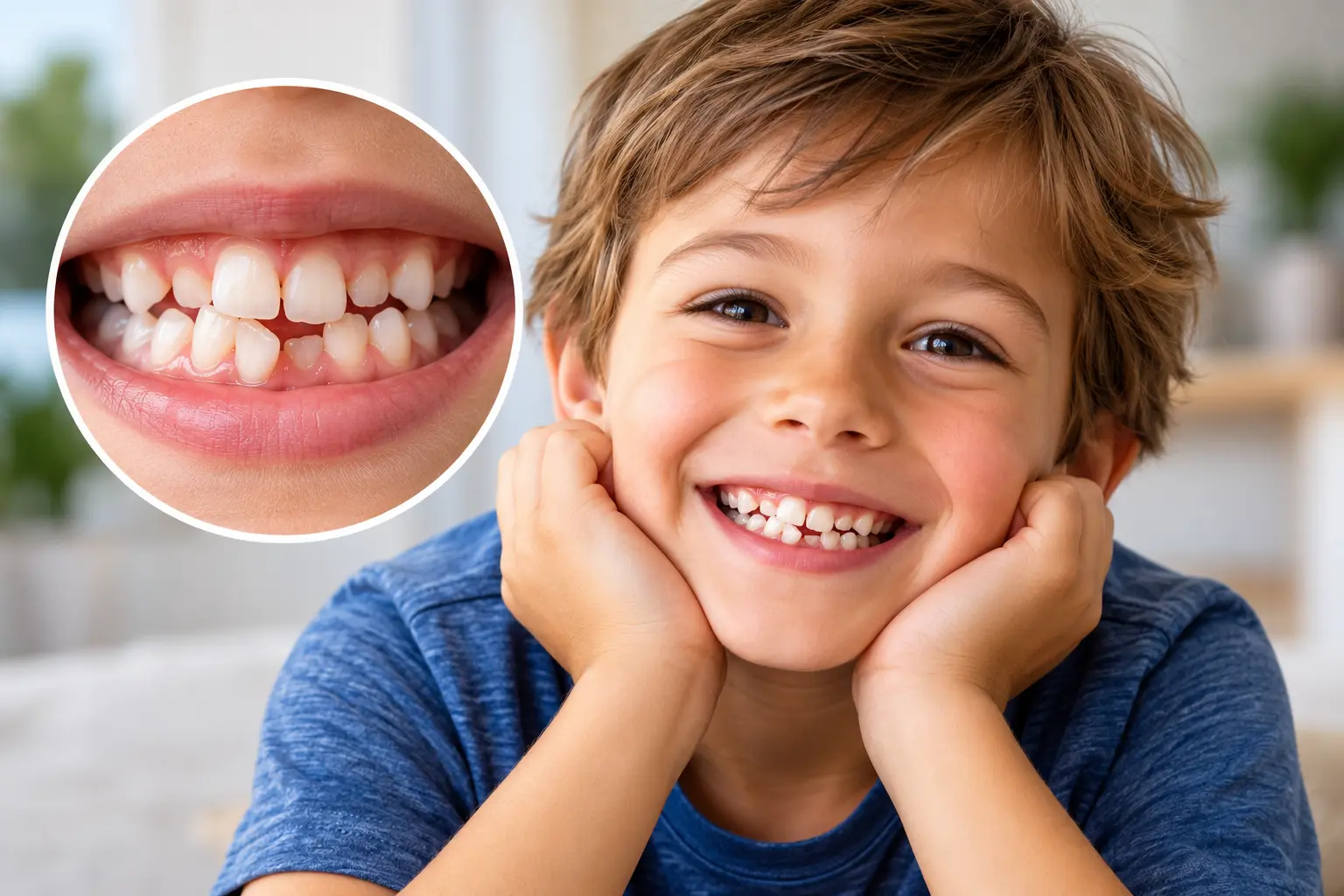

Jaw growth direction plays a key role in a child’s breathing, sleep, and facial development. When the jaw grows forward as it should, it helps keep the airway open and supports healthy breathing
We all appreciate a strong jawline but did you know that a child’s jawline tells a much deeper story than just appearance?
At MyoWay Center for Kids, we understand that proper jaw development is essential for healthy breathing, sleep, cognitive function, and overall well-being.
Let’s explore why that forward-growing jawline is so important and what warning signs parents should never ignore.
Why Jaw Growth Direction Matters
The ideal jaw growth pattern is forward, up, and out. This direction does more than shape a balanced face — it allows the airway to expand properly, supports nasal breathing, and creates a healthy oral environment.
When the jaw grows forward:
- The tongue rests naturally on the roof of the mouth
- The airway stays open and clear
- Nasal breathing becomes the default
- The face develops in a symmetrical and functional way
This is the foundation of not just good looks, but good health.
What Happens When Jaw Growth Is Compromised?
When a child’s jaw does not grow forward as it should, the face may appear long, narrow, or sunken.
This is not just a cosmetic issue — it can signal airway constriction, which can lead to:
- Mouth breathing
- Restless sleep or snoring
- Chronic congestion or allergies
- Earaches or headaches
- Crowded teeth and early dental issues
- Jaw discomfort
- Nighttime bedwetting
- Behavioral challenges or lack of focus
And these are not just short-term problems. An underdeveloped airway can lead to long-term challenges with sleep, oxygen intake, and overall health.
Red Flags Parents Should Watch For
Do any of these sound familiar?
- Your child frequently breathes through their mouth
- They snore or sleep with their mouth open
- They wake up tired or have dark circles under their eyes
- They have crooked or crowded teeth
- They experience frequent cavities, jaw pain, or ear infections
- They struggle with bedwetting or behavioral concerns
These may all be signs of underdeveloped jaws and restricted airways.
The MyoWay Difference: Early Intervention, Lasting Results
At MyoWay Center for Kids, we take a proactive, whole-child approach to jaw and airway development. We use medical-grade appliances and the world’s first myofunctional exerciser appliance to guide jaw growth gently and naturally.
Our approach is supported by targeted myofunctional therapy that helps children build healthy habits like proper tongue posture, nasal breathing, and correct oral rest position.
We also educate families and collaborate closely with dentists, pediatricians, and other providers to address these concerns early — before they become long-term problems.
Why Early Evaluation Matters
The earlier we evaluate and support a child’s development, the more we can influence proper facial and airway growth. Waiting until teenage years or adulthood often means more invasive treatments or lifelong complications.
Early intervention allows us to help children:
- Sleep more peacefully
- Focus more easily at school
- Avoid unnecessary dental and orthodontic work
- Build the foundation for lifelong wellness
Final Thoughts
A strong jawline might be pleasing to look at, but at MyoWay, we see it as a sign of optimal development. If your child shows signs of poor jaw growth or struggles with sleep, behavior, or breathing, it may be time for an evaluation.
Give your child the gift of lifelong health — starting with their jaw.
Book an Evaluation
Ready to learn more? Schedule your child’s evaluation with MyoWay Center for Kids today.