REGISTER NOW for Dr. Leslie webinar & learn why your child may be a candidate.

Pediatric Myofunctional Therapy Blog

The pediatric myofunctional therapy blog from MyoWay shares research-based insights on airway development, sleep quality, and childhood growth. Articles are designed to educate parents and professionals on early intervention and whole-child health. 

Each article in the pediatric myofunctional therapy blog is created to educate parents, caregivers, and healthcare professionals about the importance of early intervention and preventive care.


graphic on mouth breathing

What Parents Should Know About Sleep and Airway Development

Many parents notice their child breathing through the mouth and assume it is just a habit that will go away with time. It can seem minor, especially when a child is otherwise active, healthy, and growing. In some cases, mouth breathing may come and go during allergy season or when a child has a cold. […]
child snoring

Snoring and Mouth Breathing in Children May Be a Sign

Many parents hear their child snore and assume it is harmless. It can sound minor, common, or even a little funny at first. In many homes, snoring gets brushed off as just another childhood phase. Parents are often told their child will outgrow it and that there is no reason to worry. The problem is […]
tired child rubbing eyes

Could Poor Sleep Be Affecting Your Child’s Behavior?

Many adults know exactly what poor sleep feels like. A rough night can leave you irritable, unfocused, low on energy, and struggling to make good decisions. It can affect your mood, patience, cravings, and ability to get through the day. Now imagine feeling that way as a child. A young child cannot always explain that […]
child with tongue sticking out

How Tongue Posture Affects Oral Development in Children

Most parents pay close attention to their child’s teeth, speech, sleep, and behavior. Few realize that one small habit may influence all of them at once. That habit is resting tongue posture. The way the tongue rests in the mouth can affect how a child breathes, how the roof of the mouth develops, and how […]
A woman on a laptop searching myofunctional therapy near me

Myofunctional Therapy Near Me

If you searched “myofunctional therapy near me,” you are probably not starting from scratch. Most families arrive at this search after months or years of trying to solve symptoms that keep showing up in different areas of their child’s life. Parents often begin with sleep issues, behavior concerns, crowded teeth, or speech therapy. The turning […]
child sleeping

Jaw Growth Is Not Only Genetic

Many parents are told the same thing when they notice signs like mouth breathing, snoring, restless sleep, crowded teeth, or an open mouth posture in their child. It is genetic. They will grow out of it. There is nothing to do yet. That message feels reassuring at first. Parents want to believe there is no […]

Pediatric Myofunctional Therapy: More Than Just Mouth Exercises

If you have ever wondered whether myofunctional therapy is just mouth exercises, you are not alone. Many parents hear the term and assume it is a small add on that cannot possibly affect big issues like sleep, speech, or development. Pediatric myofunctional therapy is structured training for the muscles of the face, tongue, and airway. […]

Airway Screening for Kids: 5 Questions to Ask at Every Checkup

Most wellness visits and dental cleanings cover the basics: height, weight, vision, and cavities. Those matter. Yet one of the most important indicators of long term health and development is often missed unless a parent brings it up first: your child’s breathing, especially during sleep. Snoring, mouth breathing, restless sleep, teeth grinding, and bedwetting are […]

When Speech Therapy Is Not Working

If your child has been in speech therapy and you are not seeing the progress you expected, it can feel confusing and exhausting. Many parents start questioning everything, including whether they should add more sessions, change therapists, or wait it out. There is another possibility that is often missed. Speech therapy can slow down or […]

Why Your Child Gets Tired Fast in Sports

Your child practices. They care. They want to keep up. Yet during games, they seem to gas out faster than everyone else. You might find yourself wondering, why does my child get tired so fast in sports? Most parents assume it is conditioning. Maybe they need more drills. More strength training. More effort. That is […]

What Is Really Behind Pediatric Mouth Breathing?

Many parents are told that mouth breathing is just a habit. Something children will outgrow. Others are told it is caused by allergies, enlarged tonsils, or frequent colds. While these factors can contribute, they often distract from a deeper issue. In many children, mouth breathing is not a behavior problem. It is a compensation. When […]

Mouth Breathing in Children After a Cold

If your child began mouth breathing during a cold and continues to do so after recovering, it may no longer be congestion. Persistent mouth breathing can change tongue posture, jaw growth, airway development, sleep quality, and focus. Early evaluation makes correction easier and helps support healthy development. Many children start mouth breathing during a cold […]

High-Signal Pediatric SRBD Risk Screener

Purpose: This rapid screener focuses on 10 clinically significant symptoms of Sleep-Related Breathing Disorders (SRBD) in children, providing a quick assessment of high risk.

Instructions: Please choose the option that best describes your child's behavior for each question.
1. Does your child snore?
2. Does your child often sleep with their mouth open, or appear to be a 'mouth breather' during the day?
3. Has your child had recurrent or chronic tonsillitis or been told they have enlarged tonsils/adenoids?
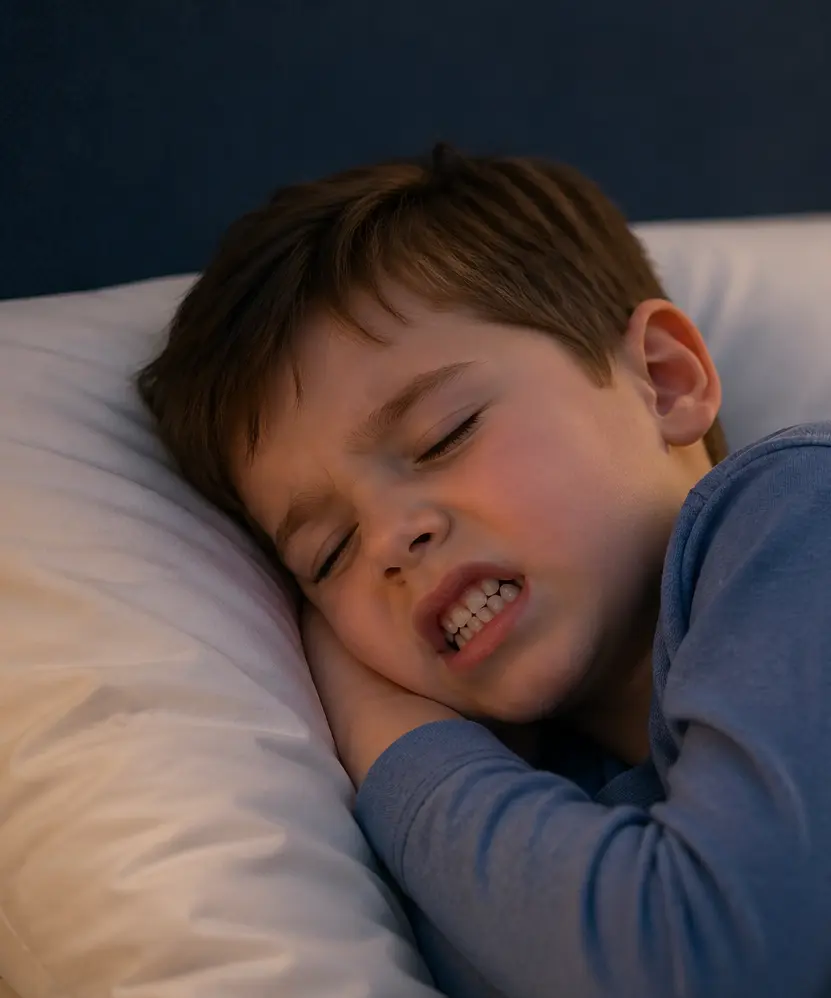
4. Does your child grind their teeth (bruxism) or clench their jaw during the night?
5. Does your child sweat excessively during sleep?
6. Is your child restless in bed, often changing positions, or sleeping in unusual positions?
7. Does your child wake up during the night after falling asleep?
8. Does your still child wet the bed regularly?
9. Is your child abnormally tired, drowsy, or irritable during the day?
10. Is your child's concentration or attention span noticeably poor, leading to problems at school or home?