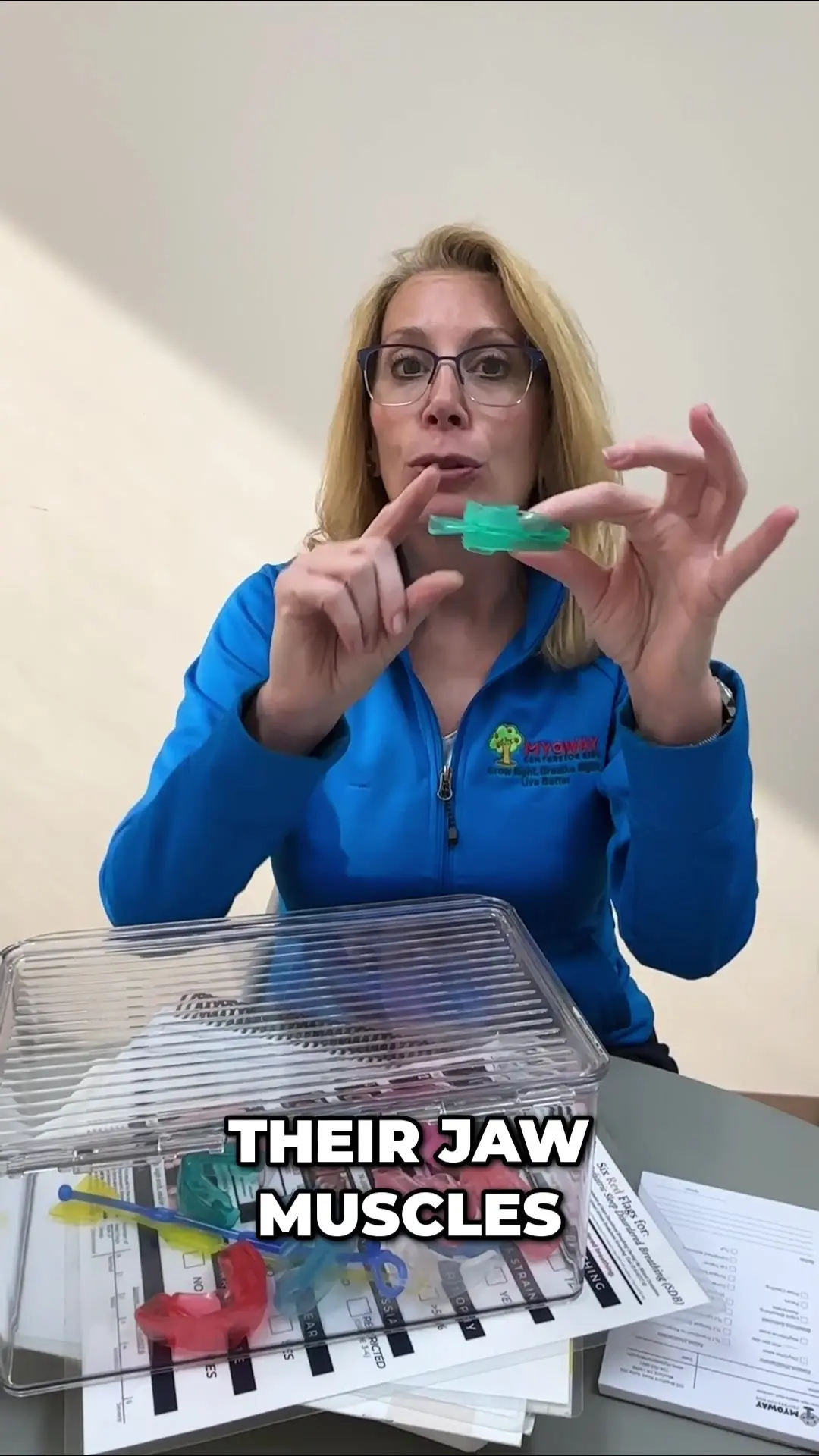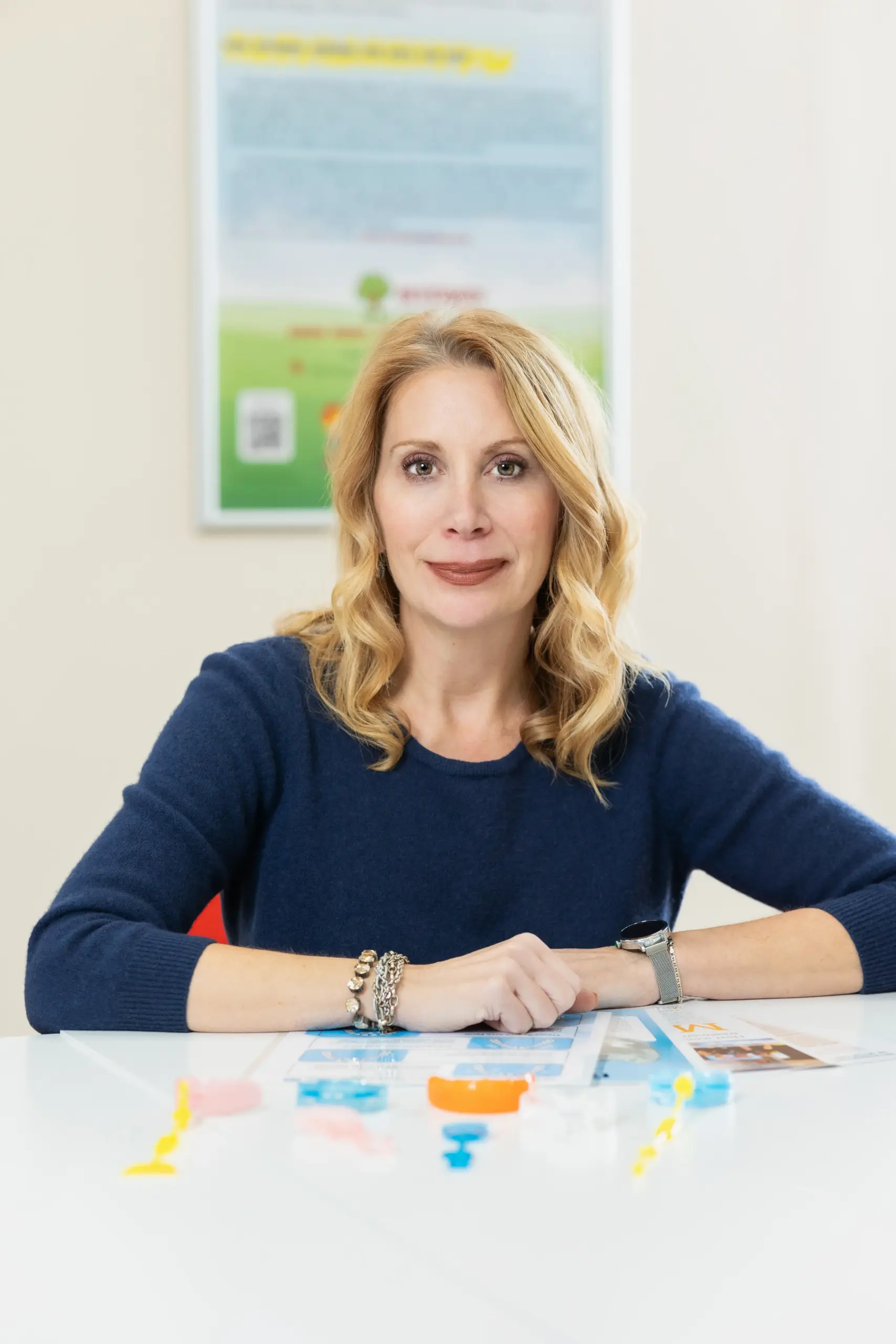
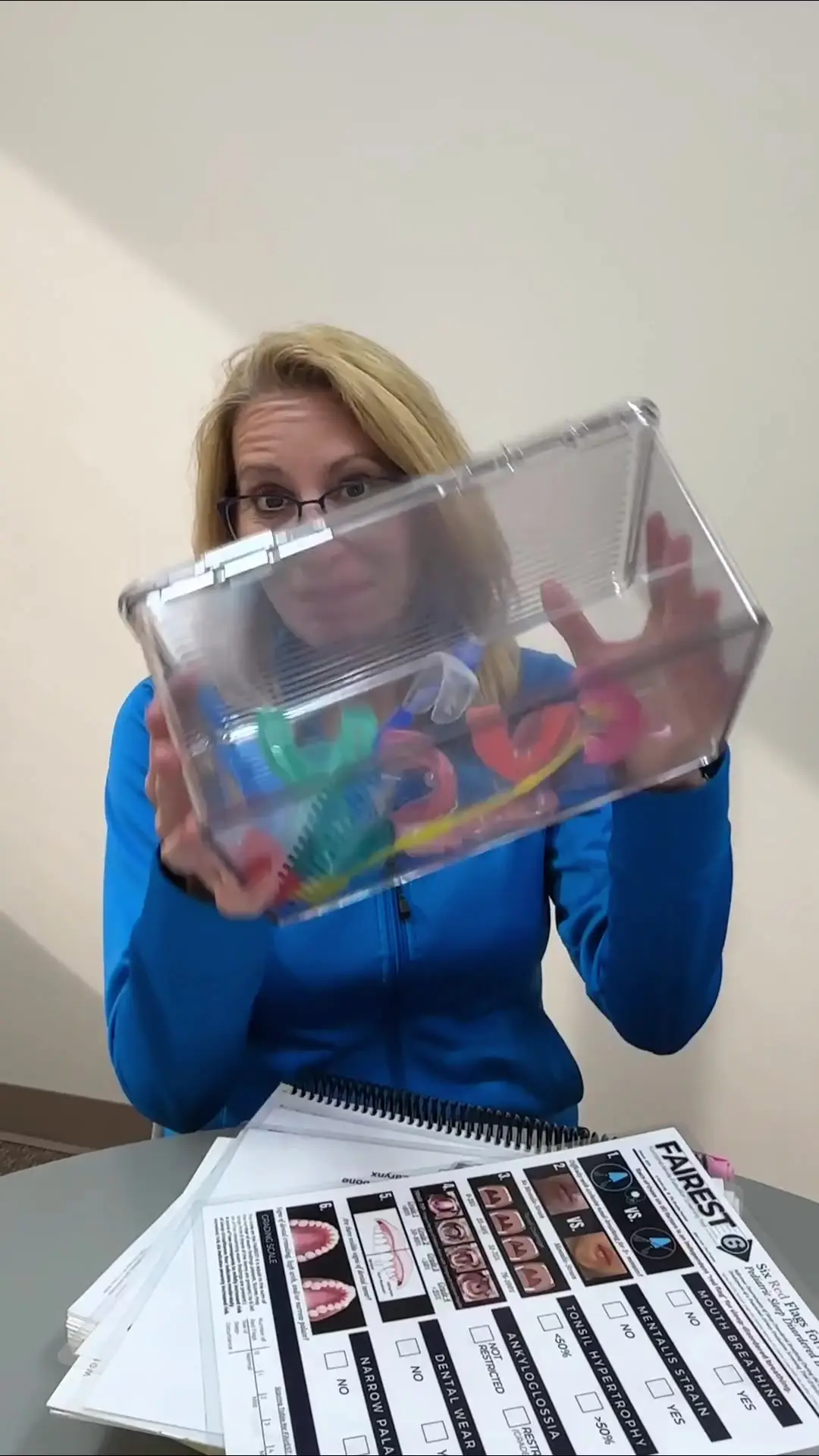
When parents visit MyoWay Centers for Kids, they are often surprised by a simple teaching box. Dr. Leslie Pasco keeps many myofunctional appliances in that box. The box does not hold even half of the ones used in care. This collection is a teaching tool, not a sales display.
Many families arrive expecting one device to do every job. In clinical practice, that is rarely how these programs are built. A child’s plan may use several myofunctional appliances for both passive and active muscle retraining. Those tools are then paired with breathing exercises to support jaw growth, breathing, and sleep.
Why Parents See So Many Myofunctional Appliances
A single appliance cannot address every muscle pattern, every stage of growth, or every breathing habit. Children also differ in age, jaw development, oral posture, and sleep signs. For that reason, programs at MyoWay Centers for Kids are specific rather than one-size-fits-all.
Our Developmental Level Programs are personalized after an evaluation. Families can read more about that process on our Programs and Therapy page. The right combination depends on what the child actually needs, not on a standard kit.
In the office, showing several myofunctional appliances helps parents see the bigger picture. The conversation is about function, not about picking a favorite device.
What Myofunctional Appliances Are Designed to Support
Myofunctional appliances are tools that may guide the tongue, lips, jaws, or oral posture during a child’s growth. They do not work like a switch that turns on better sleep or perfect alignment. Their role is to support muscle retraining as part of a broader program.
The American Speech-Language-Hearing Association explains that orofacial myofunctional disorders involve movement patterns of the mouth and face. Those patterns can affect tongue position at rest and during swallowing, breathing, and speech. The association also notes that these patterns may come from a mix of learned behaviors, structural differences, and other factors.
The primary purpose of this therapy is to help create an oral environment in which typical growth can take place. Some plans use myofunctional devices, and some do not. In either case, the work should be directed by trained practitioners.
These tools also differ from a medical oral appliance prescribed to treat obstructive sleep apnea. A qualified physician should direct that treatment. Myofunctional appliances in a pediatric therapy program are used to support muscle function, oral posture, and related habits.
How Myofunctional Appliances Support Passive and Active Retraining
Dr. Pasco often describes two related jobs: passive retraining and active retraining of the muscles. Both may involve myofunctional appliances. Each one asks the child’s muscles to work in a different way.
What Passive Retraining Can Look Like
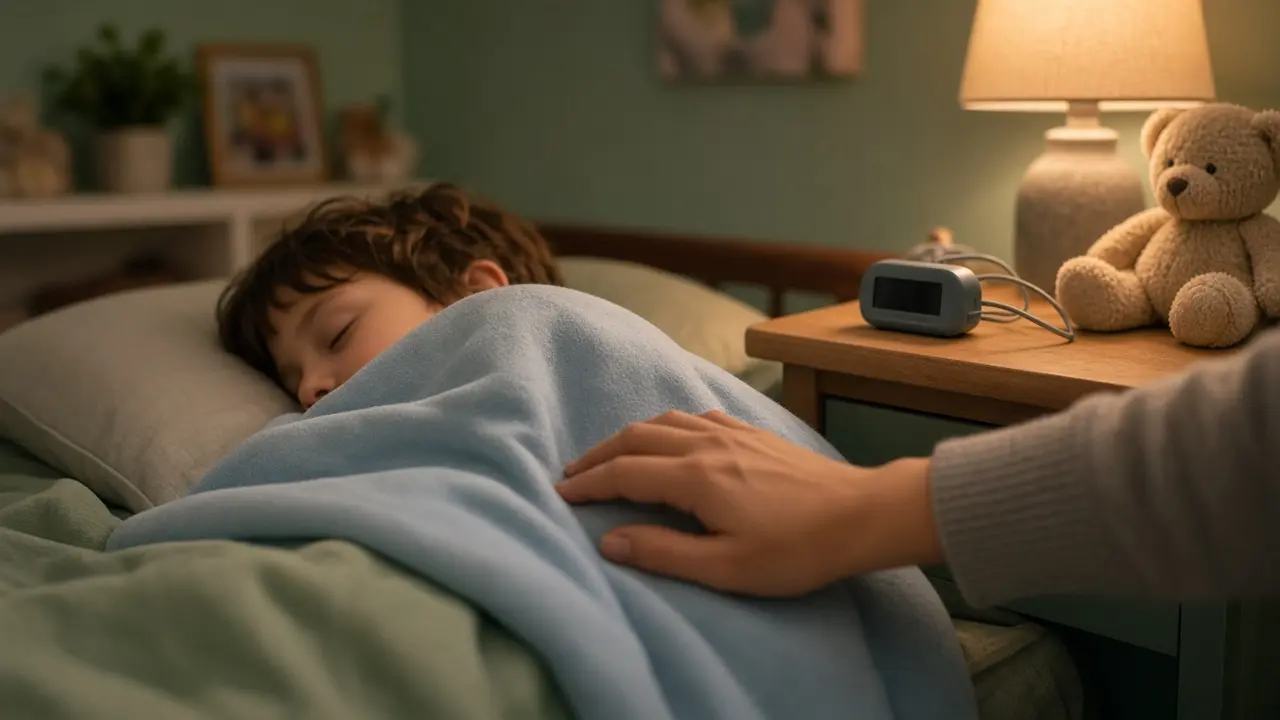
Passive retraining uses an appliance to support or cue the muscles when the child is not doing a formal exercise. This may happen during rest or sleep, depending on the child’s plan. The child does not have to remember a set of movements in that moment. The appliance provides guidance, resistance, or a reminder for oral posture.
This approach has been studied in children with sleep-disordered breathing, though the research is still developing. A 2020 review in Sleep Medicine looked at myofunctional therapy in children with mild to moderate obstructive sleep apnea. The review found an association with fewer breathing events during sleep and a small rise in mean oxygen levels.
The authors included both active and passive approaches. They described the therapy as an adjunct rather than a complete treatment. Exercise programs also varied across studies, and the two methods were not compared separately. Early findings in selected children are encouraging, not a guaranteed result.
What Active Retraining Can Look Like
Active retraining asks the child to practice on purpose. The child learns to use the tongue, lips, cheeks, or jaw in a more coordinated way. An appliance may add awareness or resistance during those exercises. Some of the work is done without a device at all.
A randomized study looked at children with sleep-disordered breathing. Oropharyngeal exercises were associated with stronger tongue tone, less mouth breathing, and a higher mean oxygen level during sleep checks. Those findings are helpful, yet they come from a defined study group over a short period. They should not be read as a promise of the same change for every child.
Active practice also helps a child build awareness during meals, speech, and rest. Our article on pediatric myofunctional therapy as more than mouth exercises explains those daily functions in more detail.
Why Breathing Exercises Belong Alongside Myofunctional Appliances
Muscle work and breathing work belong together. A child may wear an appliance and still breathe mainly through the mouth. In that case, the mouth stays open, and the tongue often sits low. The nasal airway is then not used as it should be.
The American Speech-Language-Hearing Association notes a key limit. A closed-mouth resting posture cannot be consistently established until airway interferences have been resolved. Allergies, enlarged tonsils or adenoids, or other nasal blockage may need medical attention first or at the same time. Breathing exercises are not a substitute for that medical care.
When the nose can be used more comfortably, breathing practice can support a calmer nasal pattern during the day. For some children, that practice may also help at night. In Dr. Pasco’s clinical approach, this pairing has a clear purpose: the program supports jaw and airway development. The team also works on breathing so the child can use oxygen more efficiently.
The goal is more comfortable breathing and more restful sleep, not a guaranteed result. Our article on whether myofunctional exercises can help children sleep better looks at the sleep side of this work. Our guide to why children may wear myofunctional appliances during the day and at night explains the wear schedule.
How This Combination May Support Jaw Growth, the Airway, and Sleep
The jaws, the airway, and the muscles around them influence one another during growth. Resting pressure from the lips, cheeks, and tongue is present for many hours each day. The American Academy of Pediatric Dentistry best practice on the developing dentition discusses this resting pressure. The academy notes that it has a strong effect on tooth position because it is maintained most of the time.
The same academy states that the link between oral habits and unfavorable dental or facial development is associational. It is not simple cause and effect. A habit, a low tongue posture, or mouth breathing may be associated with those changes. Association is not proof that one factor caused every change.
A 2023 systematic review looked at orofacial myofunctional therapy and craniofacial growth in children with obstructive sleep apnea. The authors reported that many of the included children showed improvement in craniofacial function or morphology. Most of those studies had a moderate or severe risk of bias, and many were not randomized. Compliance and the length of practice also appeared to matter.
Those limits are important. The research suggests possible support for function and form. It does not prove that every program will widen a jaw or enlarge an airway in a predictable way.
At MyoWay Centers for Kids, a thoughtful program may combine several myofunctional appliances, active muscle practice, and breathing exercises. Those parts are meant to support healthier jaw and airway development and more comfortable breathing and sleep. Our comparison of airway-first care and an appliance-only approach explains this point. Function has to be considered along with structure.
Why Training and Individual Planning Matter
The tools in the teaching box only help when they are chosen and coached well. A mail-order device, or a single appliance used without guidance, is not the same as a supervised program. The American Speech-Language-Hearing Association emphasizes trained practitioners and an interprofessional team.
The American Academy of Pediatric Dentistry likewise describes myofunctional therapy and appliance therapy as options. Those options should follow a careful diagnosis. Referral to other providers may also be appropriate, including a physician, an orthodontist, or an ear, nose, and throat specialist.
Dr. Pasco’s point in clinic is the same. Progress does not come down to one tool, but to several well-chosen tools used by trained people. An evaluation helps the team see how a child breathes, rests the tongue, swallows, and sleeps. It also helps show whether myofunctional appliances are appropriate.
Frequently Asked Questions
Why does a program use more than one of these myofunctional appliances?
Different appliances may support different stages of growth, muscle jobs, or times of day. The plan is based on the evaluation, not on a single standard device.
What is the difference between passive and active retraining?
Passive retraining uses an appliance to guide or cue the muscles when the child is not doing a formal exercise. Active retraining asks the child to practice coordinated movements on purpose. Many programs use both because they support muscle function at different times of day.
Do breathing exercises replace the need for an appliance?
No. Breathing practice and myofunctional appliances serve different roles. Some children also need medical care for a blocked airway before either part can help as intended.
Can myofunctional appliances treat sleep apnea on their own?
No. Research suggests that myofunctional therapy may help as added care in some children with mild to moderate obstructive sleep apnea. It is not a standalone treatment or a cure. A physician should evaluate suspected sleep apnea and guide any medical testing or treatment.
Will every child in a program receive the same appliances?
No. Children differ in age, jaw development, muscle function, breathing, and sleep signs. The number and type of myofunctional appliances, if they are used at all, should match the individual child.
How do I know if my child needs this kind of program?
Common reasons for an evaluation include mouth breathing, restless sleep, snoring, low tongue posture, and concerns about jaw growth. Those signs do not confirm a diagnosis on their own. An evaluation can help determine whether a program or another specialist is the better next step.
What if my child already has an appliance from another office?
Please bring that information to the visit. Another device may already be useful, or it may need to be reviewed with breathing, muscle function, and medical findings. The goal is a coordinated plan, not a competing set of tools.
Learning Whether This Approach May Help Your Child
If you have questions about a broader program for your child, you do not have to sort that out alone. Our team is happy to review your child’s breathing, oral function, and sleep-related signs. You can reach out to MyoWay Centers for Kids to learn more.
This article is for general educational purposes only and is not medical advice. Myofunctional appliances and therapy programs do not diagnose or cure obstructive sleep apnea or any other condition. Every child is different, and results vary. Please talk with your pediatrician or a qualified specialist about your child’s symptoms.
When you are ready, you can schedule a free evaluation with our team.