
Pediatric Airway Warning Signs Parents Should Know

Parents rarely come into an appointment saying, “I think my child has an airway problem.” More often, they mention things that seem unrelated. Their child snores, sleeps with their mouth open, grinds their teeth, moves constantly at night, wakes up tired, wets the bed, or has difficulty focusing during the day. Any one of these […]
Airway-First Care vs. Appliance-Only Approach

When parents come into my office concerned about crowded teeth, mouth breathing, poor sleep, or jaw development, it is natural for the conversation to turn quickly to appliances. Parents want to know what their child needs, how long they will wear it, and what the appliance is supposed to accomplish. Those are important questions. In […]
The MyoWay Centers for Kids System

When a parent commits to a myofunctional therapy program for their child, one of the most important questions is often overlooked: How will we know whether the program is actually making progress? In my clinical work at MyoWay Centers for Kids, I take that question seriously. A child should not simply receive an appliance, complete […]
Pediatric Airway Problems Can Be Missed

Parents often know when something does not quite add up. Your child may be seeing a pediatrician because of trouble focusing. The dentist may have mentioned crowded teeth or a narrow palate. A speech therapist may be working on tongue placement, swallowing, or an open-mouth posture. At night, you may notice restless sleep, snoring, […]
Myofunctional Therapy and Orthodontics

When parents think about orthodontic treatment, they usually focus on what they can see. A child may have crowded teeth, an uneven bite, or teeth that are coming in crooked. Braces, aligners, expanders, and other orthodontic appliances can help correct many of these concerns. However, the position of the teeth is only one part of […]
Why Pediatric Airway Care Often Requires a Team

Parents rarely begin their search for answers by asking for an airway evaluation. Instead, they may notice that their child snores, sleeps restlessly, keeps their mouth open, grinds their teeth, struggles to wake up, or becomes unusually energetic and emotional when tired. Other families may worry about crowded teeth, speech difficulties, frequent congestion, challenging mealtimes, […]
Myofunctional Therapy Success Stories
Parents rarely begin their search by asking for myofunctional therapy. They begin with a child who snores loudly enough to be heard from another room, wakes with a dry mouth, tosses throughout the night, or seems tired despite spending enough hours in bed. Sometimes the most meaningful change is not dramatic. It is the sudden […]
Open-Mouth Posture in Children

A child sitting quietly with their lips apart may not seem concerning. Parents often assume the child is distracted, congested, tired, or simply has a habit of leaving the mouth open. In some cases, that explanation may be correct. In others, an open-mouth resting posture can be an early clue that breathing, tongue posture, lip […]
Mouth Muscles Support Jaw Growth in Children

The tongue, lips, cheeks, and jaw muscles are active throughout the day as a child breathes, chews, swallows, speaks, and rests. Like other muscles in the body, they need coordination, endurance, and healthy movement patterns to function well. These muscles do more than help a child eat or pronounce words. Their movements and resting positions […]
When a Child’s Sleep Test Is Unclear
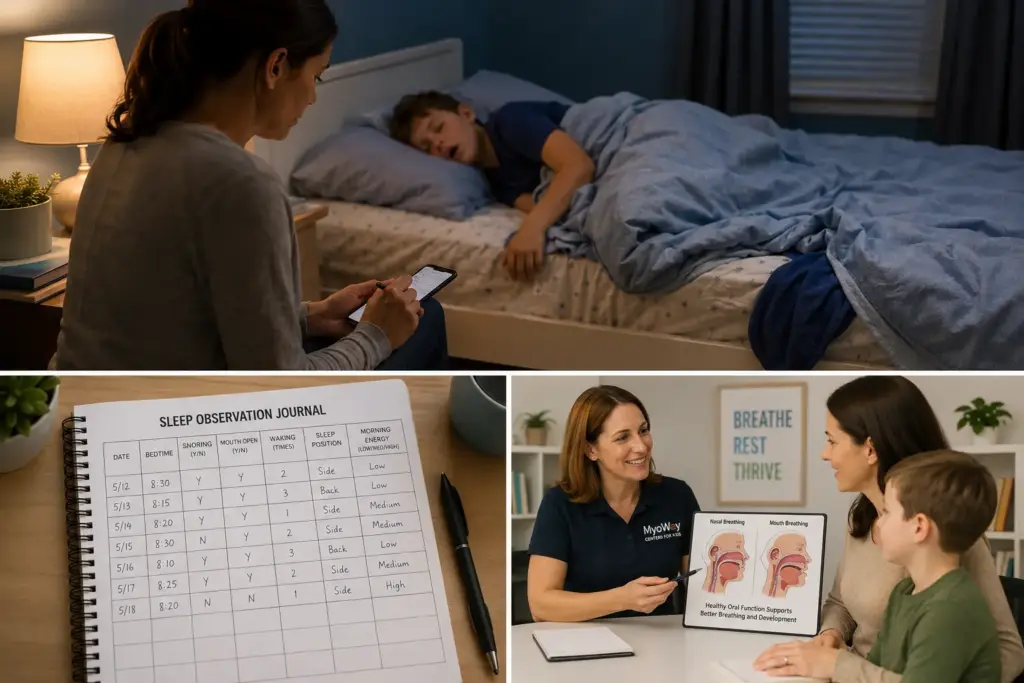
Parents usually know when their child is not sleeping well. They hear snoring from the hallway, notice blankets on the floor, or find their child sleeping in an unusual position with an open mouth. By morning, that same child may be difficult to wake, unusually emotional, unfocused, or exhausted. Then a sleep study comes back […]